Skip to content
Pulp

Gallery: Newhouse adjunct professor Steve Carlic strays away from consumerism, builds life with family around natural elements
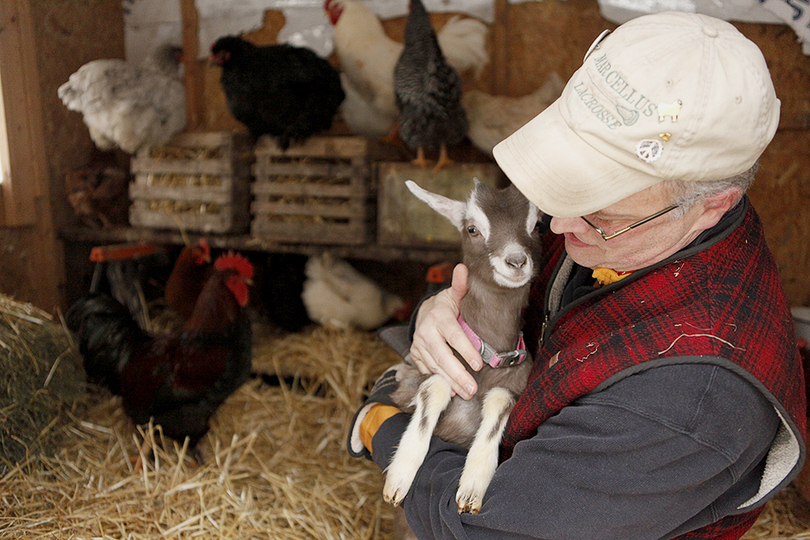
Steve Carlic, an adjunct professor at the S.I. Newhouse School of Public Communications, holds Millie, an alpine and dwarf goat mix, in his arms inside his chicken coup in Marcellus, N.Y.
Steve Carlic, an adjunct professor at the S.I. Newhouse School of Public Communications, holds Millie, an alpine and dwarf goat mix, in his arms inside his chicken coup in Marcellus, N.Y. Chase Gaewski | Photo Editor
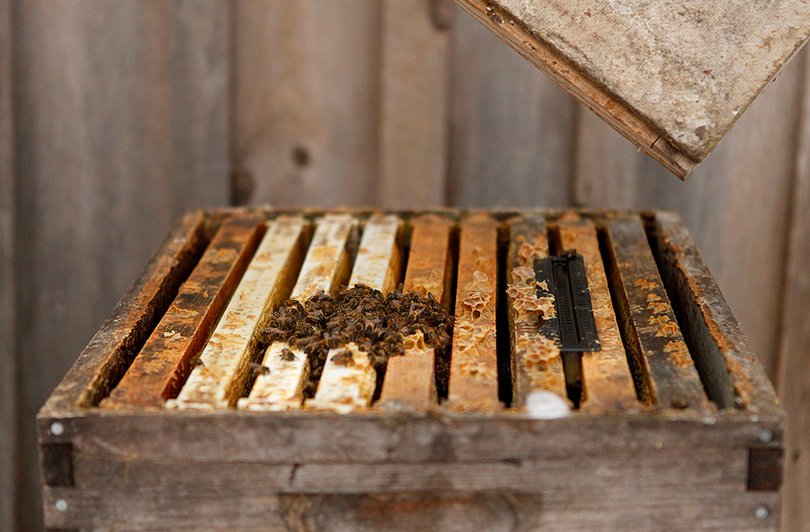
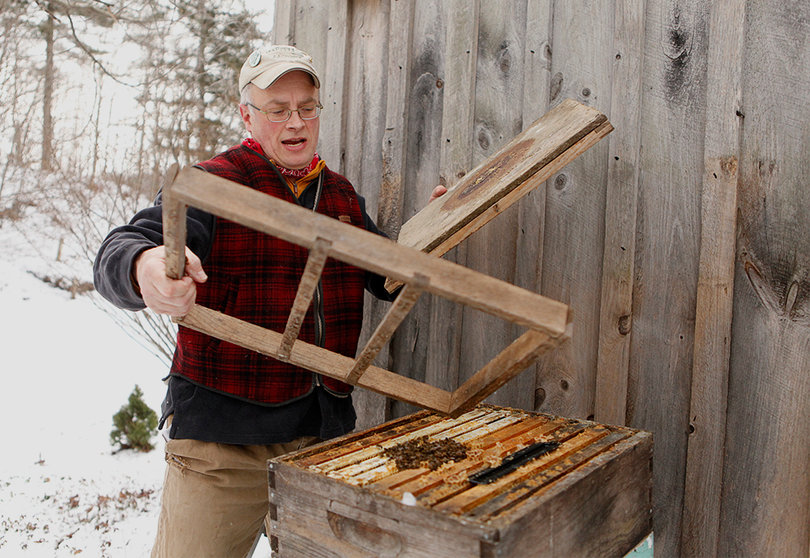
Carlic disassembles one of his beehives to feed his bees. During the winter, the bees cluster together around the queen bee, keeping warm by rotating from the inside to the outside. Temperatures inside the beehive range from 46 to 80 degrees.
Carlic disassembles one of his beehives to feed his bees. During the winter, the bees cluster together around the queen bee, keeping warm by rotating from the inside to the outside. Temperatures inside the beehive range from 46 to 80 degrees. Chase Gaewski | Photo Editor
Carlic's bees stay in the hive for the entire winter from October to late April. The bees produce honey twice a year either in July or late September.
Carlic's bees stay in the hive for the entire winter from October to late April. The bees produce honey twice a year either in July or late September. Chase Gaewski | Photo Editor
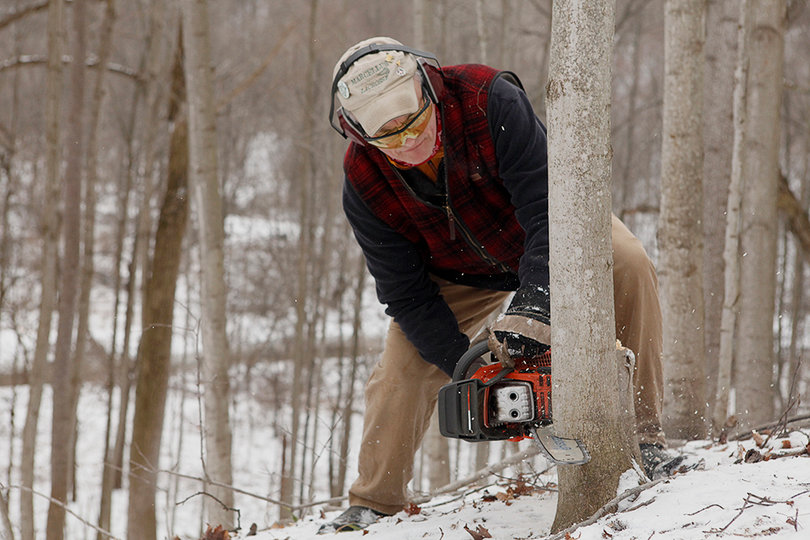
Carlic takes a short walk into the woods from his house and cuts down a tree, collecting selections of the trunk to begin growing Shiitake mushrooms.
Carlic takes a short walk into the woods from his house and cuts down a tree, collecting selections of the trunk to begin growing Shiitake mushrooms. Chase Gaewski | Photo Editor
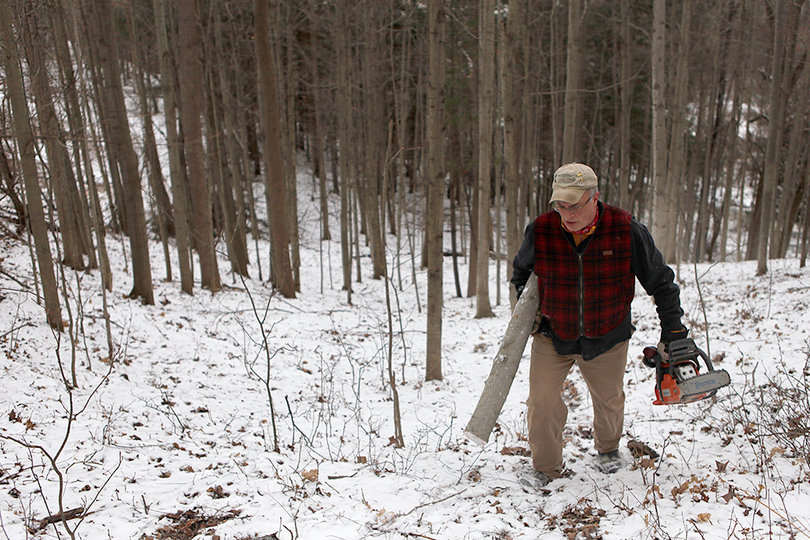
After cutting several selections, Carlic carries his trunks back to his house for preparation.
After cutting several selections, Carlic carries his trunks back to his house for preparation. Chase Gaewski | Photo Editor
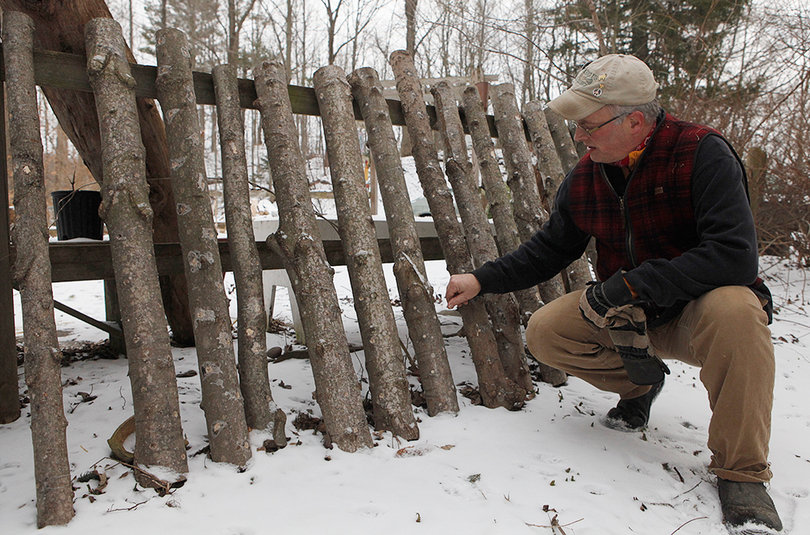
Carlic drills roughly 100 holes in each log, one-eighth to one-sixteenth inches deep, four inches apart. Carlic then fills each hole with mushroom spawn. It takes about one year for the mushrooms to grow.
Carlic drills roughly 100 holes in each log, one-eighth to one-sixteenth inches deep, four inches apart. Carlic then fills each hole with mushroom spawn. It takes about one year for the mushrooms to grow. Chase Gaewski | Photo Editor