Skip to content
History of the Number 44

Double Digits: How the No. 44 jersey remains elusive 10 years after being retired by Syracuse
Before the Greats, 1921-1954

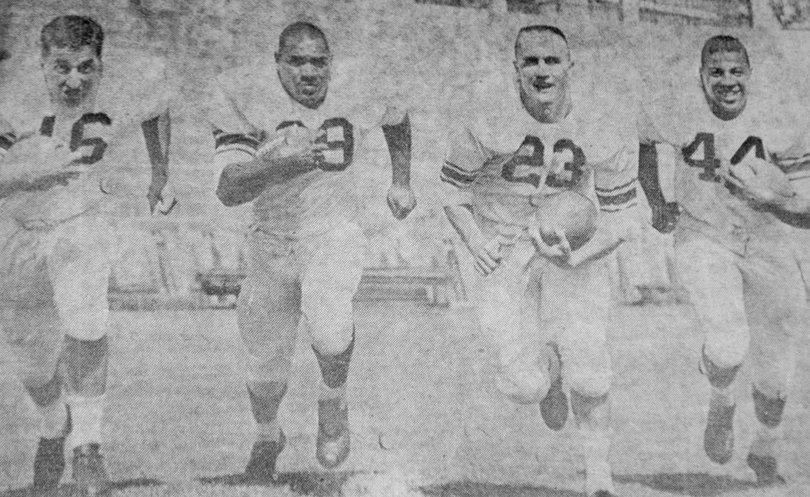
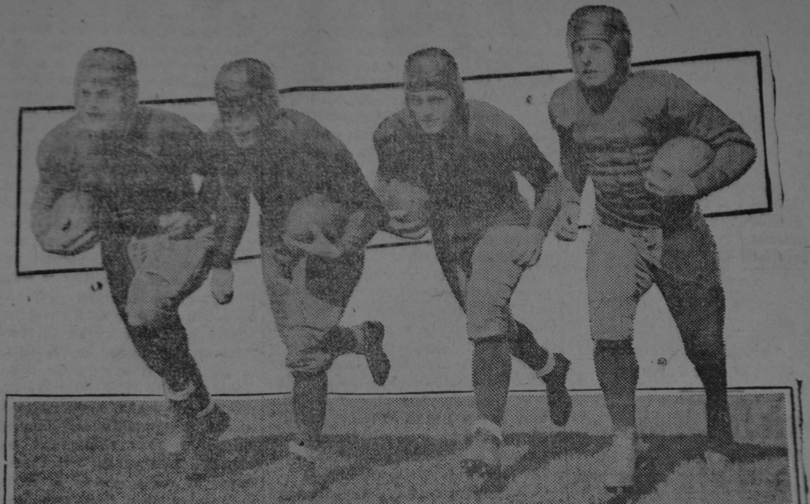
Fourteen players wore No. 44 before Jim Brown wore it from 1954-56 and 11 of them were a halfback, a wide receiver or a quarterback. Gifford Zimmerman, who wore No. 44 in 1921, was the first player to ever wear the number at Syracuse. He went on to play in the NFL for the Akron Pros and Canton Bulldogs. The halfback joined the SU basketball team, track team and was the student body president.

Richard Fishel, the fifth player to wear No. 44, was named an AP All-East honorable mention after scoring five touchdowns in 1930, including two against Columbia in the season finale. He went on to play for the Brooklyn Dodgers of the NFL.

Halfback Francis Mullins was the only player before Brown to wear it for multiple years as he donned No. 44 in 1935 and 1936.
Before the Greats, 1921-1954 Fourteen players wore No. 44 before Jim Brown wore it from 1954-56 and 11 of them were a halfback, a wide receiver or a quarterback. Gifford Zimmerman, who wore No. 44 in 1921, was the first player to ever wear the number at Syracuse. He went on to play in the NFL for the Akron Pros and Canton Bulldogs. The halfback joined the SU basketball team, track team and was the student body president. Richard Fishel, the fifth player to wear No. 44, was named an AP All-East honorable mention after scoring five touchdowns in 1930, including two against Columbia in the season finale. He went on to play for the Brooklyn Dodgers of the NFL. Halfback Francis Mullins was the only player before Brown to wear it for multiple years as he donned No. 44 in 1935 and 1936. Daily Orange File Photo
Jim Brown, 1954-1956

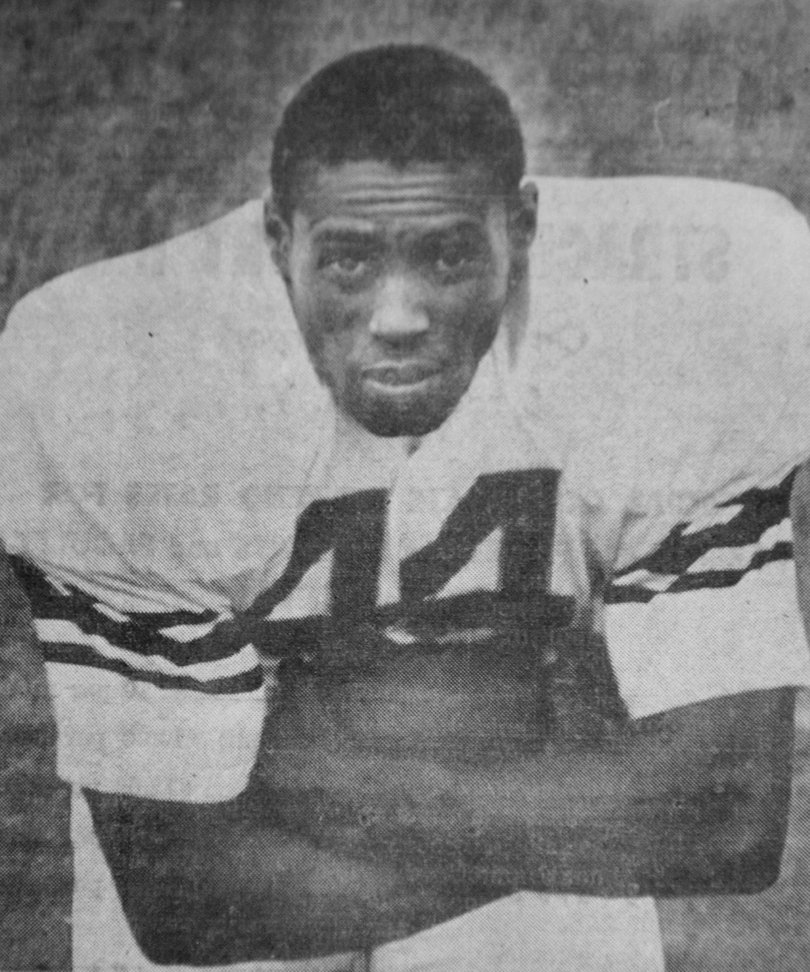
Syracuse coaches told equipment manager Al Zak that Jim Brown needed a jersey with a number lower than 50, so he tossed him one with No. 44 on it. Brown went on to score the most touchdowns in the country during his senior year at SU and became a Pro Football Hall of Famer. He recruited Ernie Davis to the program, who also wore No. 44.
Jim Brown, 1954-1956 Syracuse coaches told equipment manager Al Zak that Jim Brown needed a jersey with a number lower than 50, so he tossed him one with No. 44 on it. Brown went on to score the most touchdowns in the country during his senior year at SU and became a Pro Football Hall of Famer. He recruited Ernie Davis to the program, who also wore No. 44. Daily Orange File Photo
Ernie Davis, 1959-1961

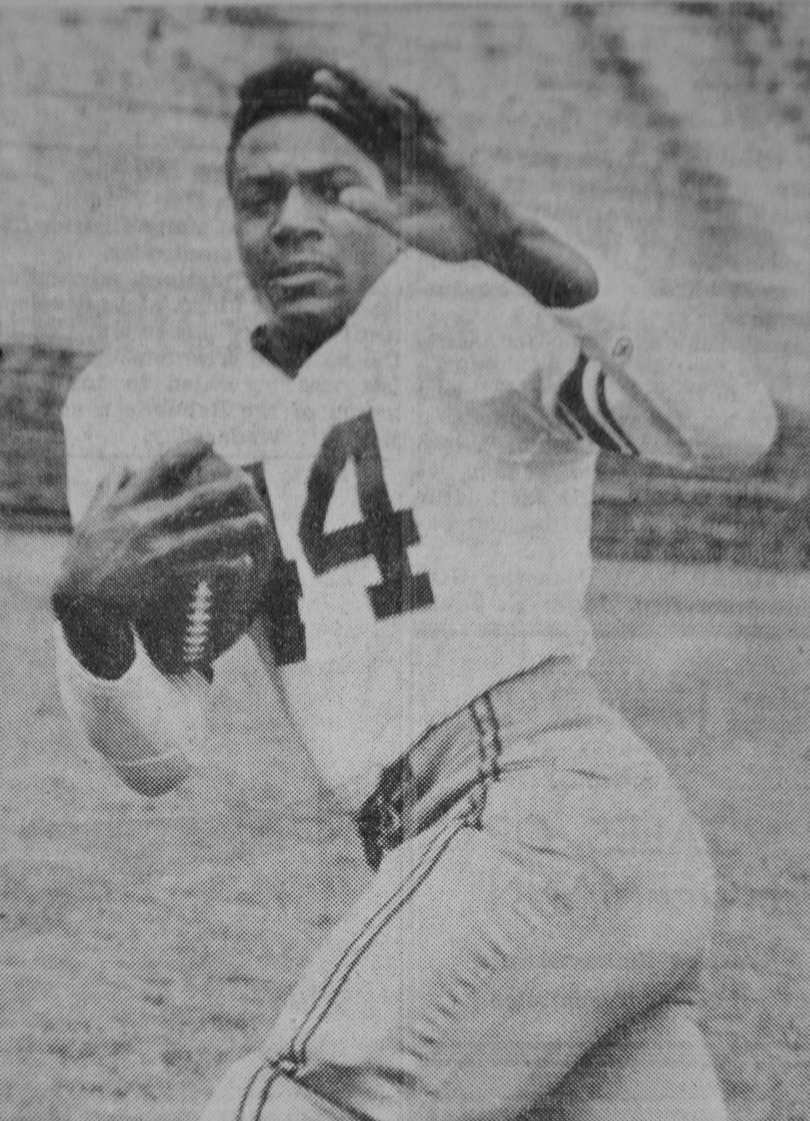
Ernie Davis became the second great to wear the No. 44, donning it for three years just like Brown. Davis led the Orange to its only national championship in 1959 and was the first African-American and only Syracuse player to win the Heisman Trophy. He was selected first in the 1962 NFL Draft, but died due to leukemia in 1963.
Ernie Davis, 1959-1961 Ernie Davis became the second great to wear the No. 44, donning it for three years just like Brown. Davis led the Orange to its only national championship in 1959 and was the first African-American and only Syracuse player to win the Heisman Trophy. He was selected first in the 1962 NFL Draft, but died due to leukemia in 1963. Daily Orange File Photo
Floyd Little, 1964-1966

After being persuaded to attend Syracuse by a dying Ernie Davis, Floyd Little spent the first season of Syracuse career on the freshman team in 1963. He was given the No. 44 on his first day of varsity practice as a sophomore in 1964, and went on to become the only three-time All-American for the Orange.

Little’s finished fifth in the Heisman voting that year and the following. He was inducted into the College Football Hall of Fame in 1983.
Floyd Little, 1964-1966 After being persuaded to attend Syracuse by a dying Ernie Davis, Floyd Little spent the first season of Syracuse career on the freshman team in 1963. He was given the No. 44 on his first day of varsity practice as a sophomore in 1964, and went on to become the only three-time All-American for the Orange. Little’s finished fifth in the Heisman voting that year and the following. He was inducted into the College Football Hall of Fame in 1983. Daily Orange File Photo
The decline of the number, 1967-1998

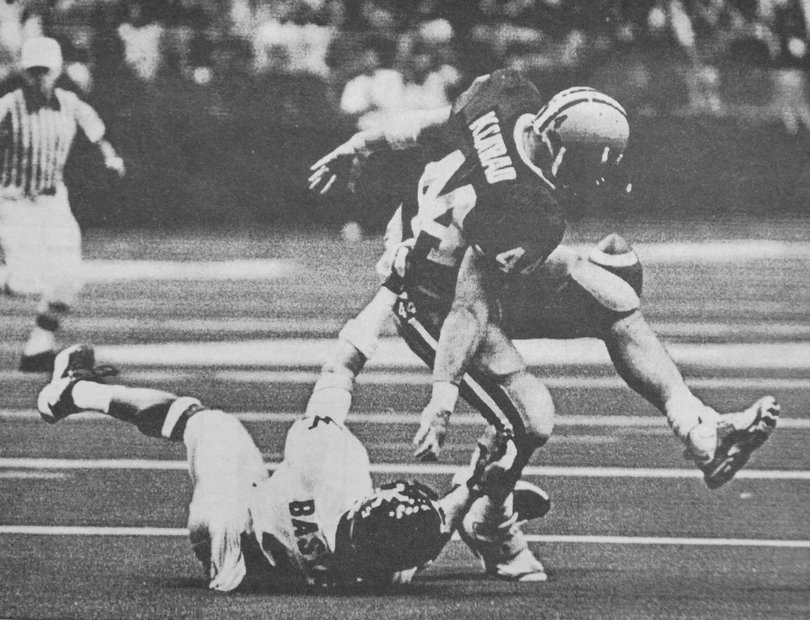
After Little, quarterback Richard Panczyszyn wore No. 44 from 1967-69. Five more wore the jersey after him, but none came close to leaving the legacy that Brown, Davis or Little did. Mandel Robinson, Glenn Moore, Michael Owens, Terry Richardson and Rob Konrad donned it as the significance sputtered out by 1998.
The decline of the number, 1967-1998 After Little, quarterback Richard Panczyszyn wore No. 44 from 1967-69. Five more wore the jersey after him, but none came close to leaving the legacy that Brown, Davis or Little did. Mandel Robinson, Glenn Moore, Michael Owens, Terry Richardson and Rob Konrad donned it as the significance sputtered out by 1998. Daily Orange File Photo
Retiring No. 44, 2005

After being worn by players who didn’t live up to the legacy set by Brown, Davis and Little, No. 44 went unworn since 1998. Then-athletics director Daryl Gross had been in his new job for less than a year and played a key role in the decision to retire the number.

“If there was ever a number that needed to be retired, it is 44,” Gross said in the announcement to retire it. “If you can’t take 44 off the table, then you’re just never going to retire a jersey.”

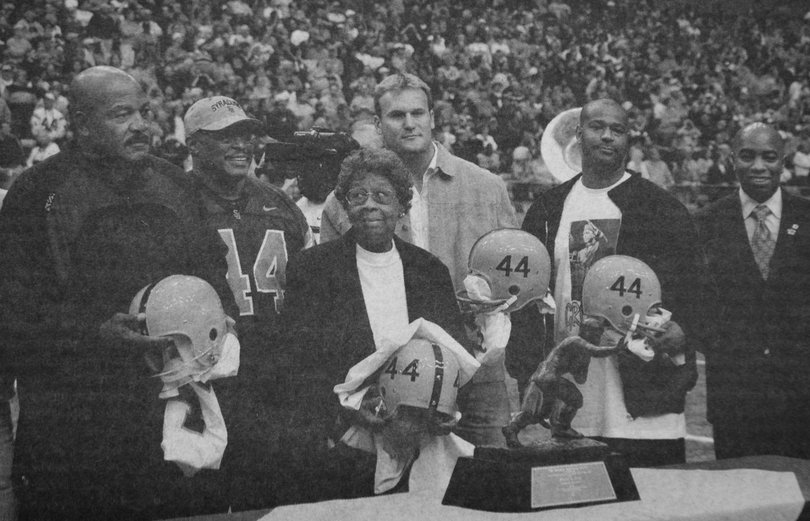
At the retirement ceremony on Nov. 12, 2005, Brown was set to speak, but said there had only been one three-time All-American in Syracuse history, Floyd Little, and he should be the one to speak.

“I think it probably should be (retired),” Brown said at the time. “I think it’s very difficult to try to pick an individual prematurely that’s going to be able to fulfill the shoes of 44.”
Retiring No. 44, 2005 After being worn by players who didn’t live up to the legacy set by Brown, Davis and Little, No. 44 went unworn since 1998. Then-athletics director Daryl Gross had been in his new job for less than a year and played a key role in the decision to retire the number. “If there was ever a number that needed to be retired, it is 44,” Gross said in the announcement to retire it. “If you can’t take 44 off the table, then you’re just never going to retire a jersey.” At the retirement ceremony on Nov. 12, 2005, Brown was set to speak, but said there had only been one three-time All-American in Syracuse history, Floyd Little, and he should be the one to speak. “I think it probably should be (retired),” Brown said at the time. “I think it’s very difficult to try to pick an individual prematurely that’s going to be able to fulfill the shoes of 44.” Daily Orange File Photo

of

Ernie Davis was an All-American. A Heisman Trophy winner. A national champion. Floyd Little too was an All-American, three times. He forever has a spot in the football Hall of Fame. Jim Brown had similar accolades and many more.

The history of No. 44 is ingrained in those three Syracuse legends. But when newly minted athletic director Daryl Gross retired the No. 44 — a number all three wore — he not only elevated their place in Syracuse lore, but so too were 22 names of those who wore the number with far less prominence.

Bill Schnoover was happy when the number was retired 10 years ago. Much like his years wearing 44 in 1962 and 1963 — between Davis and Little — those who had worn the number in recent years had added little to its history.

“I’ve always felt like (I was in exclusive company),’ Schoonover told The Daily Orange in 2005. ‘I have mixed emotions…It had tradition. It had meaning.”

The number was retired in 2005, with its shining moments highlighted by its three greatest stars. It hangs in the Carrier Dome rafters. For 10 years, it was untouchable, it had become a legend — the legacy of Brown, Davis and Little.

But on May 19, 2015, that all changed. At the groundbreaking ceremony for the No. 44 Plaza, it was restored to the program. The context of its future use was vague. Who would get it wasn’t answered. The criteria to don the jersey were far from clear.

“We don’t have that many traditions, this is one of the better ones, so I’m OK with it,” Little said at the time. “I talked with Jim Brown. He said, ‘Floyd, you’re there. I’ll roll with you, whatever you call.’”

Schnoover got the number because then-coach Ben Schwartzwalder believed any tailback at the time should have the number. He was a converted linebacker, and suffered from injuries.

So too did quarterback Richard Panczyszyn, who wore the number after Little. Mandel Robinson transferred to Wyoming after wearing the number for a year. Glenn Moore, who wore the number 1980, was more of a backup.

“I didn’t realize how much pressure would come with (the number),” Robinson said in 2005. “If they keep it and put a kid in it, that kid becomes a marked kid.”

Still, the number is “back,” and with some controversy. Former Syracuse great Donovan McNabb spoke out against the decision. Jim Brown himself said he “didn’t exactly endorse” its restoration. Just days after the announcement, the university backtracked on its decision, saying it was a “reiteration” of a policy that had already been in place.

There’s no way to know if No. 44 will ever be worn by a Syracuse player ever again. Nearly 10 years to the date of its original retirement, a decision on its future is still uncertain.

The history of No. 44 is long, but also contained. It’s remembered for the short-term successes those who wore it had, but it’s also impossible to deny the failures that come along in many others who failed to live up to its legend.

“It’s about the culture of Syracuse football,” Shafer said after the restoration. “It’s less about each and every individual and more about what each and every individual represents or represented when they played here.”