969 acres of grass, 24 miles of sidewalks: SU’s daily operation to maintain its campus

SU’s grounds crew takes great pride in their work to keep campus beautiful, clean and maintained. In 2020, Cosmopolitan named SU the most beautiful college campus in the United States. Nathaniel Harnedy | Contributing Photographer
Get the latest Syracuse news delivered right to your inbox.
Subscribe to our newsletter here.
In the early mornings, while students are still fast asleep, campus is awake.
The grounds crew gets to work at 5 a.m., and managers arrive to set up for the day as early as 4:30 a.m. The early start ensures that campus is in tip-top shape for students’ 8 a.m. lectures.
“It is very important to me that when somebody walks up that hill from those parking lots and gets off that bus at college place, this campus is beautiful,” Peter Sala, the chief facilities officer of Syracuse University, said.
The grounds crew maintains 969 acres of campus, 14 miles of roadways and 24 miles of sidewalks across Main and South Campus. The crew does everything from planting flowers to preparing for game day tailgates. Each season, they adjust their work to create seamless transitions year-round, Sala said.
Joe Quarantillo, the grounds manager, is one of the earliest to arrive to campus each morning, with two crews following him at 5 and 6 a.m. Workers are split into groups based on the sections of campus they work on, which can create some friendly competition, Quarantillo said.
It’s hard work, but everyone is motivated by the same end goal of creating and maintaining a beautiful campus, he said. They’ve been successful; Cosmopolitan even named SU the most beautiful college campus in the United States in 2020.
“Our crew, and myself included, really enjoy what the end results are at the end of the day or the end of the week,” Quarantillo said. “There’s always something that you can step back and look at and say, ‘Wow, this is a real improvement.’”
To keep campus in tune with Syracuse seasons, the team must plan ahead. As early as January, suppliers start growing plants like orange geraniums to decorate campus for graduation ceremonies. As soon as commencement is over, SU’s landscapers start preparing the campus to welcome students for the next semester, Sala said.
As leaves start to turn in the next few weeks, Sala said students can expect to see mums — a flower able to withstand colder fall temperatures — start to replace the summer’s blooms.
“Then we go into what we call our fall cleanup,” Sala said. “You’ll see us vacuuming up leaves like crazy.”
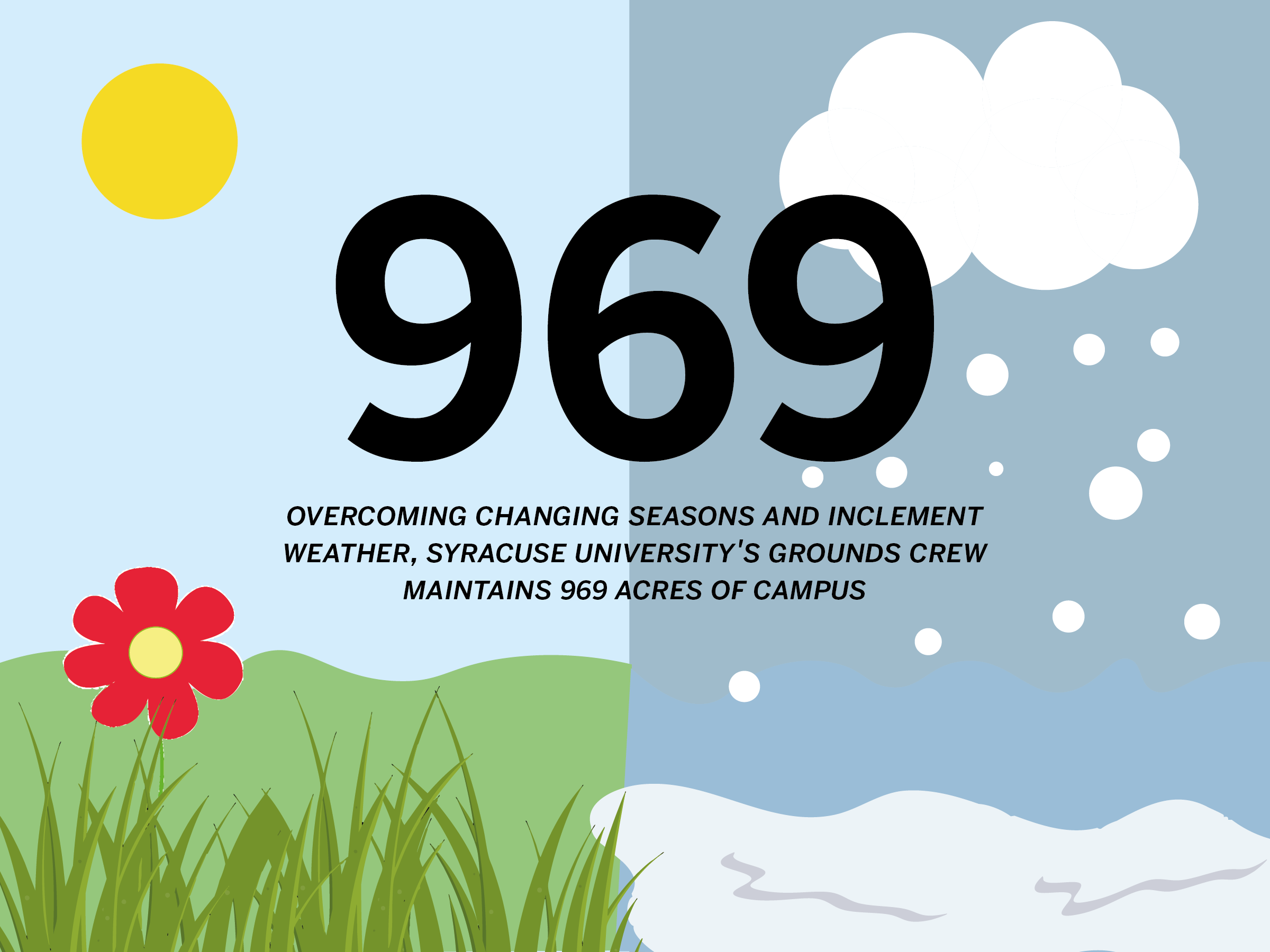
Ilyan Sarech | Design Editor
As students prepare for a grueling winter season, so does the grounds crew. Dealing with winter storms is one of the most challenging aspects of the job, Quarantillo said. The team prepares ahead of time if there’s advance warning of a storm coming, but weather can be unpredictable.
When a winter storm hits, “timing is everything,” Quarantillo said. The snow removal team works through the night to ensure that students and staff can get to campus the next day, Sala said.
“We’ll try and be here at midnight, and then we’ll fight the storm until the end, and then the next day we clean it all up,” Quarantillo said.
Landscaping is more than just pretty flowers and clear sidewalks; it’s intentionally designed to meet the needs of students and staff on campus, said Margaret Bryant, department chair of landscape architecture at SUNY ESF.
Dividing up large outdoor spaces with diagonal paths and sheltering them with trees creates nooks for students to study, eat or socialize, like those on the lawn in front of the Hall of Languages, Bryant said.
Les Rose, an SU broadcast and digital journalism professor, said the campus’ landscaping helps him release tension after a bad day. Especially when it’s sunny, it’s a relaxing “exhale factor” for him.
“This campus is so beautiful that just walking around to clear my head makes me happy,” Rose said. “Who would want a concrete jungle as a campus?”
Though landscaping serves students and staff who are already part of SU, it can also be a form of marketing to prospective students and their parents, Bryant said.
“Parents feel comfortable when they come in and see how well-maintained the grounds are, and they feel comfortable leaving the students with us, because that would carry through with how the university is,” Quarantillo said.
Designing a landscape can be meticulous — landscape architecture teams create detailed mockups for the placement of each individual plant. Choosing the right plant for the right place is also a challenge, Bryant said. When planning an area, landscape architects must balance native plants with exotic ones and consider climate.
If the wrong plant is in the wrong place, future maintenance will be more difficult. That’s why landscape architecture and landscape maintenance must crossover, Bryant said.
“If a designer doesn’t think about the maintenance part, their vision doesn’t come to reality,” Bryant said.
Maintaining the grounds is a detailed process too; Sala said as he drives around campus, he constantly notices things to be addressed. Quarantillo receives around six calls from him a day with concerns, he said, though the grounds manager is sometimes already on his way to fix the issue.
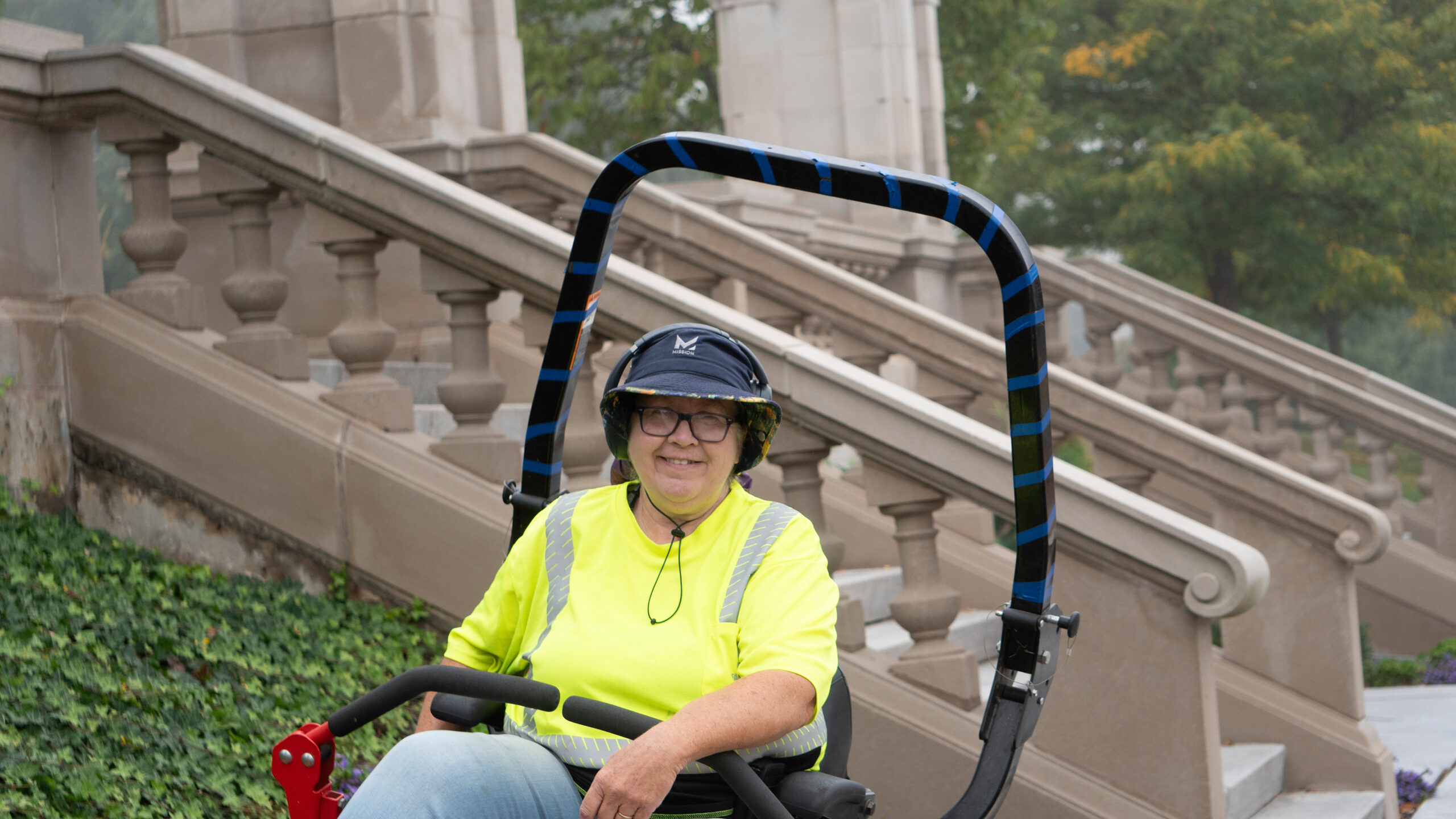
Syracuse University’s landscaping is intentionally designed to meet the needs of students and staff on campus. The grounds crew works year-round to maintain Main and South Campus, everything from planting flowers to preparing for tailgates. Nathaniel Harnedy | Contributing Photographer
Campus cleanliness is a main point of pride for Sala. The grounds crew picks up trash in the mornings, and a street sweeper cleans up roads and sidewalks overnight once a week.
“When you walk across this campus, there is not a lot of litter on the ground,” Sala said. “We are on it. We go at it hard, and we stay on it all day, and we have a shift at night.”
That hard work pays off, Sala said. He often receives emails from colleagues complimenting him on how the campus looks.
“It’s what you don’t see,” Rose said. “I don’t see ugly brown plants in a place that has snow six months out of the year.”
Though the landscaping team tries to stick to a set schedule, things are susceptible to change quickly as complications and needs pop up, like a broken window or an outdoor event. Every day is different, Quarantillo said.
Amid that quickly moving schedule, Sala encourages his team to slow down. On the first day of classes, he tells them to stop and “watch the world go by” in front of busy places like Hendricks Chapel or Carnegie Library. This way, they act as a resource for new students who might be lost or confused.
The Einhorn Family Walk outside of Schine Student Center used to be a busy road for buses and cars, making it difficult to cross campus, Sala said. In 2016, the road was redesigned into a pedestrian promenade. Now, lined with flower planters and green space; it’s a bustling center for student life.
“I go sit there at noon, right from noon to 1 o’clock, and watch the students walk down that Einhorn Family Walk,” he said. “There was so much pushback when we built that, and I’m telling you right now, that is the greatest thing on this campus.”