Music lovers craft cross-genre beats at producer collective Echo Chamber
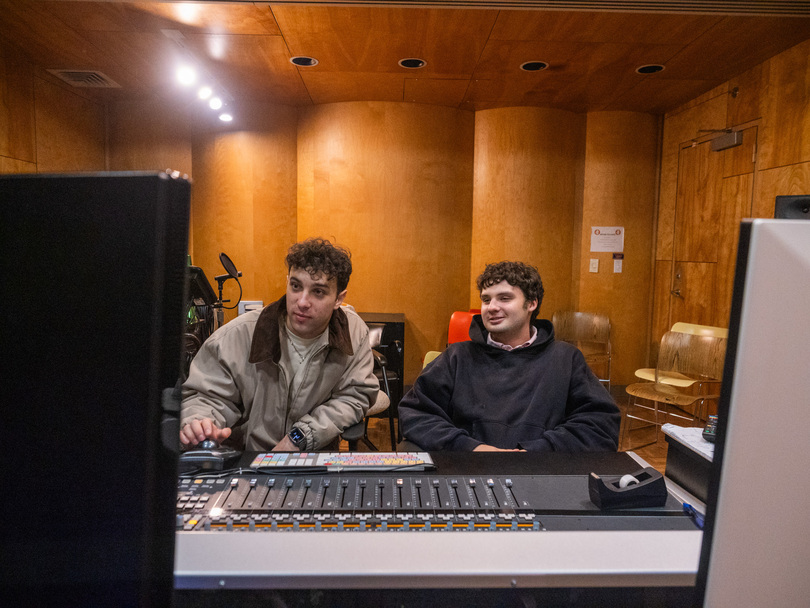
Noah Volkman (left) and Jake Croce are two of Echo Chamber's four cofounders. The student-run producer collective began as an idea between classmates in a Newhouse 2 recording studio. Taite Paradise | Staff Photographer
Get the latest Syracuse news delivered right to your inbox.
Subscribe to our newsletter here.
Last year, four Bandier Program students locked themselves in an on-campus recording studio and resolved not to leave until they had “something.” They left with Echo Chamber Sounds.
“The idea of the page was to have something very free flowing,” Jake Croce, Syracuse University sophomore and Echo Chamber member, said. “The main ethos of what we want to do is bring more community toward people interested in this kind of music, and people that make music themselves.”
Echo Chamber Sounds is a producer collective made up of Noah Volkman, Kaz Keech, William Cracknell and Croce. They post instrumental beats weekly on the collective’s Instagram. The beats are accompanied by graphics and sometimes editorial content diving into a genre or artist like EsDeeKid. The four also release a monthly playlist highlighting a genre they’re interested in, like electronic music or Scandinavian rap.
The collaborative nature of Echo Chamber is an important aspect of the project, Volkman said. Since there isn’t one leader, the work feels more community-oriented, he said.
“What I really love about our collective is how unique everyone involved is,” Volkman said. “It allows for everyone to bring something new to the table and for everyone to learn from each other.”
The group isn’t bound by one genre, Cracknell said. However, they all share an interest in underground music popular on platforms like SoundCloud. Cracknell publishes music on SoundCloud under the name Fotia, and Volkman posts his music to SoundCloud and Spotify as envy.
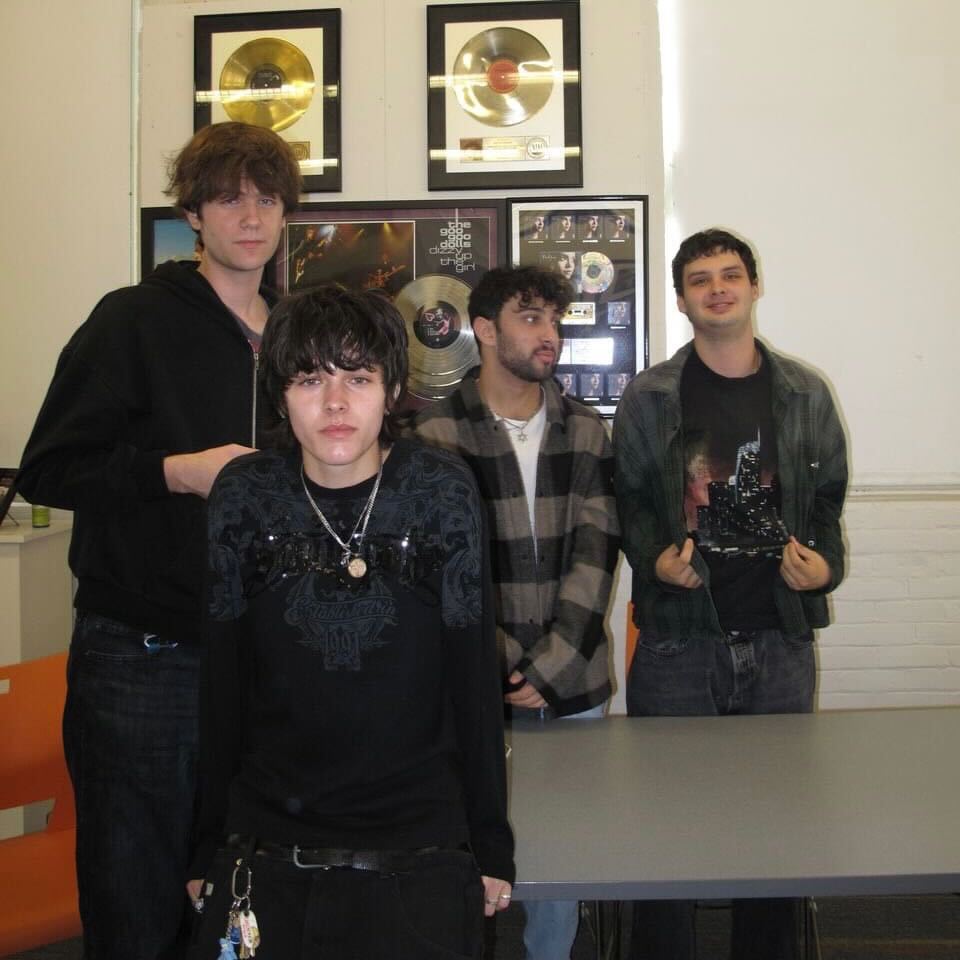
Echo Chamber Sounds allows William Cracknell, Kaz Keech, Noah Volkman and Jake Croce (left to right) to experiment with their music. The producers aren’t bound by one genre, and the group has no specific leader, members said. Courtesy of Jake Croce
Because underground music isn’t bound to commercial pressures like bigger artists, it’s often more interesting and innovative, Cracknell said.
That innovation is a big part of what the members of Echo Chamber do. Cracknell said he tries to tap into aspects of songs he’s currently listening to as inspiration for his music. Sometimes, he starts his creative process by trying to figure out how an artist executed a certain technique.
Volkman takes a similar approach, drawing inspiration from a wide variety of styles, like house music, Playboi Carti-style rap music or early Kanye West-style hip-hop. The group’s common love for music is part of what forged their bond, Cracknell said.
“When you’re already connected by music, it makes it a lot easier to relate on the deeper personal level,” Cracknell said. “I already have that level of support and trust with them in a way, just because we listen to some music and we come from similar backgrounds musically.”
Cracknell started producing music videos in middle school. During his junior year of high school, Cracknell made beats. Volkman has been making music since middle school, he said.
The collaborative environment of a producer collective has been a positive step in Croce’s music journey, he said. Echo Chamber’s weekly posting schedule motivates him to be consistent with creating more music.
“This was always the thing that I would do in my room by myself,” Croce said. “I’d come home after a long day and just unwind and make music. So it definitely was outside of my comfort zone a little bit to be collaborating with people. But it’s really great.”
Being part of Echo Chamber has helped diversify the members’ skills, Croce said. He built design skills by creating the graphics for the account, and Volkman said the collective has helped him gain a better understanding of big-picture branding and marketing.
Having a platform like the Echo Chamber account also helps add credibility to the members’ names as artists, Volkman said, proving that the members aren’t “just another DJ.”
Croce worked as a student liaison between CrossRoads Collective and the BareRoots Music Festival in September. The festival’s coordinator recruited him through his work with Echo Chamber Sounds. Volkman said the platform and connections from Echo Chamber helped him land gigs like performing at Cage Collective and opening for BUNT. at Harvey’s Garden.
Echo Chamber’s audience is mostly limited to SU students right now, Cracknell said, creating some challenges in growing engagement. However, Cracknell is optimistic about the collective’s future. He and Croce are thinking about turning the collective into their capstone project for Bandier.
The account is also beginning to roll out editorial content more often, a key step in turning the collective into a “real thing,” Croce said. Though they aren’t totally sure what the next steps for Echo Chamber will be, Cracknell said a goal is to build it into a business before graduating from SU.
Cracknell sees the collective’s flexibility as an advantage. They aren’t tied down to a specific brand identity, allowing them to stay true to Echo Chamber’s community ethos no matter what iteration the collective takes.
That ethos, creating a space of connection through music, is part of what’s made Echo Chamber successful, and why the members continue to push for it to grow, Volkman said.
“We wanted to find the other people that were looking for something like this, because when we first got here, we were looking for it, and we couldn’t find it, so we created it,” Volkman said. “And I think that that’s a really valuable thing for us to keep pushing, to have a place for people to have a community for things that they’re interested in.”