Opinion: AI chatbot pendant will worsen U.S. loneliness epidemic
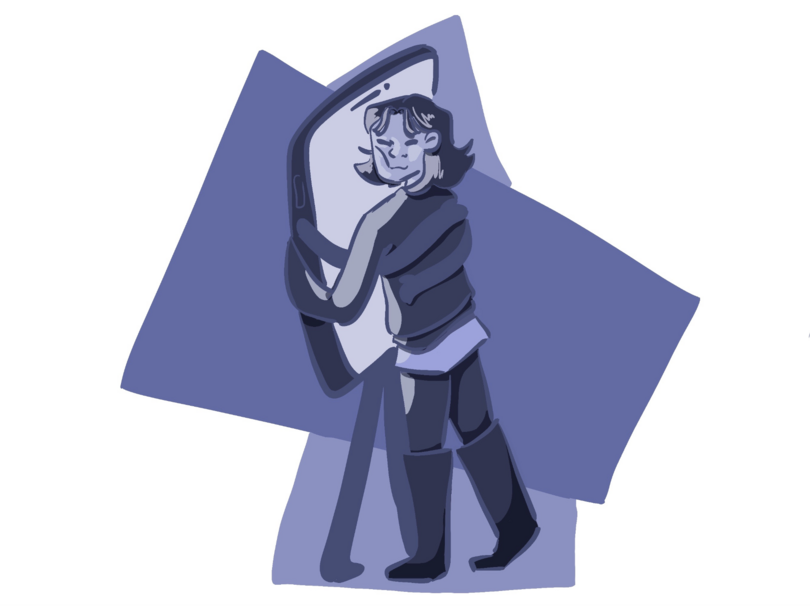
Our columnist cites around 200,000 people have already bought a Friend. She argues that while the AI chatbot-housing pendants are promoted to fix a growing U.S. loneliness epidemic, they risk unethical surveillance and unhealthy habits. Kendall Thomas | Contributing Illustrator
Get the latest Syracuse news delivered right to your inbox.
Subscribe to our newsletter here.
The United States is facing a growing loneliness problem. Avi Schiffmann, a 22-year-old founder of AI tech startup Friend, is selling a solution: chatbots housed in plastic pendants. Despite major backlash against Schiffmann’s advertising in the NYC subway, and the hefty $129 price tag, around 200,000 people have purchased their own Friend.
But Friend pendants aren’t the only way people are substituting social interaction with chatbots. Some are turning to ChatGPT to fill gaps in their romantic relationships, too.
One woman told the New York Times she’s in love with her AI boyfriend, whom she named Leo. She spends more than 20 hours a week on ChatGPT with him.
I understand the need to fill the void left by loneliness, but this form of connection is merely a temporary fix. Audrey Jones, a Syracuse University freshman studying communication and rhetorical studies, said she uses AI frequently, but she doesn’t talk to it like it’s human.
“That freaks me out really bad,” Jones said.
Chatbots are being integrated into our social media platforms as well. Meta CEO Mark Zuckerberg is pushing AI friendships for people who have fewer human connections. However, I see through to his true intentions.
Starting Dec. 16, when you chat with Meta’s AI, all your data will be sold off to advertisers, and there’s no way to opt out. Cashing in on a loneliness epidemic is unfortunately the exact response I’d expect from a socially detached, billionaire CEO.
Others are leaning on AI chatting for therapy as costs rise, but developing emotional attachments to chatbots that don’t have ethical guardrails can become dangerous.
Mau Gawa, an undecided sophomore at SU, shared that she likes to play rock, paper, scissors with her Google Echo. She wouldn’t use AI for therapy, though, as she worries it lacks proper boundaries.
Gawa’s fears are quite legitimate: the term “AI psychosis” has been coined out of concern for unhealthy relationships with AI. While it’s not yet a cynical diagnosis, there are cases of individuals who have been arrested and hospitalized as a result of AI feeding into their delusions and paranoia.
“It’s easy to convince AI to say what you want to hear, it’s not like a therapist,” said Milo Wijenayake, an SU graduate student studying finance. Wijenayake uses AI for assignments, but doesn’t trust it for therapy, either.
AI isn’t the answer to our loneliness, so we need to find a more long-term solution, especially considering social isolation’s serious impact on a person’s health. With 1 in 3 adults in the U.S. reporting they’ve felt lonely, there’s a great chance someone you know is at risk.
To truly confront the loneliness epidemic, we need to look inward and confront our own habits, and question those who have built our hostile infrastructure.Bella Tabak, Columnist
Social media may seem like a quick fix, but research shows it doesn’t actually help. Even though we’re spending large amounts of time on social media on average, we’re still feeling socially confined. Limiting time on social media and prioritizing making plans with friends is something I’m trying to do more of for myself.
Sunny Suaya, an SU junior studying broadcast and digital journalism, recommends that people feeling lonely should try and interact with others in person.
“The art of conversing with people day to day, out in the open, is getting lost,” she said. “You’re in the grocery store, you’re standing in line, start conversing with someone, it could make their day and make your day as well.”
I have to agree with Suaya; I’ve shared some amazing conversations with strangers. While I may not have exchanged social media or even names with them, I still remember those connections.
Wijenayake has different suggestions for more introverted individuals. He said adopting a pet, reading a book or starting a new hobby may be helpful.
One bar in Washington D.C. is taking authentic connection to the extreme by eliminating phones, removing the distraction of a potential AI boyfriend altogether.
Focusing on making changes on the individual level can be helpful, but sometimes it doesn’t go far enough. Car-dependent communities lack the common human connection that walkable cities do. Third spaces, places where you can socialize that aren’t work or home, are becoming hard to find.
To truly confront the loneliness epidemic, we need to look inward and confront our own habits, and question those who have built our hostile infrastructure.
Bella Tabak is a senior majoring in magazine journalism. She can be reached at batabak@syr.edu.