Syracuse Stage receives $20K grant from Indigenous Theatermaker Award
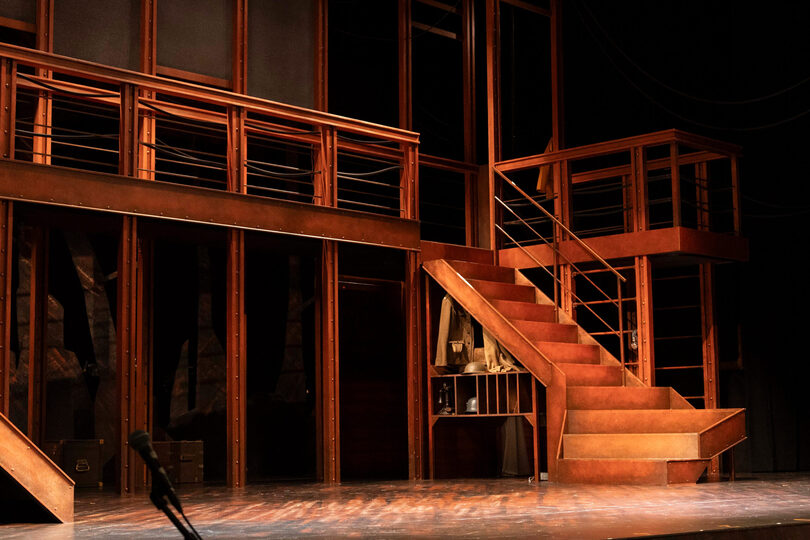
The Lucille Lortel Foundation Indigenous Theatermaker Award honors theater institutions in New York or Connecticut for preserving and uplifting Indigenous theatermakers. Syracuse Stage's work with Indigenous communities stretches back for more than 30 years. Christian Calabrese | Asst. Photo Editor
Support The Daily Orange this holiday season! The money raised between now and the end of the year will go directly toward aiding our students. Donate today.
UPDATE: This story was updated at 11:42 a.m. EST on Wednesday, Dec. 10, 2025.
Syracuse Stage received the 2025 Lucille Lortel Foundation Indigenous Theatermaker Award and a $20,000 grant from the Dramatists Guild Foundation on Oct. 20, recognizing the theater’s decades-long commitment to elevating Indigenous voices and stories.
“The whole point of being able to have something like this award is to say, ‘We’re not going to let your stories be erased,’” Joann Yarrow, Syracuse Stage’s director of community engagement, said. “We want to hold space for them. We don’t want to dictate what they look like or what they sound like.”
The annual award honors a theater institution or organization in New York or Connecticut for preserving and uplifting Indigenous theatermakers. Syracuse Stage is only the second recipient since the award’s inception, following the Yale Indigenous Performing Arts Program’s win in 2024.
This summer, Syracuse Stage collaborated with Netherlands-based choreographer Nicole Beutler and Neal Powless, a filmmaker and member of the Onondaga Nation, on “A Room in Our House.” The dance piece examines the relationship between Dutch colonists and Indigenous peoples of North America.
Syracuse Stage’s work with Indigenous communities stretches back more than 30 years, Yarrow said.
In 1994, the theater premiered “The Indolent Boys” by Pulitzer Prize-winning Kiowa novelist N. Scott Momaday. The play featured young actors from the Onondaga Nation, including the son of Jeanne Shenandoah, an environmental leader and cultural advocate.
“Theater is just entirely good for children,” Shenandoah said. “It helps them become aware that there is an avenue for not only education and awareness, but enjoyment.”
Syracuse Stage expanded its Indigenous programming in 2008 with “Tales From the Salt City,” a performance created, directed and written by Ping Chong. The interview-based examination of Syracuse history included Shenandoah, who shared her experience as a member of the Haudenosaunee Confederacy.
“It’s a wonderful opportunity to share knowledge about our people and to give recognition of our presence and everything’s here in our homeland, and we’re here,” Shenandoah said.
In 2021, Syracuse Stage launched its biggest Indigenous project: “Our Words Are Seeds,” a three-year collaboration written by and developed under the creative direction of Ty Defoe, a member of the Oneida and Ojibwe nations. Yarrow said the project evolved through multiple iterations — from being part of the Cold Read Festival of New Plays to a workshop performance at Syracuse Stage where it then traveled to the Onondaga Nation school among other locations.
“Everything that we’ve done, we’ve always done in conversation with our friends to really make sure that everything is handled respectfully,” Yarrow said.
The project took an unexpected turn when Kate Laissle, director of education for Syracuse Stage and dramaturg on the project, discovered letters by Mary Cornelius Winder, an Oneida woman who spent 40 years petitioning the government for the return of Oneida land. When Yarrow reached out to incorporate the letters into the “Our Words Are Seeds” production, she received an email from Michelle Schenandoah, one of Winder’s grandchildren.
They met, which led to a partnership with Schenandoah, who had never seen her ancestor’s letters. Syracuse Stage arranged a field trip for the entire family to the National Archives at New York City, where the letters were located.
Powless, who has collaborated with Syracuse Stage on multiple projects, said having members of the Indigenous community involved in these projects is critical.
“Indigenous people are finding that they have to be involved in those conversations, in those productions, in the creation of those things in a really profound way,” Powless said. “Otherwise, it just goes back to those other old boxes of stereotypes.”
Powless, Syracuse University’s ombuds, said he praises Syracuse Stage for their commitment to true Indigenous storytelling. He said it’s exciting to see members of the Syracuse community reaching out to their neighbors and the original inhabitants of the land to tell their stories their way.
Yarrow acknowledged the challenges of sustaining Indigenous programming in a transactional arts environment, but the $20,000 grant will serve as “seed money” for future Indigenous storytelling projects, she said.
“This idea is that it’s not about a one-off, it’s about a relationship,” Yarrow said. “It’s not about just acknowledging the land. It’s about curating friendships and trust and being genuinely interested in our community.”
CLARIFICATION: A previous version of this article said a Syracuse Stage staff member discovered letters by Mary Cornelius Winder. This staff member was Kate Laissle, director of education for Syracuse Stage and dramaturg on the project.