Nutrition science, food studies navigate closures due to declining enrollment
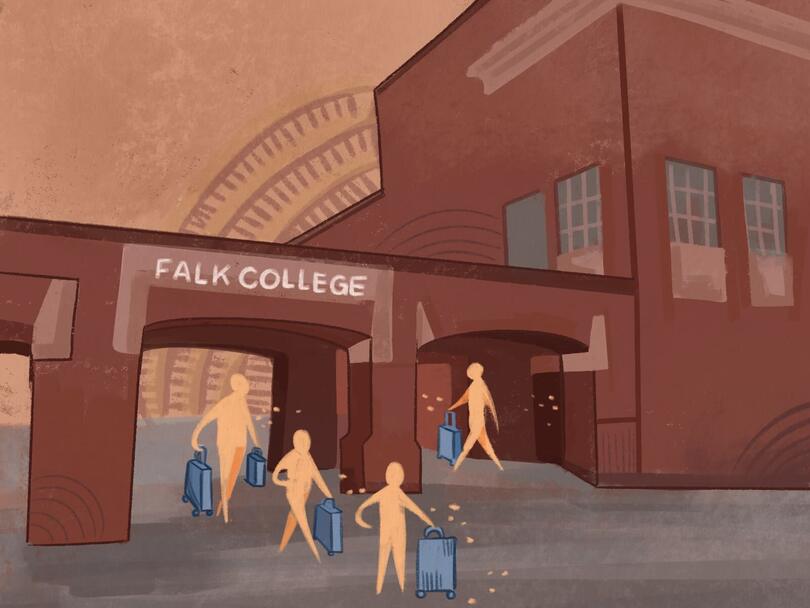
SU closed its nutrition science programs last semester, a year after announcing the closure of its food studies program. These cuts, largely justified by decreased student enrollment, affected students and faculty in the programs. Hannah Mesa | Illustration Editor
Get the latest Syracuse news delivered right to your inbox.
Subscribe to our newsletter here.
UPDATE: This story was updated on Monday, Feb. 2 at 7:40p.m.
Michael Capous, a senior studying nutrition science at the Falk College of Sport, calls his major “underestimated.”
“Nutrition is seen as just telling people to eat healthy,” Capous said. “As a nutrition science student, people often underestimate the impact in the physiology of how our bodies use and consume energy.”
Now, as his program merges with the broader nutrition major to become a specialized track, Capous said he feels the overall support for his program has “dwindled.”
Audrey Small, a 2025 graduate of Falk’s food studies program, said she was one of 10 people in her major’s graduating class.
After a January 2024 email to food studies students announcing the major’s enrollment pause to “thoughtfully” consider the program’s future. The program was closed three months later, Small said.
“I remember being quite shocked when I received an email from my advisor and professor,” she said. “Falk was pretty vague about the whole situation, and all we were told was that the program was being put on ‘pause’ for the 2024-2025 academic year.”
Scott Tainsky, senior associate dean of Falk, announced the closing of the college’s undergraduate and graduate nutrition science programs in an August faculty meeting. During the last academic year, Falk announced the closing of its food studies program and the plan to “teach out” remaining undergraduate and graduate students, SU’s Vice President of Communications Sarah Scalese wrote in a statement to The Daily Orange.
Both programs have been discontinued due to consistent declining enrollment, according to statements from Scalese and members of the programs’ faculty.
A spring 2024 initiative aimed to reimagine Falk by focusing “exclusively on sport-related disciplines” and restructure or relocate the school’s human dynamics departments. Several majors, including the School of Social Work and Marriage and Family Therapy, transitioned to other SU colleges.
Scalese said nutrition science faculty have been vital to developing the new nutrition science track, and the university is not cutting faculty in any departments or programs. Faculty will also continue their research within the redesigned program structure, she wrote.
Despite promises to create a plan for the remaining undergraduate and graduate students to complete their degrees while staying in the now sports-centered college, students and faculty in food studies – which Scalese said “was identified for closure before Falk’s reimagining” — and nutrition science said they were put in a vulnerable position after programmatic changes.
“I personally feel out of place,” Capous said. “I’m not interested in sports. I resonated a lot more with the human dynamics aspect of the college, I have no interest in working with athletes or in the world of sport.”
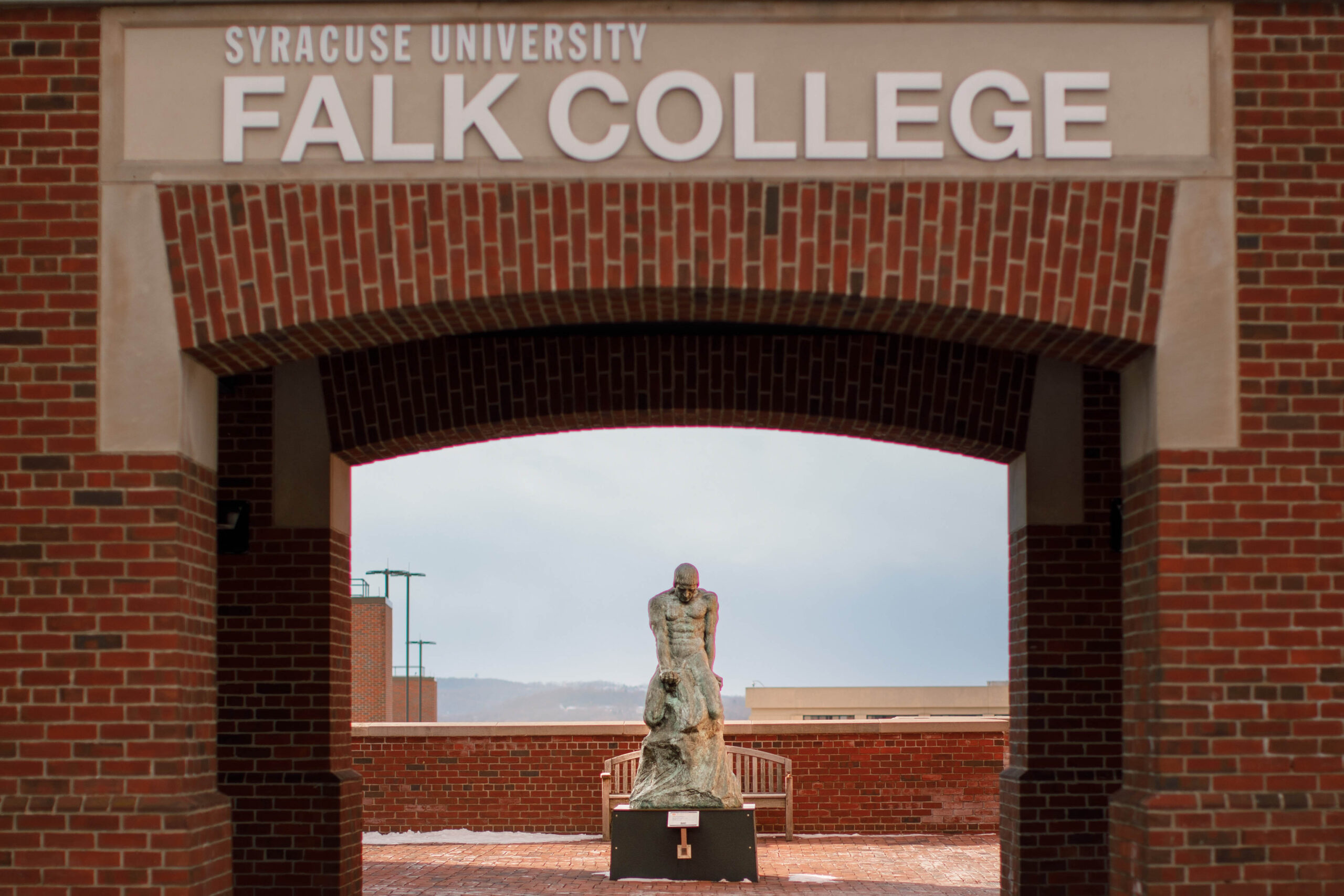
Avery Magee | Photo Editor
SU cut its nutrition science programs last semester, a year after announcing the closure of its food studies program, with these cuts largely justified by decreased student enrollment.
Nutrition science
The closure of the nutrition sciences program followed consultation with faculty on declining enrollment and significant overlap between the nutrition science and nutrition majors, Scalese said. She added that the meeting maintained an open-door policy and several faculty members offered their perspectives privately.
“We felt it was critical to have open lines of communication with faculty from the start and throughout the process,” Scalese wrote.
Maria Erdman, an associate teaching professor in the Department of Nutrition and Food Studies, said Tainsky told faculty about the changes to the nutrition science master’s, bachelor’s and minor programs without prior notice at the Aug. 27 meeting.
“They’ve been meaning to do this, but why it suddenly had to be popped on us, literally, with no discussion,” Erdman said. “Then we were told, ‘Okay, you have two months to come up with the final plan.’ It was very sudden, it was shocking.”
Department of Nutrition and Food Studies professor Margaret Voss also said there was a lack of faculty notice. In a statement to The D.O., Voss wrote she does not know why her account, as well as her colleagues’, differ from the university’s.
“From a faculty perspective, it does seem that the roll out of closures in our college was handled differently than in other colleges,” Voss said in the statement. “When I speak to colleagues in other units, they did seem to be part of the discussion and planning process for program closures.”
Scalese said Falk College is making data-informed decisions about the structure of its programs to streamline its academic offerings. Nutrition science’s restructuring aligns with Falk’s “strategic work” to prioritize academics, she said.
SU conducted portfolio reviews throughout the fall semester to “identify strengths” and “areas of improvement” in the university’s programs. Agnew said each school’s dean was given enrollment trends and market analysis to help guide reviews.
Chelsea Turner, the food justice chair at Cafe Sankofa, a nonprofit providing health education to Syracuse’s South Side neighborhood, said nutrition science programs help contribute to community betterment and health.
“One reason why, specifically at SU, it’s really good to have a nutrition science program is (that) the South Side is a food desert,” Turner said. “When you have people who can go to a college, not have to pay the additional fees for housing and maybe extra transportation costs, things like that, makes health education more accessible.”
Voss said faculty are “developing an alternative pathway” within the nutrition B.S. major to accommodate students. However, she said she had nothing to do with the program’s closure and could not speak to the “rationale or decision-making process.”
Consolidating the nutrition science and nutrition majors into a single major with specialized tracks allows the university “to build a more robust offering,” Scalese said, and avoid “diluting” resources across two programs with “significant duplication.”
Last year’s nutrition science graduating class consisted of 11 students, Voss wrote. Eight undergraduate students are currently enrolled in the program, Erdman said.
Capous said it was “eye-opening” to see that the major closing isn’t being widely talked about in the college.
Tracey Rodriguez, a junior studying nutrition science, said she wasn’t aware of the major’s transition. Despite this, she said she’s noticed a cultural shift in what Falk markets toward students.
“There’s definitely more of an emphasis on sports, and even in the emails we get from faculty,” Rodriguez said. “A lot of the opportunities that they talk about for ‘interesting people we’re bringing to campus’ are a lot more sports focused, whereas my freshman year, there were a lot more in different fields of healthcare and public health.”
Daily Orange File Photo
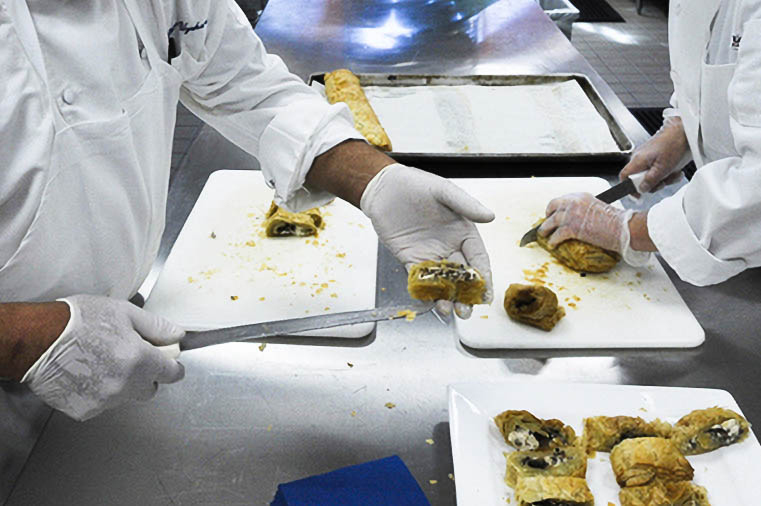
After a January 2024 email to food studies students announcing the major’s enrollment pause to “thoughtfully” consider the program’s future. The program was closed three months later.
Food studies
The food studies program explores the human connection to food and its impact on identity, politics, nutrition, environment and history, Small said. Throughout her four years, she has had the opportunity to volunteer at local food pantries and take cooking lessons in Falk’s teaching kitchen.
“The program was very tight-knit, so the food studies professors and students shared equal disappointment about the news,” Small said.
In the January 2024 email to food studies students, Falk Dean Jeremy Jordan said the school would “provide an opportunity to thoughtfully consider the future” of the program. The email added the program would not accept any new students for the Fall 2024 semester.
Small said she had a feeling this marked the program’s end. Three months later, the university cut the program entirely, she said.
“At this point, everyone was fairly certain this meant the pause was permanent, and I think a lot of us were still worried about how this would affect what classes would be available to us,” Small said.
Rick Welsh, a current sociology professor at the Maxwell School of Citizenship and Public Affairs, was hired in 2012 to start the food studies program after Falk phased out its hospitality management program. He served as the program’s department chair for seven years.
Scalese confirmed the food studies program experienced “consistent enrollment decline” over the past few years, leading to its closure. Welsh said that while the program’s closure was “sudden,” it wasn’t a huge surprise.
When creating the food studies program, Falk was developing its sports management program, Welsh said. He said he knew the college as a whole was going to experience big changes as it became “sports-focused.”
“I don’t want to say I’m glad food studies is closed, because we had some really great students, at the undergrad but especially at the master’s level, we went on to do really cool stuff,” Welsh said.
During the transition period, faculty moved to different departments, Small said. However, because the food studies department overlapped with the nutrition department, she felt a lot of her courses were kept the same, still taking cooking classes, agroecology and labor in the food chain.
“Our program grew closer as a result of this transition, as we felt our species was on the brink of extinction,” Small said.
In 2024, SU arranged a deal with Welsh to slowly stop teaching food studies courses at Falk and begin teaching sociology courses at Maxwell, he said.
Welsh currently teaches a course called “Farm to Fork,” a hands-on lecture class followed by a cooking lab. It allows undergraduates still enrolled in food studies to finish their degree.
Next year will be his last time teaching a food studies course, he said.
“We did that because they wanted us to continue to teach because they were still paying us and they also needed to get the undergraduates through,” Welsh said. “We got our grad students all through, but we still have a couple undergrads who need to get their electives.”
Despite the support of Falk faculty, Welsh said the transition was “otherwise difficult,” especially as he continues to teach food studies courses in the Falk building.
“It’s emotional for me to go back over there to teach food studies classes, knowing all the work we put into it, and it’s not a clean break,” Welsh said. “But I understand why we’re doing it.”
Welsh said he’s glad the food studies cut was handled with “some humanity” and that most of the faculty stayed together during the program’s closure. However, he said he’s “much happier” and “better off” teaching at Maxwell.
All former food studies faculty are still employed at SU, and most have transitioned to positions at Maxwell. One is still employed at Falk, but is pending retirement, Scalese said.
“It was just such a heavy lift to keep that program going. There were very few of us,” Welsh said. “It was just increasingly not a good fit.”
Looking forward
There are no plans to reinstate the food studies program as a whole, Scalese confirmed in November. However, Small still hopes to see SU implement the fundamental aspects of the program on campus in other ways.
“I am really sad but honored to be one of the last food studies alumni,” Small said. “Most people I meet have no idea what food studies entails, but it really is such an underrated and understudied field, because food impacts most aspects of our life.”
SU will continue to offer select food studies and culinary courses under the “NSD” prefix, Scalese said.
As the new nutrition science track faces review by the University Senate Curriculum Committee, Voss is confident the merged program will supplement the former major’s cut.
“We are deeply committed to maintaining this record of student success,” Vass wrote. ”(The track) is specifically structured to allow students to complete the full set of allied health prerequisites.”
Both food studies and nutrition science, as it stands, will be phased out as the majors graduate. The last class of nutrition science will graduate in 2029.
CORRECTION: A previous version of this article said Erdman claimed nutrition science faculty were informed of the program’s closing before an October University Senate meeting. Erdman was referring to the Aug. 27, 2025 meeting with Falk Senior Associate Dean Scott Tainsky. The Daily Orange regrets this error. The article also previously stated that Erdman claimed the program saw declining enrollment. Erdman did not say the program saw declining enrollment explicitly, she later clarified. The Daily Orange regrets this error.