

Opinion: Our social media personas online contribute to growth offline
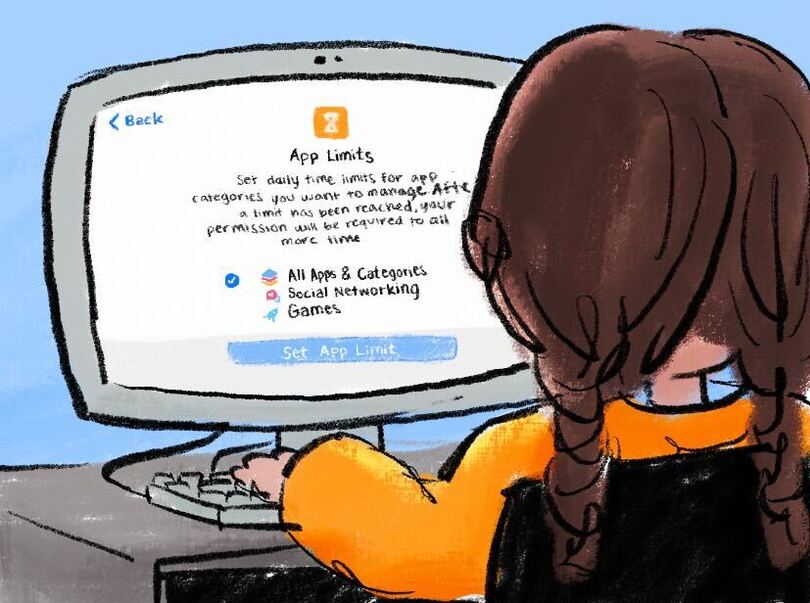
Our columnist argues being well-versed with social media is essential in navigating today’s workforce. Social media now transcends all fields of employment, he claims. Emma Lee | Contributing Illustrator
Get the latest Syracuse news delivered right to your inbox.
Subscribe to our newsletter here.
As the new year rings in and many reevaluate habits, social media use is on the chopping block once again.
CNN, NPR and The Guardian have all published guides to cutting down on scrolling in the past year. The Los Angeles Times recently profiled the oxymoronic rise of the “anti-doomscrolling influencer,” and the surge is beginning to gain national attention. Australia even recently banned social media use for adolescents under 16.
Lists of “ins and outs” for 2026, often posted to TikTok or Instagram, commonly highlight spending less time on social platforms as a top “in.” If it wasn’t already obvious from friends and family kvetching over ridiculous lengths of time lost to Instagram Reels, one thing remains clear: Spending less time on social media is trending.
Despite its flaws, casting social media as an all-encompassing demon for modern problems ignores the unexpected beauty and necessity of these platforms.
Don’t get me wrong, social media makes quite the attractive villain for many of society’s ills. Our country is more politically polarized than ever. There’s an oft-discussed “male loneliness epidemic” alongside a broader loneliness epidemic across genders. There are mounting concerns on its impact on mental health – though this may sound foreign to a Syracuse University student, given our party scene – the nation is facing a party deficit.
But long before social media existed, people curated themselves. The clothes we put on in the morning, the music we play around others, the tone we take in conversation, even what we choose to eat — these are all conscious choices. Social media is simply an extension of things we already do. It didn’t invent performance; it just grants us an audience.
The fact is, most of us are fairly fragile. We all wish to be liked, admired and, most of all, accepted. As much as I’d like to advocate for a world free of judgment where we could all drop the acts and love thy neighbor for their – and our – awkward, undistinguished selves, I think we’re well past that possibility. The personas we build online are not always fake. Often, they are aspirational drafts of ourselves.
We should enjoy and have fun with the personas we cobble together online and be grateful for the ease in which we act as someone we want to be. In the pre-social media days, people were still put on pedestals and strangers still seemed aspirational, but the media that circulated these individuals kept them at arm’s length.
The people featured on magazine covers or playing characters on TV once seemed worlds away. They might as well have lived on a different planet. Today, social media allows our aspirational figures to be closer to us than ever. Not only are the best-kept fashion, beauty, restaurant and fitness secrets now readily available and shared en masse with anyone who wants them, but the consumer now has the power to assume the position of trendsetter.
Some of the most powerful and popular social media stars today are college-aged and startlingly transparent. They may live more glamorous lives and have much more money, but there’s something to be said for the fact that a significant portion of influencers like Kylan Darnell and Katie Fang’s content shows them not just getting ready but also opening up to their audience.
Engagement doesn’t even really matter in this equation. Even if only your friends see your posts, the notion that your life is worth sharing is rather beautiful. To some, this may sound like a daunting prospect, but in fact can build confidence and develop the muscles of self-expression.
At the risk of sounding like a brainwashed LinkedIn zombie, skills and proficiencies give people an advantage in many job markets. Media jobs demand them outright or ask for at least a cursory understanding of aesthetics or how people respond to them and even corporate roles consistently reward them.
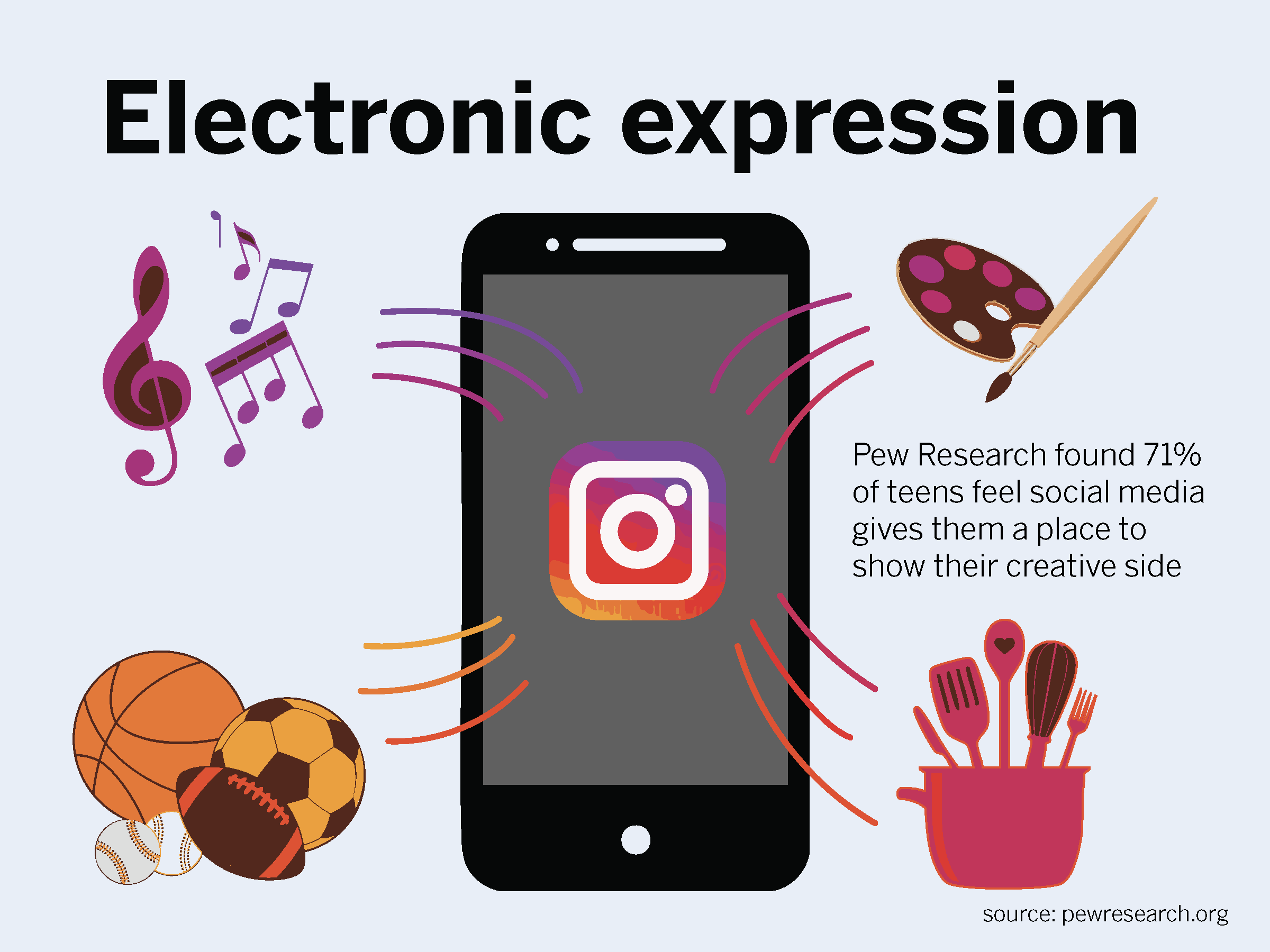
Adelaide Guan | Design Editor
Learning how to convince an audience of a controlled narrative, curating a strong and consistent visual aesthetic, storytelling, photography and even writing are all muscles flexed when creating social media content and they can absolutely prove useful in a variety of professional settings.
Even corporate jobs now benefit from a grasp of image making, audience cultivating and narrativising something seemingly ordinary. Companies ranging from Nordstrom, DHL, Portrillos, Dell, Adobe and Delta Airlines are encouraging employees from all sides of their process to increase their social media presence to assist the brand.
Some jobs even take your social media presence into account when considering who to hire. Understanding how to curate your online presence and how you may appeal to future employers has become a valuable professional skill.
Social media’s obsession with aesthetics and self-improvement is often looked down upon. But packaging activities like reading classic literature, going to the gym or spending time in nature in a glamorous, accessible way pushes people to adopt strong habits that might otherwise be difficult to incorporate into their lives.
Contrary to what has been popularized, social media can be an essential tool in plugging yourself back into an increasingly digital world. Social apps have become an essential link in maintaining community and sustaining relationships.
Outside of your personal network, social media can help keep you informed – in fact, it’s how most Americans learn of current events. As long as you can sift through the noise and process the overload of information, you can digest and absorb essential information through its spread on social apps.
This even goes a step further than simply gathering information for social media use through the sharing and spreading of information, public discourse and learning how you could put your time or resources into valuable causes have been found to increase one’s civic engagement. In an increasingly apathetic nation, increasing engagement in meaningful action can go a long way.
This is not to say that much of what people have to say about social media is incorrect, or even that it hasn’t introduced some new woes into society. To understand the benefits of these platforms, what they can do for us, and how to best use them in moderation would be to optimize their place in your life. Treating it as a boogeyman or trying to run away from it entirely would be to turn your back on an increasingly essential part of modern life.
Ben Newman is a sophomore majoring in advertising. His column appears bi-weekly. He can be reached at ibnewman@syr.edu.