Opinion: Welcome new semester with sustainable habits, resist financial FOMO
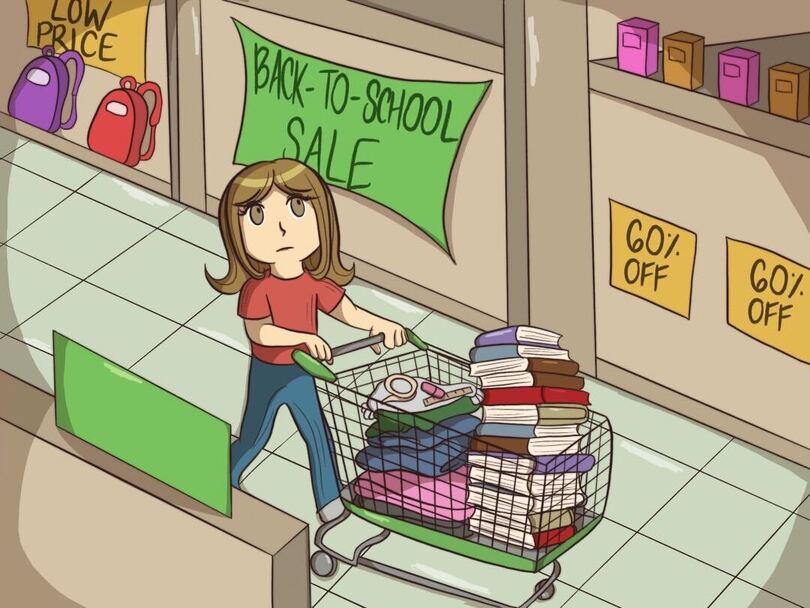
Social media influences college students to buy an unnecessary number of expensive items at the start of each term, our columnist claims. We must recognize these inflated prices and resist the urge to “fit in” with our peers, she argues. Maria Masek | Contributing Illustrator
Get the latest Syracuse news delivered right to your inbox.
Subscribe to our newsletter here.
With a new semester underway, it’s easy to splurge on items branded as back-to-school must-haves. Before making any purchases, though, students should consider how unnecessary shopping sprees affect both the environment and their wallets.
Between the holidays and the chance to work over break, many Syracuse University students are returning to campus with extra money in their pockets, and are eager to spend it on room decorations, clothing and other items just in time for the start of classes.
Still, it’s important to be cognizant of what will happen to these items once it’s time to go home. The average college student throws away 640 pounds of trash per year, with the majority of it discarded during move-out. Adding such a large amount of trash to landfills wastes expensive, usable goods and causes significant harm to the environment.
On average, students at private institutions like SU spend about $2,858 each year on personal expenses such as dorm decorations and clothing. College dorms and off-campus apartments are known for the very expensive trash they produce at the end of the academic year. In fact, many people who live near college campuses go dumpster diving in order to salvage the costly, barely used items students tend to leave behind.
A major contributor to this overspending is purchases motivated by social media trends. About 70% of Gen Z say they experience financial fear of missing out, or FOMO, due to social media, meaning they make financial decisions influenced by what they see other people investing in or purchasing online.
Many influencers have made a profit by specifically targeting college students. According to the New York Times, a subgenre of Momfluencers has turned to social media with dorm room inspiration videos, which encourage students to spend thousands of dollars on unnecessary decorations.
For students, this sense of FOMO is further reinforced by campus culture. At a private institution like SU, students come from a wide range of financial situations, yet one Pinterest-worthy dorm room can pressure others into overspending on decorations they don’t need or cannot afford to “fit in” with their peers.
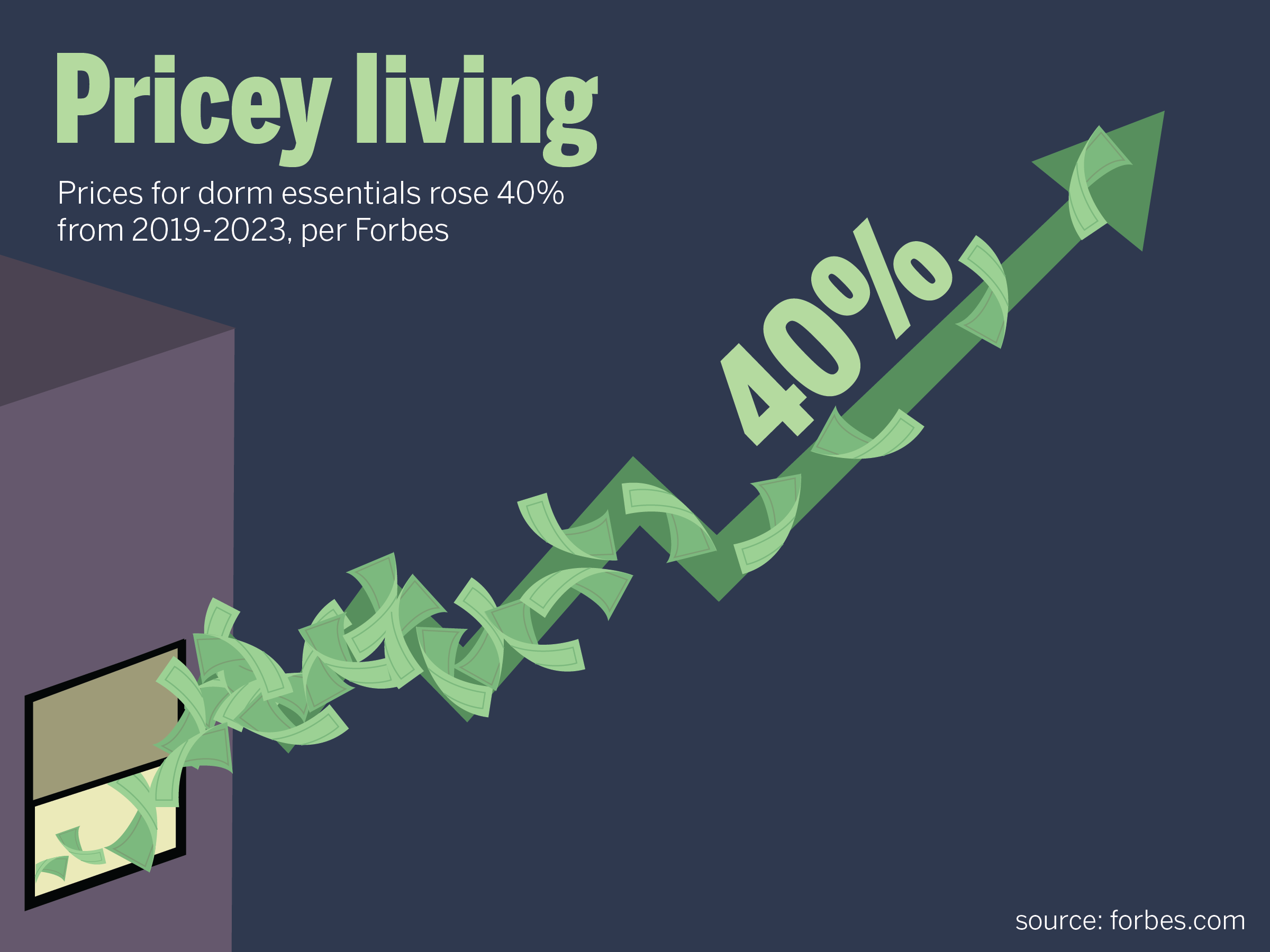
Zoey Grimes | Design Editor
There are, of course, necessary purchases students must make at the beginning of the semester, such as textbooks, electronics and other school supplies that cannot be overlooked. But, it’s surprisingly simple to reduce the cost of these purchases and prevent them from ending up in the garbage at the end of the semester.
Instead of buying textbooks, SU students can rent used textbooks or purchase digital copies through the university bookstore. This semester, I’m renting two textbooks for only $26, which would have cost me at least $36 if I had purchased them online.
The bookstore also offers students the option to resell their used textbooks back to them for 50% of what the student paid. Textbooks bought or rented through the university bookstore can also be returned for a full refund, preventing wasted money on materials they no longer need.
Another option is to resell your purchased textbooks on websites such as ThriftBooks or Ebay. When you rent your textbooks instead of buying new ones, it also helps limit the environmental impact of textbook production. Thirty-two million trees are used to produce books yearly, and 640,000 tons of books are thrown away in a year, including textbooks. Plus, when you rent textbooks from SU, picking up the textbook in person instead of having it shipped to the dorm releases less carbon emissions into the atmosphere.
Reselling purchased textbooks is a great way to lower the cost for other students as well, all while making back some of your money in the process.
Coursework can be demanding, and sometimes requires students to upgrade their devices to something that better suits their needs. That doesn’t mean a functional electronic device has to go to a landfill — you can resell your old device online instead of trashing it, putting some extra cash in your pocket.
If and when you find yourself with items you don’t need or aren’t sure what to do with, don’t just throw them away. SU provides students with the service, ‘Cuse Collections at the end of the year, which accepts “gently used and unwanted items” from students. They accept appliances, clothing, accessories and non-perishable food items. Leftover food goes to the South Campus food pantry, and the rest of the items are given to local organizations and nonprofit groups that give back to the Syracuse community, according to their website.
As college students, it’s important we be financially and environmentally responsible. We need this planet to last us a long time. The small actions we take today to stop overconsumption help preserve our bank accounts and the environment.
Hannah Hewitson is a freshman majoring in journalism. She can be reached at hrhewits@syr.edu.