


F
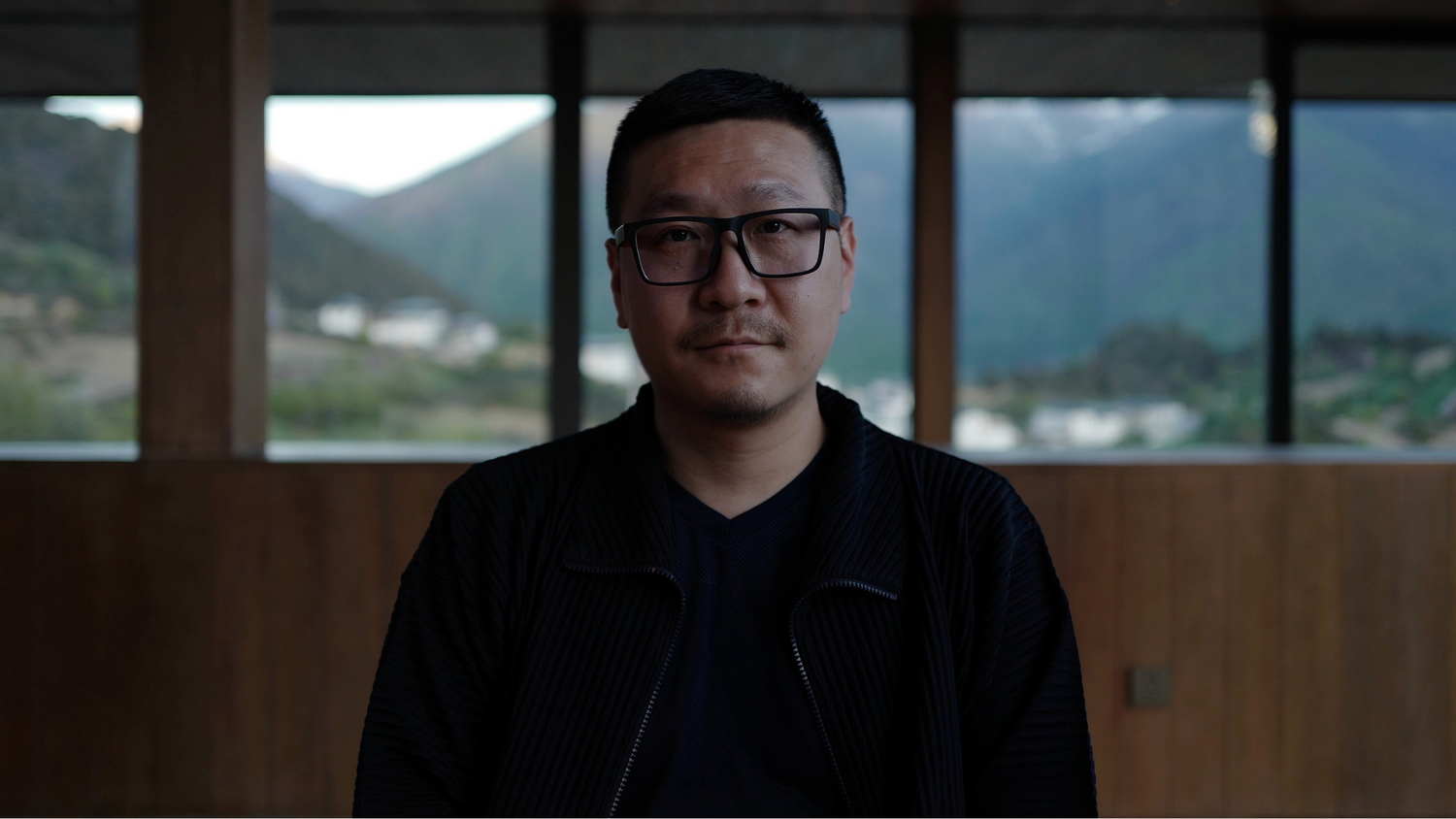
ei Wang moved through the world with an unstoppable spirit, leaving an impact that, much like his name, soared above and beyond.
“The name Fei means ‘to fly,’ and that is exactly what he taught his students to do,” said Vittoria Buccina, assistant dean of enrollment at Syracuse University’s School of Architecture. “To rise, to push themselves and to become the best versions of themselves.”
Fei, 45, and a professor at SU’s School of Architecture, died in December following a traffic accident in London. The professor taught at SU for over a decade. He also served as the School of Architecture’s China programs director and master’s program coordinator. Outside of the university, Fei was a highly respected practicing architect.
After earning his bachelor of architecture at Tongji University in Shanghai, Fei left his home country to pursue his academic career in the United States, earning degrees from Virginia Tech and McGill University.
“To know Fei, even a little bit, is to be immersed within a global matrix of pedagogy and design,” said architecture professor Ted Brown. “He’s always on the pulse.”
Along with his teaching career, Fei was an editor for several architecture publications, a curator and an entrepreneur. His work was exhibited across the world, earning several research and design awards.
“He is so much more than what you could read on a piece of paper or on a Wikipedia page,” said Caroline Bowling, one of Fei’s students. “The energy that he brought into his space, and the passion … that’s much more of a measure of who he is.”
Known for his “unconditional mentorship,” Fei’s dream was to change the world through education, his husband and business partner Nan Wang wrote to The Daily Orange.
Students said Fei’s dedication to helping them was unlike that of a regular professor. They recall him staying on calls late into the night, assisting them with their projects, taking the time to send other work to reference and connecting them to working architects.
“His relationship with students didn’t feel like that between an elder and a child,” Nan Wang wrote. “It felt more like a friendship. He liked helping friends.”
Fei could have a sharp tongue and stern critiques — but his students agreed that his feedback pushed them to become better. They appreciated his honesty, and when he praised their work, they knew it was something to be proud of.
“He was always thinking about his students and what might be helpful for them and their growth,” said architecture student Marley McDonough.
McDonough said every time she spoke with Fei about her work, his advice pushed her projects further than she could’ve ever gone without his guidance.
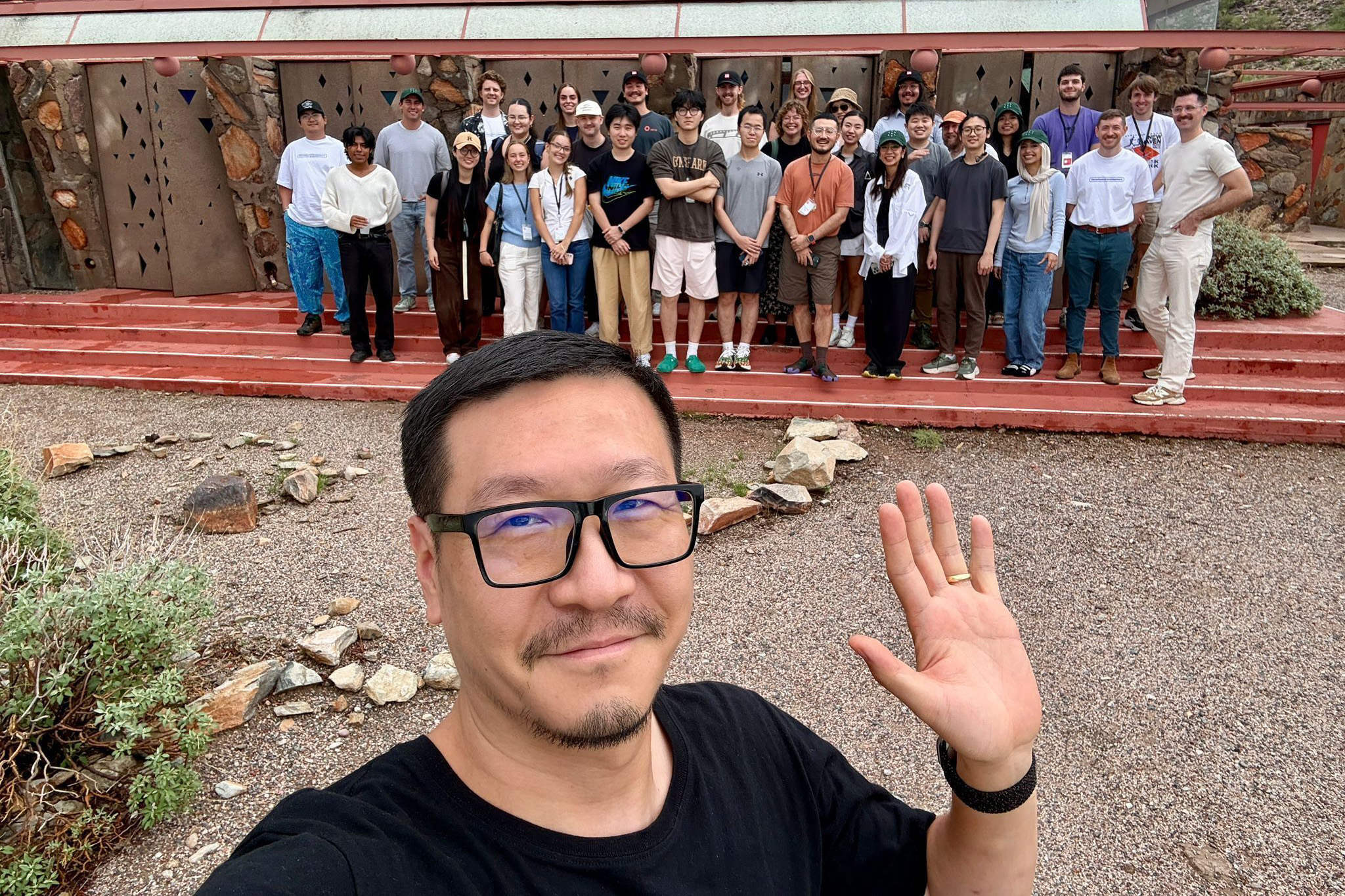
Fei poses for one of his classic selfies on a trip to Arizona with his studio class last fall. His students said Fei was constantly rounding up the group for photos throughout the trip, which they now cherish. Courtesy of Caroline Bowling
His commitment to his students was evident during the COVID-19 pandemic. When Chinese international students weren’t able to come to campus, Fei was instrumental in creating three in-person architecture studios in China, connecting SU professors to students across the globe.
During a memorial service held by SU’s Hendricks Chapel in January, Fei’s students and colleagues shared their memories of the professor. Furui Sun, one of Fei’s former students, said Fei’s belief in him was pivotal during a semester where he was struggling and felt unsure about his career.
“Fei noticed the things you thought were invisible,” Sun said during the service. “The way you hesitated before speaking, the way you rushed when you were unsure … in my hardest moments, it was his faith that told me I could do it.”
For some students, Fei played a role in their college careers before they even attended SU. His “persuasive” character and “remarkable charisma” helped ease parents’ concerns when deciding where their children should study.
“During admissions, many parents chose Syracuse Architecture because Fei himself was teaching there,” Nan Wang wrote. “They trusted him and relied on him.”
Fei understood many of the worries his students encountered at school. Yifan “Ivan” Shen, a member of the COVID-19 cohort, first met Fei in the pandemic-era studios in China during his first year at SU. When he found himself struggling during his fourth year on SU’s campus, he said Fei would share his own struggles from his time as a student adjusting to life in the U.S.
His relationship with students didn’t feel like that between an elder and a child. It felt more like a friendship. He liked helping friends.Nan Wang, Fei Wang's husband
But outside of those deeper conversations, Shen also sought advice on all kinds of questions. Fei advised him on where to find a local Asian market, what dorm life looked like and how to use Uber.
“He’s the kind of person that goes out of (his) way to take care of your visa questions,” Shen said.
Although his work “took up most of his life,” Fei’s husband said he enjoyed watching relaxing movies when he was off the clock, his favorite being “Love Actually.”
Fei, who always seemed to be travelling, loved to explore. Last year, Fei and Nan Wang did not waste a second after buying a car. They immediately began exploring nearby waterfalls and national parks. His travels and the remarkable architecture and places he’d seen were a point of pride for Fei — and something Nan said he often brought up in conversation.
Despite numerous projects to take pride in, Fei did not just measure his success by awards, but by the accomplishments of those around him.
“There is also something else I believe he was proud of—things related to me,” Nan Wang wrote. “When I taught my first class at Syracuse Architecture or gave my first lecture, he was extremely happy.”
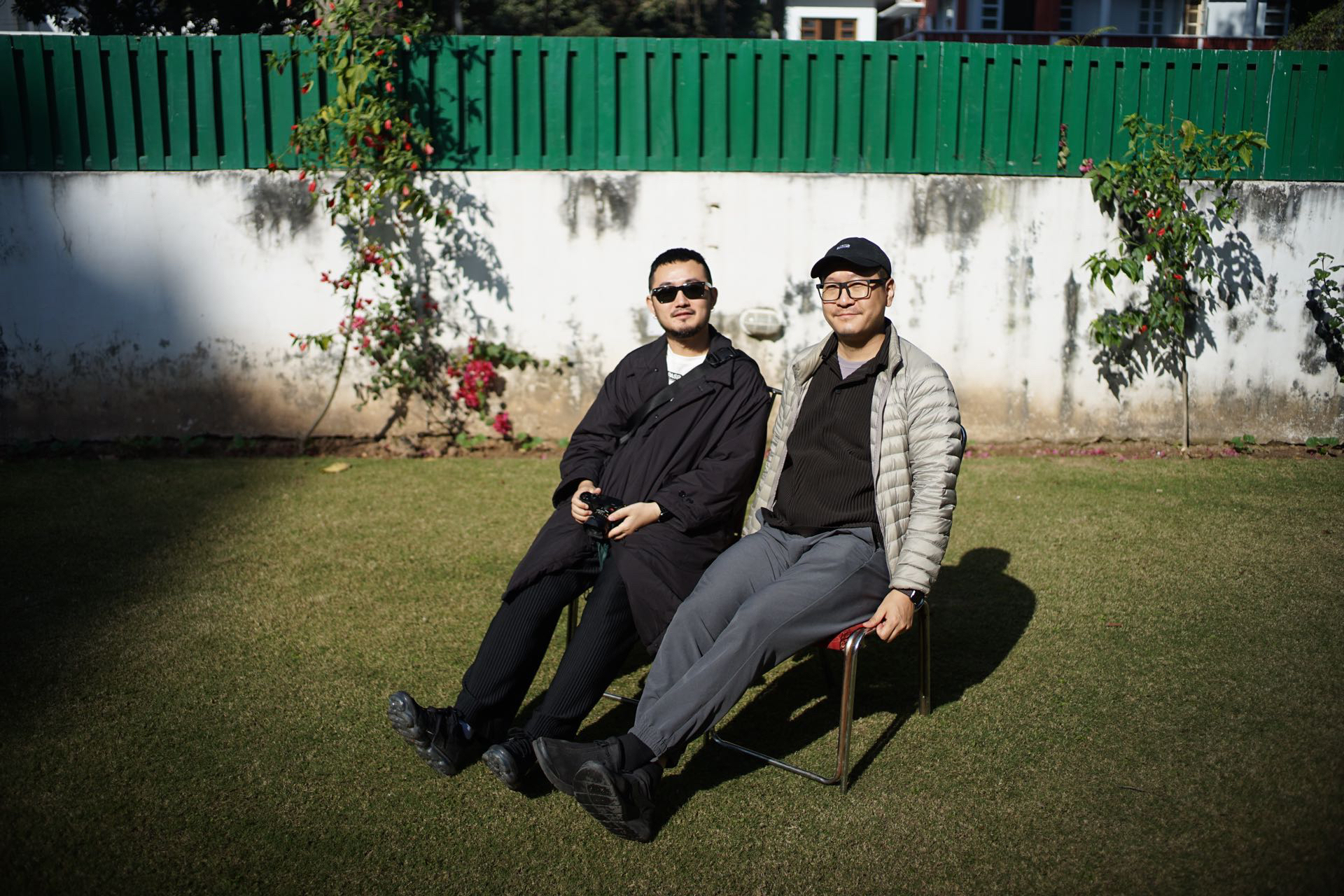
Fei and his husband, Nan Wang, were together for over 11 years. Nan said that although he was never formally his student, he influenced him every day — “I feel that a part of my being belongs to him,” Nan wrote. Courtesy of Nan Wang
Always working to connect students, graduates and professionals, Fei developed an “informal network” between Chinese alumni. Through organizing panels and information sessions, Fei played an essential role in forming a bridge between his students and the professional world.
Bowling, who also attended SU’s memorial service, said even after his death, Fei was able to continue bringing people together in his circle. They said they grieved with faculty members they had never met before.
“To continue to facilitate connecting people, even after he has gone,” they said, “(is) a very uniquely Fei thing to be able to (do).”
Shen said he hopes to work with SU to establish an official Chinese alumni association, carrying on the community Fei fostered through his informal network. Shen also wants to organize mentorship events to continue Fei’s legacy.
Although Buccina’s longtime friend is gone, during his memorial she said she believes his spirit will remain in “every studio, every journey and every student” he mentored.
“His mark on the world of architecture will endure, and so will our gratitude for having known him,” Buccina said. “He taught us how to fly.”
Photograph courtesy of Nan Wang
Published on February 26, 2026 at 1:50 am