SU’s Hair Me Out celebrates Black entrepreneurs, student businesses
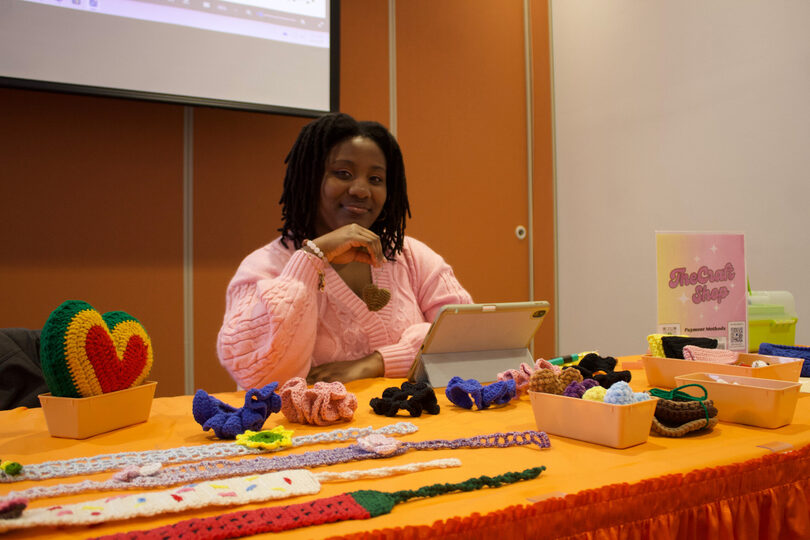
From body care products to crochet, Hair Me Out emphasized the importance of honoring Black student businesses. By bringing together different businesses, the event highlights not just individual talents but also the Black community. Isabella Flores | Contributing Photographer
Get the latest Syracuse news delivered right to your inbox.
Subscribe to our newsletter here.
Colorful crafts ranging from press-on nails to skincare products and crochet hats scattered across the Schine Student Center’s room 304. Students browsed the tables, stopping to examine items and chat with the vendors. Though each was different, the booths shared a common theme: showcasing Black student entrepreneurs on campus.
“To support a Black-owned business means supporting not just the person, but the community they are part of,” said Amelia Martin, a SUNY ESF senior and founder of The Craft Shop.
On Monday, Syracuse University Belonging and Student Success hosted its annual Hair Me Out and the Black Flea Market Expo. As a part of the university’s Black History Month programming, Black student entrepreneurs each set up their own exhibit to sell products from their businesses.
Senior Catherine Genao showcased her new body care line, Bodyfide, which she launched this month. Genao said she combined her chemical engineering major and creativity to create the brand. She began making body care products to help people with dry skin, like herself, and even created an oil with different-colored glitters.
“Each of the colors that I have — purple, silver-pink and gold — is based on skin tones, so everyone can feel welcome and embrace who they are,” Genao said.
Genao said it can be difficult to find your identity as a Black student at a predominantly white university. Through Bodyfide, Genao crafts products that are inclusive and designed for everyone, which helped her connect with her cultural identity on campus.
“It’s very beautiful to see everyone together — different backgrounds, different skin tones and different ideas of how they also identify themselves within their craft,” Genao said.
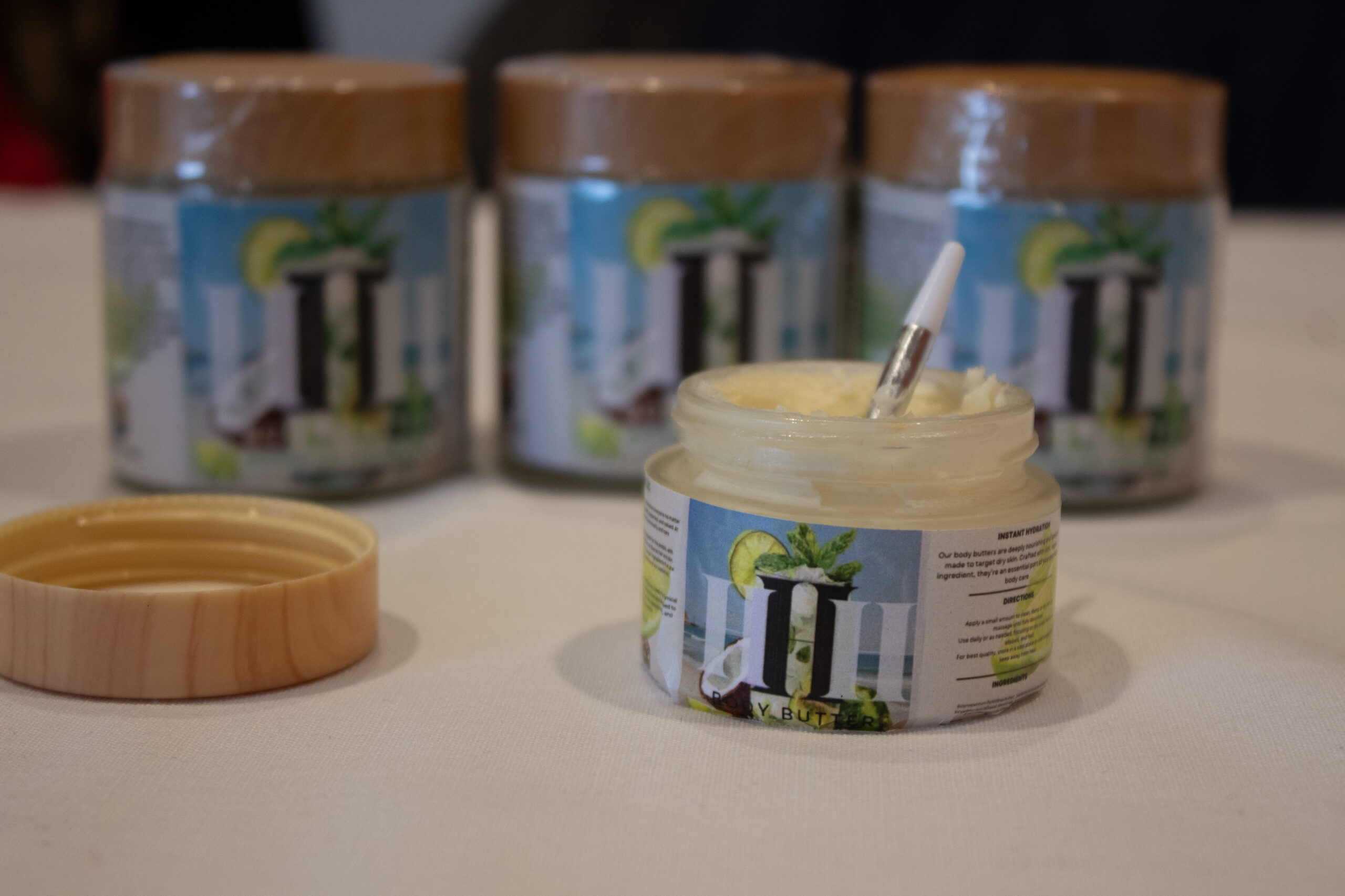
Catherine Genao started Bodyfide to create inclusive body care products for all skin tones and types. Genao used her identity and her studies in chemical engineering to launch Bodyfide.. Isabella Flores | Contributing Photographer
Martin’s shop sells crochet, embroidery and punch needle projects. She has been crocheting since 2015, and decided to create her shop during her freshman year after sharing her work with her friends and family, she said.
Martin said events like Hair Me Out are important steps toward independence for members of the Black community — for them to creatively express themselves and share a piece of themselves with the public.
“It’s really important to support Black-owned businesses because it is just something that you don’t see very often, and even if it’s not something you see, it’s just like that love and support from your community,” Martin said.
Students attended the event to support the creators and learn more about Black-owned businesses on campus. SU senior Lauren Newman said spreading awareness of Black-owned businesses is important to share their culture with others across campus. She said she appreciated seeing students putting in work outside of academics to share their culture and talents with their peers.
SU senior Zari Heron said her crochet business, StitchesbyZ, is a fun way for her to express her identity and share her craft with the people she loves. Heron is part of Zeta Phi Beta, a historically Black sorority, where she first began making hats and other accessories for her sorority sisters. To her, creating work that expresses her identity as a Black woman is an important part of her life.
“Since that’s a really big part of my identity, especially being a Black student here on campus, being able to create things for my organization and other historically Black organizations is important to me,” Heron said.
For Newman, Hair Me Out is important for raising awareness of Black-owned businesses and ensuring that people know they are here to promote their culture and share it with others.
“Our culture is here, but it’s not just for the viability,” Newman said. “We want to share with the world, especially in this world and the climate that we’re in, it’s important to just share that love that we have.”