
Hilary Duff’s candid artistry in ‘luck… or something’ offsets shaky execution
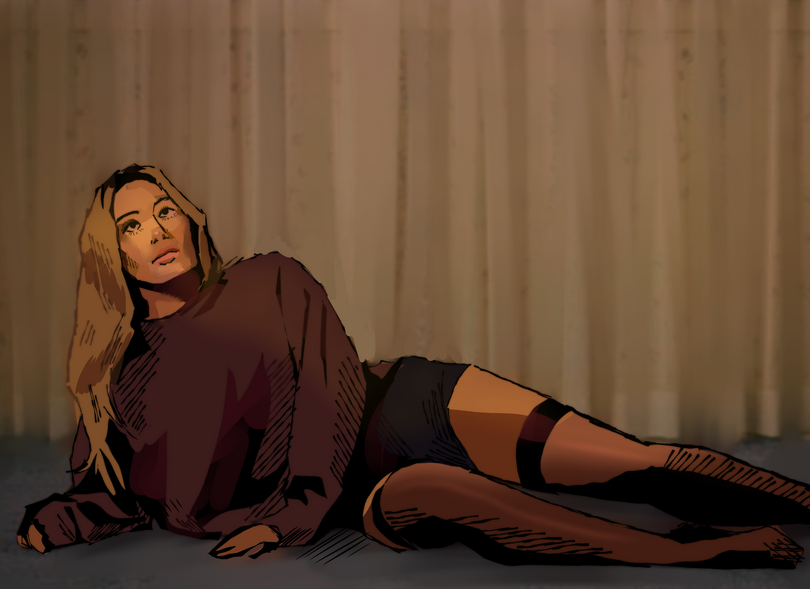
In Hilary Duff’s album “luck… or something," the singer doesn’t reinvent the wheel but reconnects her roots as a musician. The album marks Duff’s first musical release in 10 years since stepping away to focus on acting and motherhood. Jay Cronkrite | Contributing Illustrator
Get the latest Syracuse news delivered right to your inbox.
Subscribe to our newsletter here.
When Hilary Duff announced the release of “Mature,” her first single in 10 years, I, like most fans, was pleasantly surprised. It teased a new chapter for the return of the music star.
Duff, the former “Lizzie McGuire” star and emblem of millennial culture, took a leave of absence from the music industry after 2015’s “Breathe In. Breathe Out.” to focus on her acting career and motherhood. A decade later, Duff is back with her sixth studio album, “luck… or something.”
Released on Friday, “luck… or something” consists of 11 tracks. Duff comes into her own in her latest album, produced by her husband Matthew Koma. Her earlier music was representative of her Disney Channel image, with juvenile lyricism. This album reasserts her as a full-fledged pop star, though still with some imperfections.
The first song, “Weather For Tennis,” sets the tone for the album’s honest and raw themes backed by punchy synths. The song is about a strained relationship, repeating the same toxic tendencies over time. The album’s opener is lyrically strong, but the instrumentals feel muffled and Duff’s subpar vocals aren’t able to carry a weak beat to greatness.
“If it ain’t the weather for tennis then / I guess we can / Argue until dinner time,” Duff sings.
“Roommates” continues the opener’s themes as Duff explores stale love. Though the lyrics are similar to the previous track, the production feels lighter this time, making for a simultaneously danceable and sincere track.
“We Don’t Talk” sees Duff dive into her complex relationship with her sister, with whom she is estranged. While its basic lyrics aim at relatability, Duff lacks the emotional conviction to make the sentiment worthwhile. The flat, repetitive lines are reminiscent of her early work, and Duff’s vocals are monotonous. Meanwhile, “Future Tripping” turns the album’s genre on its head, with a groovy beat accompanying the lyrics about anticipatory anxiety — it’s a certified sad girl bop.
“I’m worried about / Sh-t that hasn’t happened / Entertaining every doubt,” Duff sings.
“Growing Up” is a song about aging and friendship. The lyrics are unapologetically basic and the production is bland, but its deeply millennial energy makes it a surefire hit for Duff’s target audience.
The album’s first half shows promise, with interesting indie pop production, but the lyrics are a glaring flaw. Luckily, the second half improves upon itself lyrically.
“The Optimist” sees Duff move into ballad territory, and she does so successfully. Duff returns to themes of familial estrangement, this time about her father. The haunting instrumentation and Duff’s soft vocals do justice to the song’s message. The song’s distinctive instrumentals and pensive lyrics make it a standout in Duff’s discography.
“I was an emotional architect / Who knew your dimensions more than you,” Duff sings.
“You, From The Honeymoon” brings a similar breezy vibe like “Future Tripping” and resonates thematically with “Roommates.” It’s a solid track, but it doesn’t provide anything that previous tracks haven’t already.
“Holiday Party” is arguably the most raw track on the album, as Duff sings about feeling insecure in a relationship. The song allows listeners to see a new side of Duff, and it’s refreshing. The track’s lyrics reflect that, making it one that encompasses Duff as a relatable, candid artist.
“In my imagination / She’s there with her eyes so starry / Holding your car keys,” Duff sings.
The album’s first single, “Mature,” is a strong leader, backed by a spunky guitar riff and unexpected off-the-cuff lyrics like “She looks / Like she could be your daughter” in reference to an ex dating inappropriately young. The next song, “Tell Me That Won’t Happen,” is another song where Koma’s upbeat production shines, as Duff sings about the dangers of her young fame.
The album closes with “Adult Size Medium,” a deeply personal power ballad where Duff continues to traverse the subject of her young fame. “Adult Size Medium” makes up for earlier tracks’ lyrical weaknesses. Its profound metaphors and emotionally resonant build-up make it the perfect closer to the album.
“I’m waking up to a dream sequence / Sometimes I can’t see me in it,” Duff sings.
“luck… or something” is worth a listen. Duff has never been known as a vocalist, but Koma’s production is proficient at hiding the shaky parts and Duff’s lyricism ranges from serviceable to spectacular. She’s not going to reinvent the wheel, but Duff’s return to music feels authentic, and it shows in the work.