Opinion: Burnout doesn’t spare college students — or Olympians
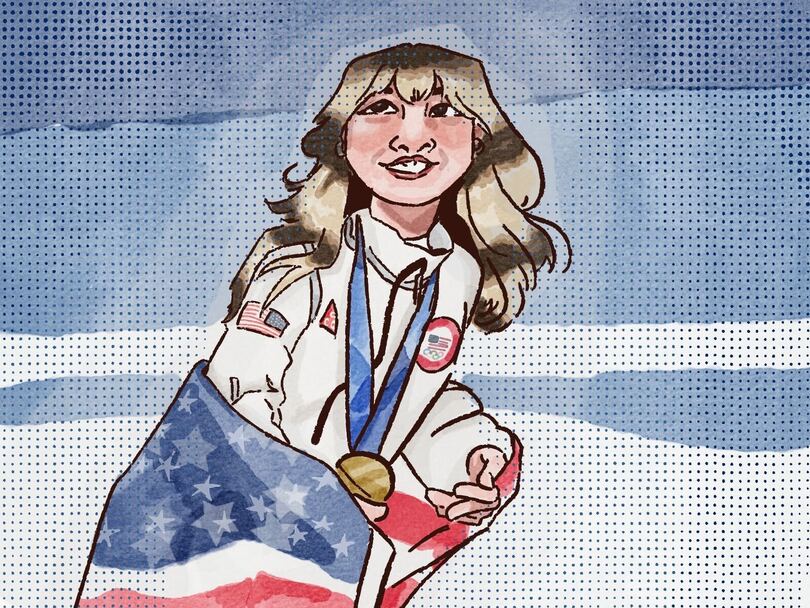
Ilia Malinin’s recent struggles and Alysa Liu’s mindful return show that high pressure takes a toll, even on Olympians. Our columnist writes students must similarly take breaks to prevent burnout. Kendall Thompson | Contributing Illustrator
Get the latest Syracuse news delivered right to your inbox.
Subscribe to our newsletter here.
Last week I skipped class. Sorry, Mom.
I didn’t skip to clean my room or tackle the assignments that have been sitting open on my computer for a week. Instead, I sat on my couch and doomscrolled on TikTok. Video after video blurred together until one caught my eye: a live reaction to Ilia Malinin falling during his final skate at the 2026 Milan Cortina Winter Olympics.
Malinin, a figure skater representing Team USA, was projected to win gold by an extreme margin. Before his 2026 Olympic run, he carried a two-year winning streak and two consecutive world titles in men’s figure skating. He is also the only figure skater to have successfully landed a quadruple axle — a feat that earned him the nickname “Quad God.”
Heading into the final skate, Malinin was en route to gold, sitting in first place with a hefty lead. Then everything unraveled. He fell twice, and several jumps were downgraded. By the end of the performance, he had dropped to eighth place, falling off the podium entirely.
After the shocking performance, Malinin began reposting videos on social media with concerning messages that he has since removed. One read, “Your little boy is tired, Mom.” He later shared his own post, “When I get home and step into my room and my eyes start watering because no one knows how hard I’m truly trying.” This is just a glimpse into the weight elite athletes carry behind the scenes.
This story is not a rare one. Alysa Liu, another American figure skater, retired at just 16 years old after her run in the 2022 Beijing Winter Olympics. Liu began skating at 10 years old and, by 13, she became the youngest champion in the competition’s history, winning the U.S. Figure Skating Championships.
But after the 2022 Winter Olympics, Liu announced in an Instagram post that she was retiring from competitive skating. She wrote she felt “trapped” and “stuck” through the rigorous training process, fading passion and limited control over her programs. She also pointed to the extreme expectations placed on her at such a young age. For Liu, stepping away from skating was the only way she felt she could regain a sense of freedom and control over her own life.
Ilyan Sarech | Design Editor
Surprisingly, Liu came back for the 2026 Milan Winter Olympics to compete for Team USA. This time, though, she declared that she was coming back on her own terms — taking days off as needed, having creative input and being in control of her nutrition and exercise plans.
Liu ended up winning gold last Thursday — both with Team USA and women’s figure skating — and did so with zero regrets.
“Quitting was the best decision I ever made … and coming back was the best decision I ever made. I don’t make bad decisions,” Liu said.
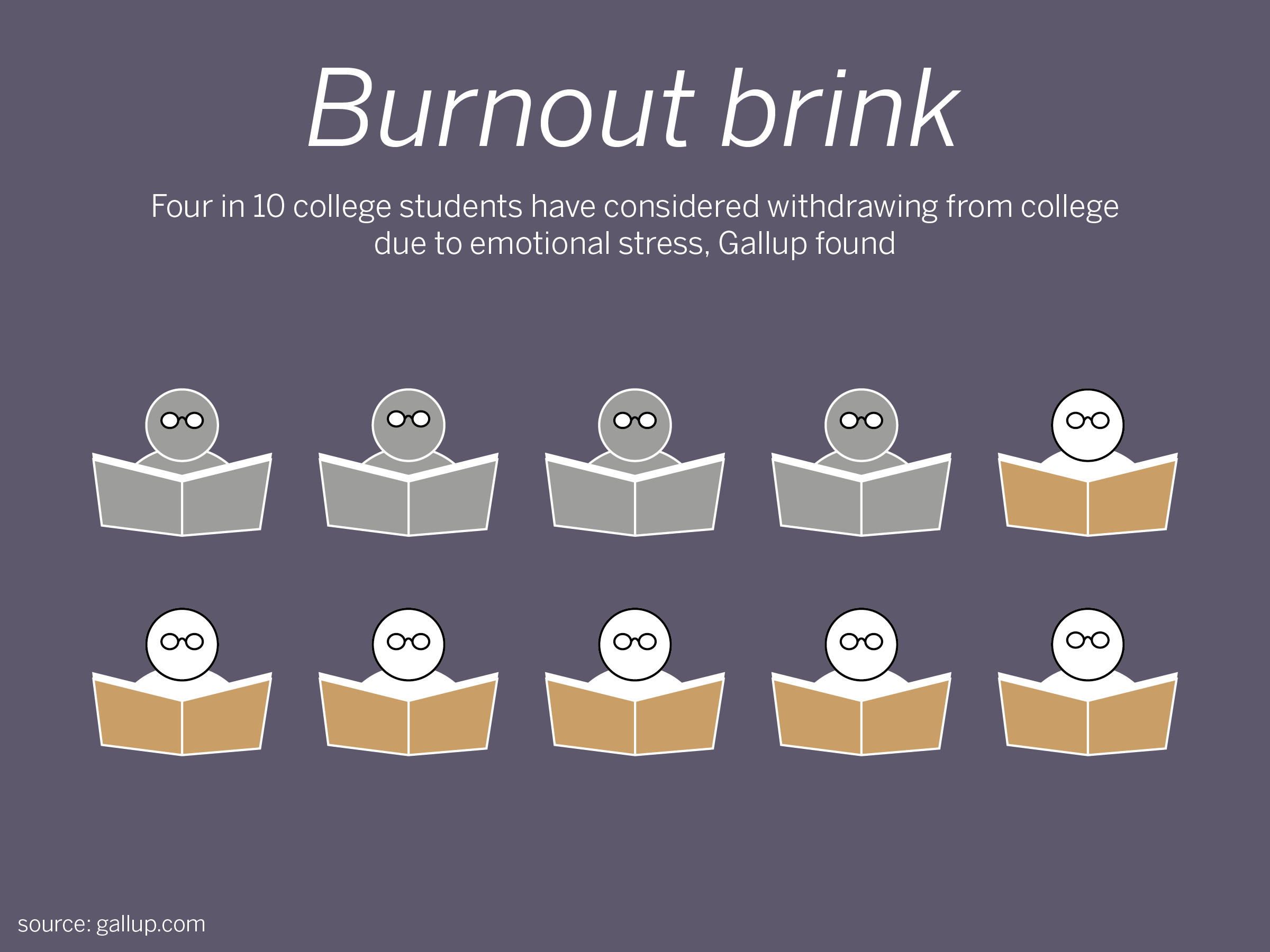
These struggles are not unique to Olympians. Being on a college campus, we are consistently exposed to high-stress situations and the pressure to always look ahead. Too often, we don’t allow ourselves grace and appreciation for all that we have overcome to get here.
As we head into midterms under the familiar grey, gloomy skies of Syracuse, the fatigue intensifies. Work starts to pile up, and every activity seems to demand more energy to complete than it did just a few months ago.
Yet, there is still so much stigma around the idea of taking a break, especially when it comes to school.
We are taught that stopping or setting a boundary is a sign of weakness. That you have to keep trekking along toward a finish line that keeps inching away, until you finally fall to the ground from exhaustion.
But this doesn’t have to be the case.
For our society to be more accepting and willing to allow people to take a much-needed break, it has to begin on an individual level. We have to recognize when a break is needed and give ourselves permission to take one. Otherwise, we contribute to this toxic ideology just as much as we are harmed by it.
So yes, I skipped class. You could argue that tuition is too expensive to miss even a single lecture, that by staying home, I essentially threw away a portion of what I paid to be here. But honestly, it’s not about any of that.
Life is not a zero-sum game. Every decision you make will have a consequence, but you’re the only one who gets to decide whether that consequence is worth living with.
Whether you’re Ilia Malinin taking some time for himself after losing out on an Olympic gold medal over a few falls, Alysa Liu taking a two-year break to rediscover her love for the sport or just some college kid sitting on their couch watching TikTok, remember that you’re the only one who can decide where you need to be in this moment. That’s OK.
Maybe don’t skip every class — there, Mom, that’s my redemption — but skipping one won’t kill you.
Don’t be afraid to take time for yourself, especially when it’s gloomy outside or the world just feels too loud. Also, never apologize for skipping class to doomscroll on TikTok.
Ally Price is a sophomore political science major. She can be reached at aprice09@syr.edu