Slocum Hall transforms into festive space for Lunar New Year celebration

On Friday, Slocum Hall's atrium illuminated with red lanterns, replicating a traditional Lunar New Year celebration. The space was filled with booths and presentations about the Chinese tradition. Kai Pavlova | Contributing Photographer
Get the latest Syracuse news delivered right to your inbox.
Subscribe to our newsletter here.
Xian “Vivian” Sheng always saw the Lunar New Year as a time to share the experience of gathering together. For the fifth year architecture and international student, there is no better place to spread this tradition than across Syracuse University’s campus.
“Coming from China, spreading my culture is an exciting thing, and I’m happy Syracuse is hosting this kind of multicultural event,” Sheng said. “Everyone can share the happiness of gathering together.”
On Friday, Slocum Hall’s atrium transformed into a vibrant atmosphere, with red lanterns illuminating the space to celebrate the arrival of the Year of the Horse. The annual event was hosted by international students in Syracuse University’s architecture program in collaboration with the School of Architecture’s dean, Michael Speaks.
This year, the Lunar New Year falls on Tuesday. A celebration known for reunions, the Lunar New Year marks the start of a new year in the lunisolar calendar. In the Chinese zodiac, 2026 is the Year of the Horse, with those born in the Year of the Horse sharing characteristics like bravery and strength.
Traditional Chinese music played as attendees tuned into the Lunar New Year spirit. Tables were decorated with red and gold cutouts and ornaments. As attendees curiously surrounded the creative displays, different booths offered calligraphy to Chinese snacks. Activities were also a key part of the event, which included fortune scratch-offs, a photo booth and traditional candies and tea sprinkled across a table.
For Sheng, who facilitated the calligraphy activity, she showcased her traditional practices to others who are unfamiliar with the art, which is rooted in ancient Chinese history during the Shang dynasty.
“Doing these kinds of activities helps you understand Asian culture. As an international student, I am honored to celebrate it now and have our festival here,” Sheng said.
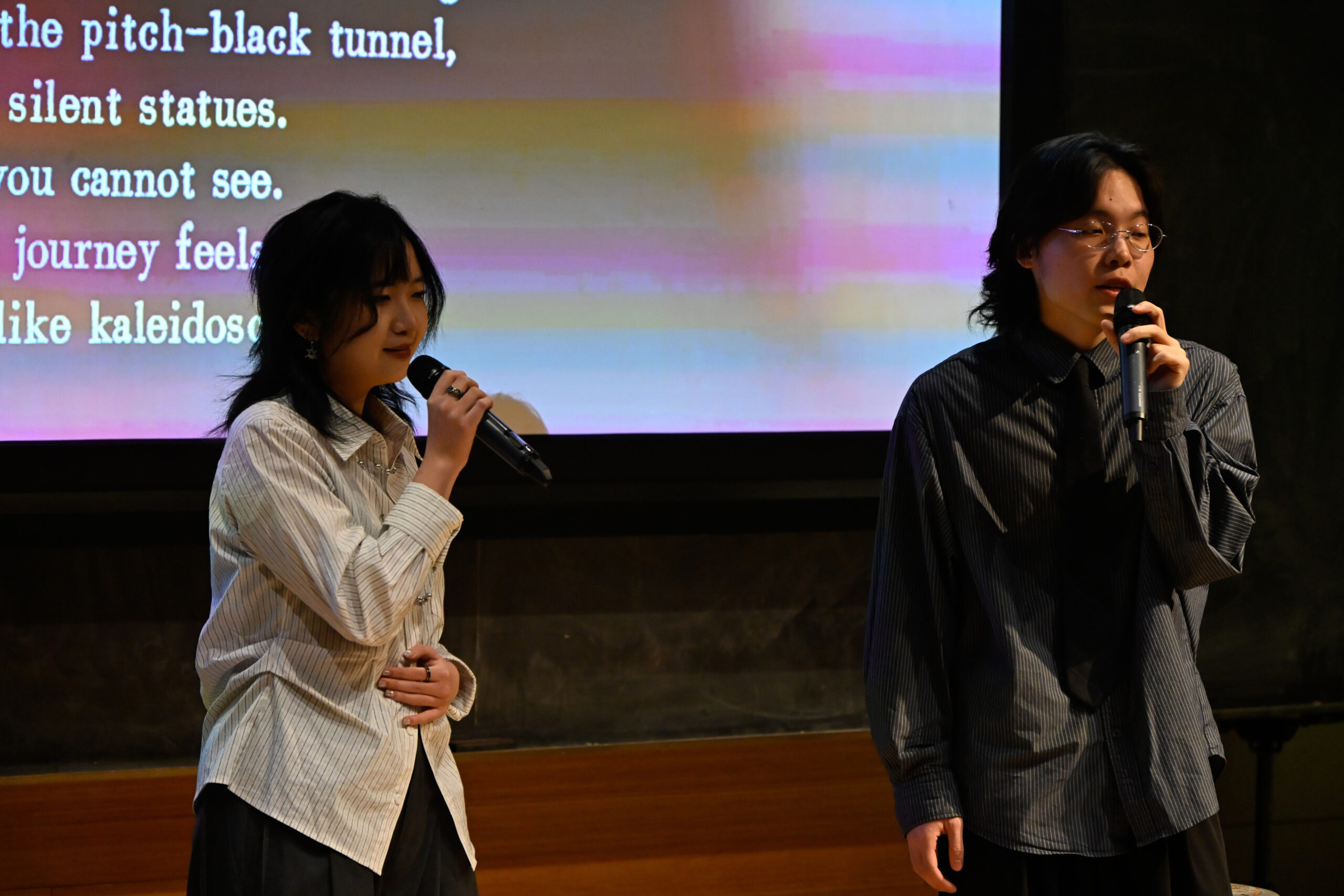
The School of Architecture’s Lunar New Year celebration included presentations about the significance of scroll paintings, live performances and interactive booths. Kai Pavlova | Contributing Photographer
In addition to displays and exhibitions, students also performed during the event. From singing, dancing and playing traditional instruments, having these performances allows students to highlight their cultural backgrounds, like fourth year students Xingye Xu, Changchun Sun and Kenyan Guan, who sang and performed together.
“I’m really glad that we can celebrate these kinds of events,” Xu said. “They hang all their lanterns up, when I saw this kind of lantern hanging, I felt homesick.”
The Lunar New Year celebration also included presentations, like “Lunar New Year: A Journey Through Scrolls,” presented by faculty member Xixi Chen, who was born in Shanghai. The presentation showed three Chinese scroll paintings, each representing a different sensory aspect of the Lunar New Year and art’s significance in shaping certain narratives and aspects of Chinese culture and society. The first painting conveyed the different sounds related to the holiday, from firecrackers popping to families rejoicing. The second centered on family events and togetherness. The third evoked the scents of the celebration.
Friday’s Lunar New Year event in Slocum Hall included foods like duck spring rolls, fried rice and vegetable dumplings. It also served traditional sweets like fortune cookies and flaky layered biscuits. Kai Pavlova | Contributing Photographer
Other presentations included a Chinese flower dance performed by fourth-year student Chelsea Zhang and a harp performance by third-year student Sihan “Michelle” Lei. A dumpling-making video was also shown, which featured many other Lunar New Year dishes, including winter melon and meatball soup.
With the traditional Lunar New Year meals prepared, attendees gathered around the table to celebrate the start of the new year together. The dishes featured served as symbols of the new year, including dumplings, spring rolls and rice cakes. Different meals hold symbolic meaning, like dumplings representing wealth and rice cakes growth. Dean Speaks also distributed red raffle tickets to attendees in the audience, handing out Lunar New Year-themed goodies such as patches, t-shirts and a book.
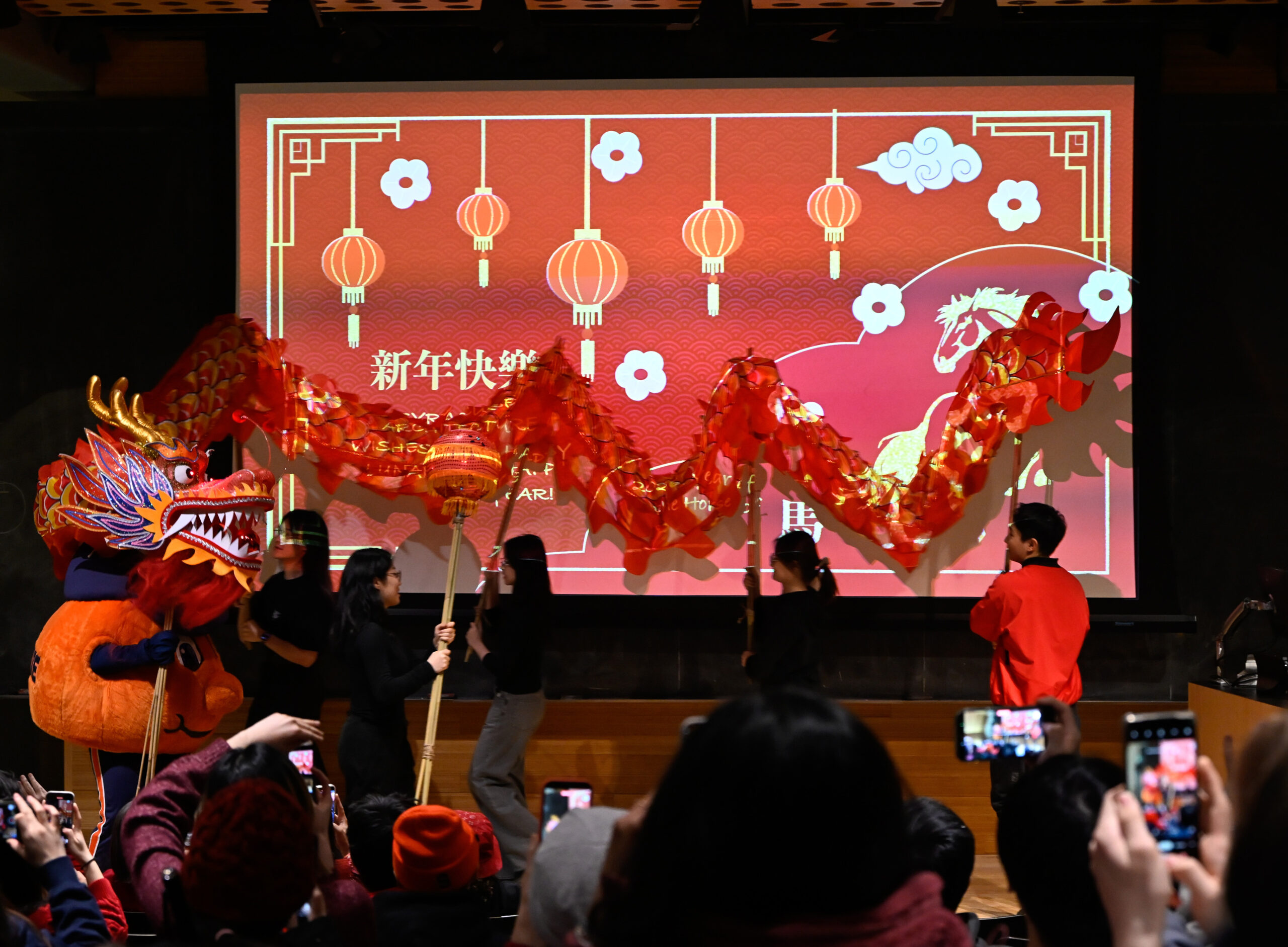
After the presentations ended, a dragon dance was performed, supervised by third year architecture student Zhixin “Cindy” Gao and led by Otto the Orange. The dance is meant to ward off evil spirits and bring good fortune into the new year, and the dragon represents power, strength and prosperity.
“This event has a strong connection with Chinese students, since lots of students are from Asia, so it makes students feel more belonging to the whole community,” Gao said.
For senior Sophia Luo, she decided to truly immerse herself in the celebration by dressing up for the special event. Luo wore a pink Qipao, a formal and traditional Chinese dress deeply rooted in its history.
“Wearing this dress and attending events like this allows me to feel like I’m home. The older I get, the further removed I feel from that, so the Chinese food, Chinese culture and celebration of that was really cool,” Luo said.
Being an international student, Gao reflected on the significance of this event to her. She said she believes it’s extremely important to bring Chinese culture here to Syracuse.
“Learning more about international cultures makes the campus more diverse,” Gao said. “People learn not just about the culture itself, but the community and how people interact with each other.”