How 10 days in Okinawa laid the foundation for Uche Izoje’s Syracuse move

Two months before moving to SU to play college basketball, Uche Izoje spent 10 days in Okinawa, a trip that proved monumental to her success. Eli Schwartz | Asst. Photo Editor
Get the latest Syracuse news delivered right to your inbox. Subscribe to our sports newsletter here.
Mornings on Kouri Island started quietly. Breakfast was served on small circular tables facing the beach. The turquoise water of the East China Sea stretched in every direction. Players walked along the shoreline, sinking their feet in the warm waves.
In a few minutes, two vans would cross the Kouri Bridge to take a group of 10 basketball players to the Okinawa, Japan, mainland. Among them was Uche Izoje, a 6-foot-3, 20-year-old Nigerian.
During the 45-minute drive to a multi-sport facility in Ginoza Village, Izoje’s peers muttered in Japanese or scrolled their phones. Izoje often sat in silence, mentally counting down the minutes until they’d arrive.
“That’s someone who loves basketball,” said Bob Willett, one of Izoje’s trainers. “You have someone that’s not only athletic, she knows how to use her athleticism.”
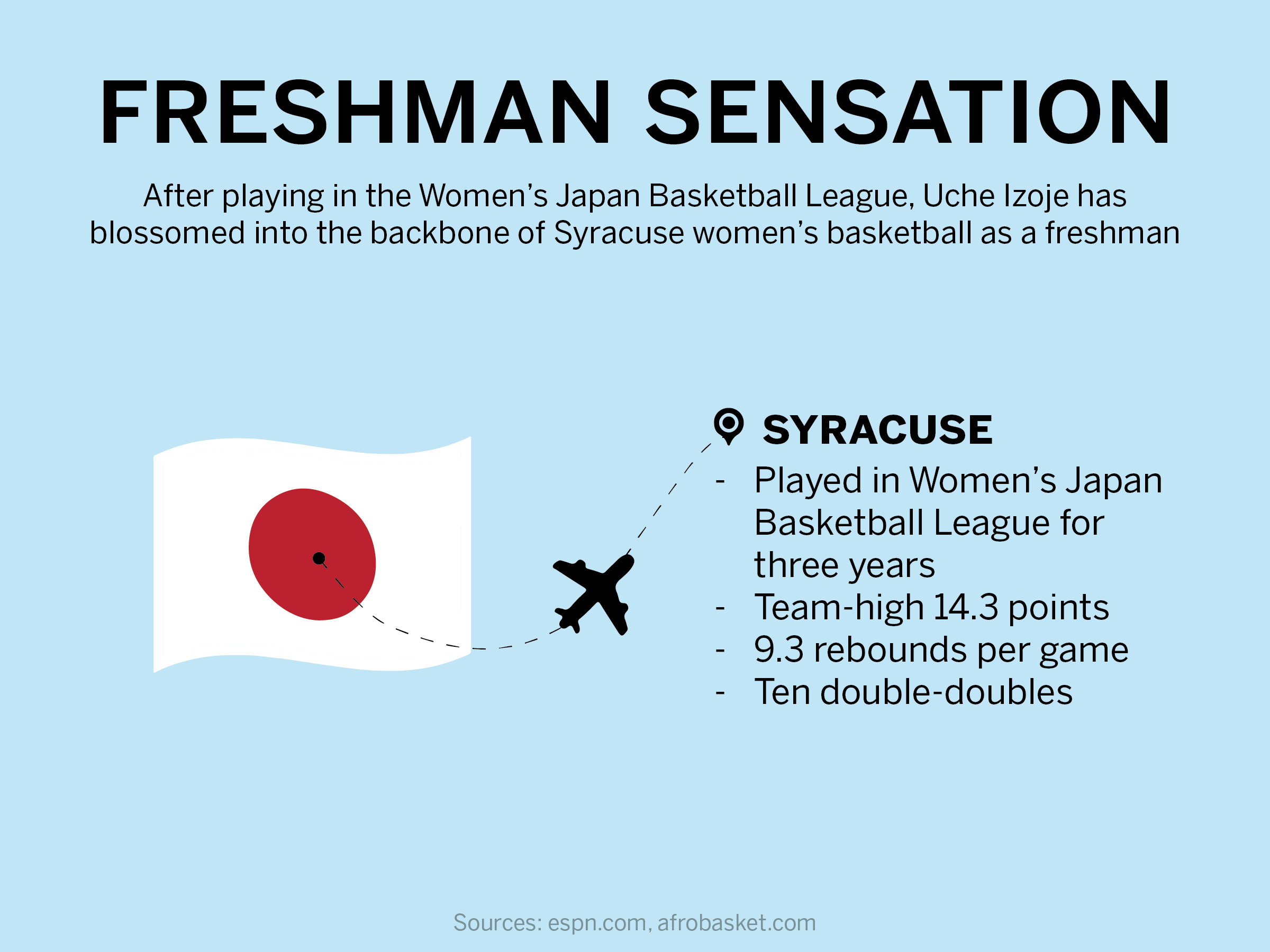
About two months before moving to Syracuse for her first year of college basketball, where she’s flourished as a freshman this season, Izoje needed one last tune-up. She’d played on the Chanson V-Magic in the Women’s Japan Basketball League for three years after harnessing her love for the sport in Nigeria.
But she hadn’t been exposed to the nuances of American basketball, where the players are stronger and more physical. A 10-day retreat with some of Japan’s best players, coached by two top Canadian trainers in Bob and his son Nolan Willett, was designed to prepare her for the next level.
“It was just continuing to pour fuel on the fire of what she was good at,” Nolan said. “She isn’t a finished product, and she’s as good as she is now.”
Katie Crews | Digital Design Director
Before the event, Izoje didn’t know any of the retreat’s attendees personally, but she recognized their names. Evelyn Mawuli, the organizer, represented Japan during two Olympic campaigns, winning a silver medal at the 2020 Summer Games.
From her condo on Kouri Island, which she made available to each player, Mawuli set out to promote women’s basketball while helping polish Japan’s top talent.
Mawuli brought in Bob and Nolan to train the group. As the creators of Canada’s largest player development program, per Bob — and regular visitors to Japan for several years — there were few better trainers for Izoje to learn from.
“She was still raw in a lot of areas, but the potential upside for her was high,” Bob said.
Three weeks before the event, Bob and Nolan sat in their Calgary residence, reviewing the retreat’s participant list. Bob said Izoje’s name held little expectation.
As he did with every player, Nolan searched YouTube and Google for film. When he got to Izoje, what he saw was hard to ignore.
A video surfaced: Izoje, wearing a bright red jersey, soaring for a right-handed dunk off her left foot. As Bob and Nolan watched Izoje’s jam on repeat, they thought to themselves, “How come we haven’t heard of her?”
After a deeper dive, they discovered Izoje was a two-time WJBL All-Star and Rookie of the Year. In 2024-25, she ranked second in the league in scoring (14.4) and rebounding (9.9) per game, and led it in blocks (1.7).
Bob and Nolan were accustomed to training guards, but they considered Izoje — an “up-and-coming” big — a fun challenge.
“It’s funny because when you watch her play, you’re like, that’s a grown-ass woman that’s kicking ass,” Bob said. “There’s a lot of male and female players that don’t even know how to run properly.”
When they first met her, the spark they’d seen from Izoje on video wasn’t there. Bob said she was timid, while Nolan said she tried to encourage herself by murmuring words under her breath. She was tall, athletic and in shape, but clearly unsure of her abilities.
Bob thought it was due to her lack of prior player development. Izoje moved to Japan at a young age and attended high school in Kyoto, the western-central region of the country. She’d skipped college to go pro, where you’re expected to arrive polished. Izoje still had a long way to go.
But Bob and Nolan soon recognized her potential. On the first day, they noticed Izoje take one dribble from the perimeter and get to the basket with one large stride. A few more reps prompted Nolan to ask her a question.
“Have you ever thought about playing college basketball?”
Izoje was one step ahead. She was heading to Syracuse two months later, she responded, instantly shifting Bob and Nolan’s focus to preparing her for the NCAA.
They emphasized the importance of getting to your spot while drawing contact. They reiterated basketball isn’t a game of height; it’s a game of territory. Izoje stood up straight and struggled to take contact. They pushed her to stay grounded and aggressive.
Nolan said Japan’s style of play is more “robotic” and focuses less on individual skill. Izoje and Mawuli, the sole frontcourt players, ran pick-and-pops — meaning a player set a screen, and Izoje gravitated outside for a jump shot — and sharpened their triple-threat work, learning to be proficient at all three levels.
The workouts always finished with some form of live action: one-on-ones, coaches versus players and sometimes even one-on-twos. Bob said Izoje showed more energy each day and a willingness to make mistakes.
“This wasn’t a dance routine,” Bob said. “She knew that she had to understand why she was doing everything, and she would talk it through until she would master it, and then we would move on.”
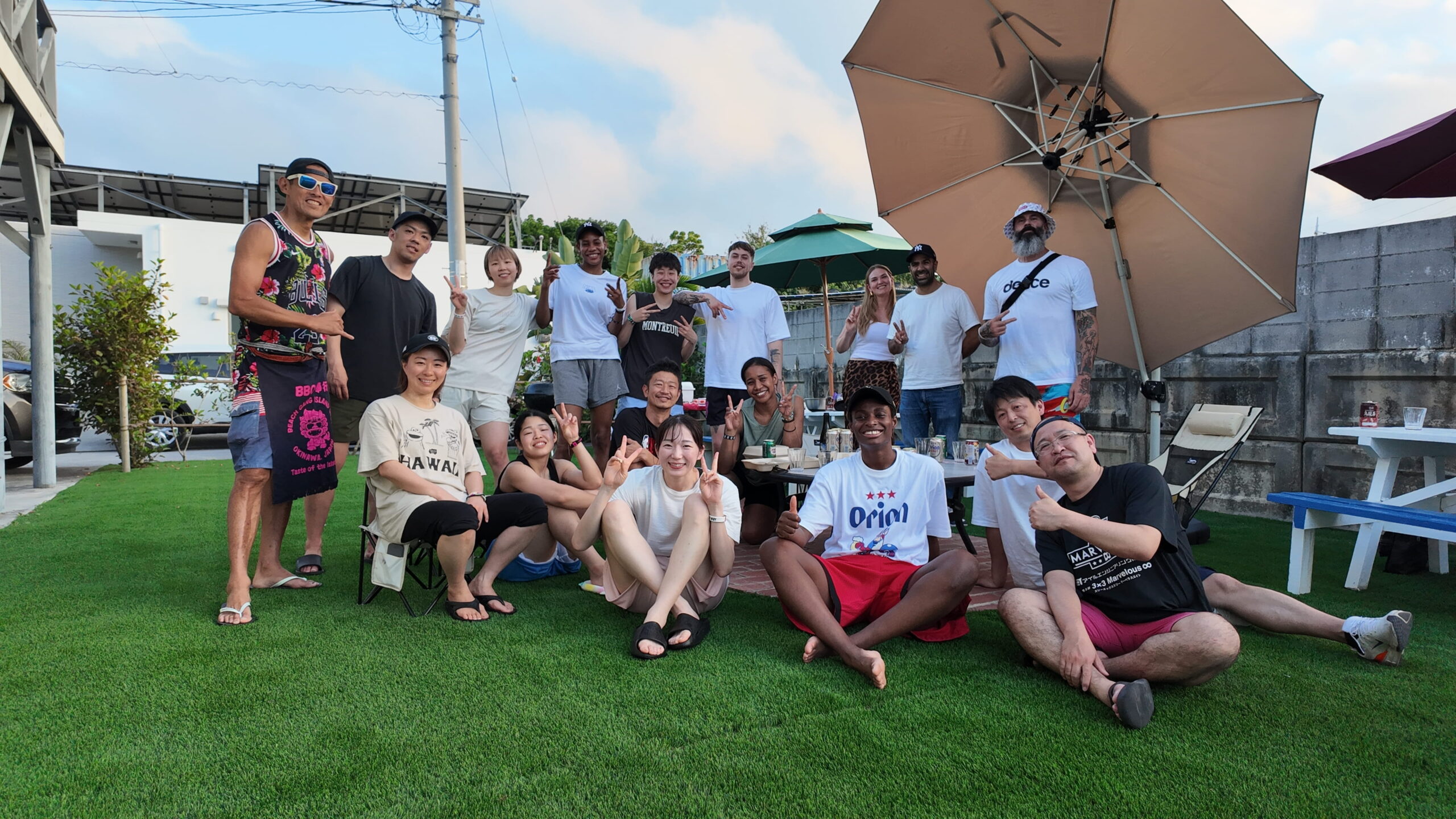
Uche Izoje and other retreat attendees in Okinawa, Japan, enjoy a meal outside. Izoje spent 10 days on Kouri Island, fine-tuning her skills before moving to Syracuse. Courtesy of Bob Willett
By day three or four, Izoje was yelling at Mawuli on the court, pushing her just as she’d pushed Izoje days prior while matching her jovial energy. Bob said it created a dynamic that allowed Izoje to open up.
She expressed her nerves about going to the United States for the first time, unsure of what to expect from the culture. She repeatedly asked Bob and Nolan questions, drawing on her previous references from movies and TV shows.
At dinners, which spanned from barbecues near the beach to local restaurants to guest chefs at the condo, Izoje sat close to Bob and Nolan. She had no interest in discussing the money that comes with college sports. Instead, she wanted to pick their brain about what her new life would be like.
As Bob ensured she’d be in good hands, Izoje’s confidence grew. She made TikToks with her teammates at meals and told stories from her past, becoming the “life of the party.”
“It was almost like we had been part of the family for years,” Bob said. “When you get to that college stage, it is work, and it is a business, and it is hard. So the fact we get to see little snippets of her just being herself and having fun is really cool.”
Back on the court, the Willetts taught Izoje about the slower American pace of play. They worked on moving her shot to a one-hand release and pro-hopping into the lane, which they said she replicated like Derrick Rose and Dominique Wilkins.
Izoje caught on quickly. Although the retreat had translators, she used the opportunity to work on her English with Bob and Nolan.
After the workouts and practices — sometimes multiple per day — Mawuli planned excursions around the area. The group went kayaking and jet skiing. They volunteered for a local charity. There was even a ceremony with the government to celebrate the players, many of whom were Japanese National Team members.
By playing against some of the nation’s best, Bob said Izoje became the best.
During one of the final practices, Bob was shadowing Izoje and struggled to stay at her hip. The space she covered led him and Nolan to realize the “on switch” she could channel at any moment.
“When she got on the floor at Syracuse, it was gonna be such a good learning curve,” Nolan said. “It was guaranteed she was gonna have success.”
Safe to say Nolan was correct.
In 24 games this season, Izoje has racked up 10 double-doubles with the Orange, leads the squad in points, rebounds and blocks and is drawing national attention on both sides of the ball.
The quiet mornings on Kouri Island were more than a postcard view. Izoje knows those 10 days didn’t build her. She was already built. But beside the East China Sea on an island that houses just 350 people, Izoje’s foundation took shape.
More than 7,000 miles away, it’s impossible to miss.