Vacant script hinders ‘How to Make a Killing’ despite comedy-thriller assets
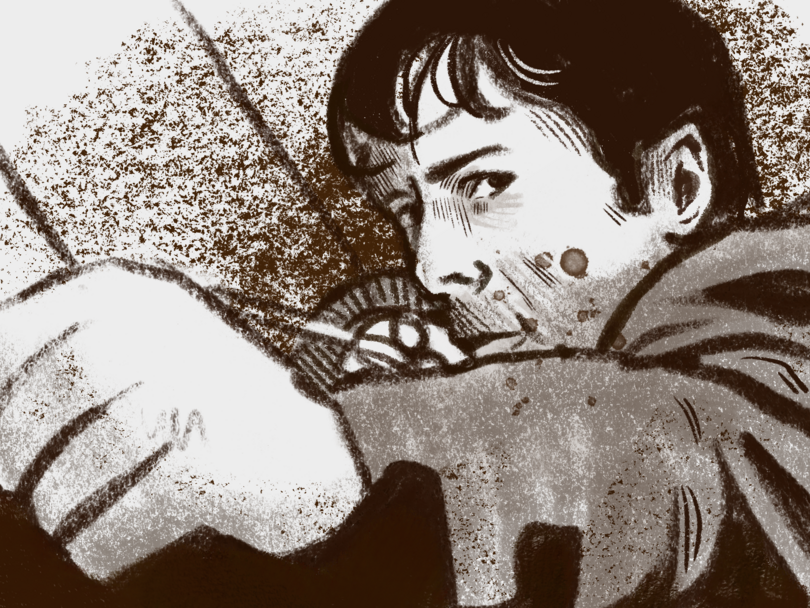
Written and directed by John Patton Ford, "How to Make a Killing" is a loose remake of the 1949 film "Kind Hearts and Coronets." Despite a new cast and setting, the retelling maintains the same message: money and power come with generational backstabbing. Hannah Mesa | Illustration Editor
Get the latest Syracuse news delivered right to your inbox.
Subscribe to our newsletter here.
Editor’s note: This article includes mention of violence and suicide.
When you’re broke and directionless living in the United States, “How to Make a Killing” advises viewers that the answer is to kill all your distant relatives for an unfathomable inheritance. Not exactly the best life advice, but enough to get me into the theater.
Released in theaters on Friday, “How to Make a Killing” is a loose remake of the 1949 film “Kind Hearts and Coronets,” with a new cast, setting and premise. But, the retelling maintains the same message: Money and power come with generational backstabbing.
The film follows Becket Redfellow (Glen Powell) in the last four hours before his execution on death row. In the short time he has left, Becket requests companionship with a priest to confess the “tragic” story of him and his childhood love, Julia Steinway (Margaret Qualley).
Written and directed by John Patton Ford, the story falls flat in sketching a world that Becket eventually destroys. With a service-level script and weak on-screen presence, excellent delivery from Powell was undermined by a half-baked story.
Considering the mixed-reviews of Powell’s recent performances in “Hit Man” and “The Running Man,” this was Powell’s latest attempt to climb to the A-List status he deserves.
For the film’s duration, Becket is the narrator. He details how he arrived on death row, beginning with the generational wealth of the Redfellow family, his then-18-year-old mother’s exile after getting pregnant with him and his father’s death.
The story is loomed by the threat of the Redfellow dynasty, the Long Island bourgeois billionaire family Becket’s mother came from, but we are unaware of the family’s actual influence other than montages of their elaborate possessions.
On his mother’s deathbed, Becket learns he is the youngest inheritor to the Redfellow fortune. To mourn her death, Becket bikes to the Redfellow manor in Long Island but is denied entrance. Thereafter, he grows up in the foster care system and accepts he’ll never become patriarch of the Redfellow fortune.
But Becket’s attitudes about his generational wealth changes when he outgrows foster care. While working in a tailor shop, Julia runs into Becket for the first time since they were kids. She humiliates his status as a salesman and seeds the idea of murdering his way up to the Redfellow estate. Becket is indifferent until he is laid off for his boss’ nepotism and becomes deadset on finally reaching his inheritance.
This is where the film’s battle with sticking to its themes begins. Although I was hooked from the get-go by Powell’s on-screen presence and facial control, it is not enough to undermine an underdeveloped screenplay.
Under Powell’s narration, the rest of the film is full of Becket’s infiltration into his estranged family, murdering their exuberant personalities for their fortune. In addition to infatuation with Julia — the true antagonist — Becket finds true love in his now-dead cousin’s ex-girlfriend.
Much of the later scenes consist of Becket’s fun shenanigans killing off his relatives like poisoning his cousin’s protein drink; the pace is visceral to servicing its actors and neglects fleshing the narrative’s themes.
Becket’s killing sprees seem to try to address themes of social mobility in the U.S. by showing an extreme attempt to raise social status. But, it lands flat for its lack of footing. Becket’s motivations are feeble and are changed on whims that are not serviced by any strong challenges. Becket’s character arc is an acceptance of cold reality, but its conveyance is a lazy depiction of capitalism-induced existential crisis.
Many critics fault Powell for taking on another type-casted role as the calculated action hero, but there’s nothing he can do to fix the storyline’s absent nuance.
Most of the film is one you can watch with your brain off. Yet, in its final moments, the movie finally had me on the edge of my seat.
Julia frames Becket for murdering her late husband — who actually died by suicide. Having succeeded in the inheritance battle, Becket strikes a deal to turn over every cent to her in exchange for a withheld suicide note. With an unearned change-of-heart, he shifts away from the calm demeanor he had throughout the movie.
Moments before his execution, Julia saves him at the bell by turning in her late-hubsands suicide note and thus proving his innocence. Upon discharge, his love interest has left him and he is relegated to life on Long Island with Julia, who picks him up outside the prison.
Some may say this ending works, that this is the ultimate compromise Becket makes to climb into high society. But, the final diminishes itself in its final 10 minutes from rushed plot points. The stakes around Becket’s death sentence don’t feel high enough, so the resolution isn’t earned.
Ironically, I did enjoy the feature. It hits on many of the iconic comedy/thriller tropes with exaggerated personalities, action and heartwarming romance. But, it doesn’t do more than that.
Ultimately, “How to Make a Killing” is a forgettable, popcorn movie that restrains Glen Powell’s ascent into A-List stardom.