Lone Star natives keep home close at Texas Cultural Association

Get the latest Syracuse news delivered right to your inbox.
Subscribe to our newsletter here.
In snow-covered Syracuse, some students from Texas find themselves missing the barbecue joints, rodeos and calf chasing of their hometowns. More than 1,500 miles away from his home in Houston, Jarel Reed decided to bring some of the Lone Star State to Syracuse University.
“Texas culture is still at the forefront of who I am, even though I’ve been far away from it,” Reed, an SU freshman, said.
To unite students that may share similar feelings, Reed decided in September to form SU’s Texas Culture Association, of which he is president and founder. They officially became a registered student organization on March 16. The club hopes to bring a sense of Texas to campus and teach students about a culture different from the one in central New York.
After combing through SU commitment Instagram pages and messaging students who came from Texas, Reed met fellow Texans, like Mary Carmel, SU freshman and vice president of the club.
Carmel said she realized there was a need for a club like this after attending a line dancing event in the Schine Student Center. She was inspired by the turnout and the fact that so many students wanted to interact with the country culture.
The Texas Culture Association hopes to draw on this to help combat feelings of isolation for Texan students who are far from home and may not know many other students, said Ronan Randolph, SU freshman and secretary of the club.
“Looking at all of your other friends who have people from their hometown already, I just want to try and recreate that environment for other students,” Randolph said.
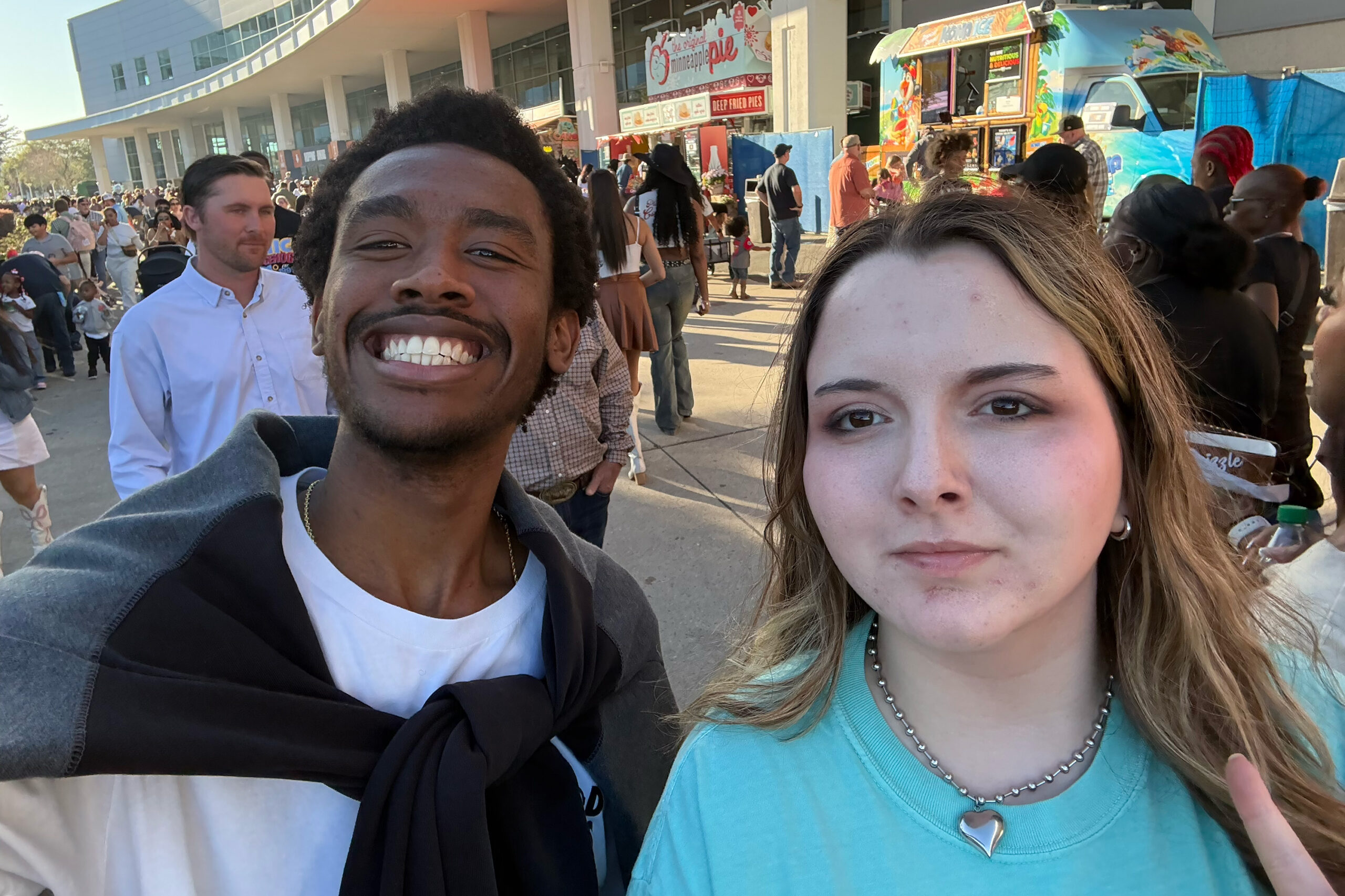
Earlier this year, Syracuse University freshmen Jarel Reed and Mary Carmel attended the Houston Livestock Show and Rodeo. They hope the Texas Culture Association will bring events like these to Syracuse. Courtesy of Jarel Reed
While many of the club’s leaders are from the Houston area, they still plan to employ their motto: members first.
Given the large size of the state, Carmel said she was eager to learn more about the culture in other areas, like Paris, Texas, or Dallas, from the members of the club. Her goal is to listen to members of the club about any ideas they may want to implement, especially those from different areas of Texas.
Now with about 30 members, the organization is the first and only state organization at SU, Reed said. Even within the club, the members bring different perspectives on what Texan culture is, coming from cities across the state. Reed said being a part of the club has also made him realize how many other SU students come from Texas.
Randolph said many people have a set idea of what Texan culture is, and he was glad to see the members break these stereotypes. The club plans to hold Texas-style events to educate members on the different traditions and events around the state.
When Randolph came to SU, he found himself craving foods, like authentic brisket, that reminded him of Texas. But he couldn’t find these items in Syracuse. He hopes the club can help bring people together through food — like barbecues with brisket, barbecue chili and Tex-Mex food. Reed said the food portion of the organization will have its own “identity.”
While the officers want the club to remain informative of Texan culture and events they are holding, they also want to foster bonding and connection between the members.
Reed hopes to host events like a Texas rodeo, calf-chase and bull-riding event, which don’t usually happen in Syracuse.
The culture of Texas is unique, Randolph said, and being able to bond with others over everyday experiences — like an armadillo running onto the middle of the road or cowboys out the window of his high school — has helped him feel less isolated.
“I also didn’t realize it wasn’t normal for a bunch of cowboys to just walk by your school on a daily basis,” Randolph said.