‘Smiles After Dark’ explores contemporary situations through horror lens
Get the latest Syracuse news delivered right to your inbox.
Subscribe to our newsletter here.
When one of Matthew Pasquale’s hometown friends called his latest film project “goofy,” Pasquale wasn’t bothered. He didn’t respond to the message and posted a new episode the next week.
“You kind of just have to get an idea and just chase it, and be all in on it. You can’t really give a sh-t what people think about it,” Pasquale, a Syracuse University sophomore, said.
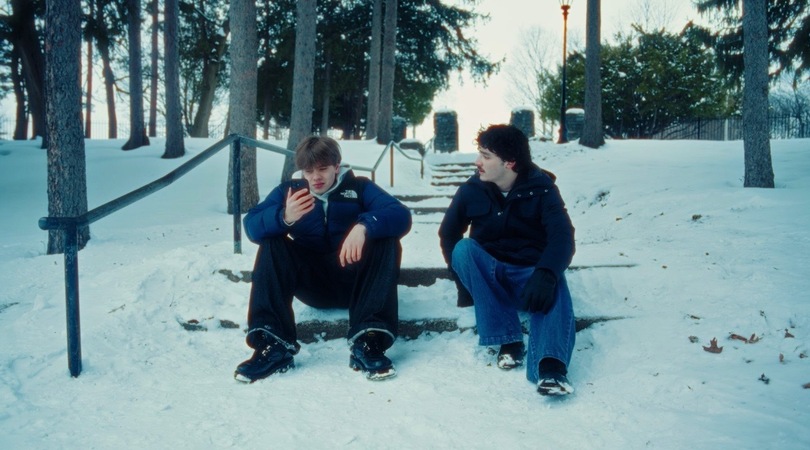
The project, “Smiles After Dark,” is a horror short film series produced and edited by Pasquale and sophomore Chasden Gilson-Walker. Since they began filming in January, the television, radio and film duo has released three minute-and-a-half long episodes of the dark sitcom. Each episode, posted to Instagram, YouTube and TikTok, explores contemporary young adult issues, like being ghosted by a romantic interest.
Pasquale wanted to do a project on social media for a while, but he didn’t know what exactly it would be. He approached Gilson-Walker with the idea in January and the project began to take shape. Gilson-Walker originally resisted the idea because he didn’t have social media — due to its addictive tendencies — before working on “Smiles After Dark.”
Since being a part of “Smiles After Dark,” Gilson-Walker said he’s come around to social media. After downloading the apps for the project, he said the online platforms have been a major asset for exposure.
“It’s completely catered to social media, and I think that’s what’s trending right now. That’s what people like right now,” Gilson-Walker said.
Gilson-Walker said he thought it would be interesting to juxtapose sitcom-style acting and storylines with “dark twists.” He said he loves Netflix’s sci-fi TV show “Black Mirror” and wanted to emulate the show’s jarring nature in his own work.
“It kind of messes up the viewers’ experience, because they’re watching it, they think it’s comedic, and then boom, it hits them. It’s shocking,” Gilson-Walker said.
Though Pasquale has been brainstorming the project for a long time, producing each episode has been a fast process. Pasquale and Gilson-Walker began thinking of ideas just two and a half weeks before posting the first episode, which was released on Feb. 15. The following episodes have each been produced within a week, all the way from writing the script to publishing on Instagram.
Pasquale said the tight timeline has been a welcoming challenge. The hard work is worthwhile in the end, as he sees strangers approach him and tell him they like his work.
With minimal crew and equipment, the show’s filmmaking makes it special, Pasquale said.
“To see that it’s kind of already making an impact with two people, no crew, no nothing, and we’re just kind of doing this run and gun style, basically, is really dope to see,” Pasquale said.
Because Gilson-Walker and Pasquale are “perfectionists,” the editing process can be long, sometimes lasting overnight with frequent arguments between the two filmmakers, Gilson-Walker said. However, Gilson-Walker said the fun part about the process is getting to do it alongside his friend.
Sophomore Andres Sosa, who was featured in the second episode, “The Watcher,” was fond of the first episode. Despite having no acting experience, he said he was happy to fill in a small role. Since Sosa is a musician himself, he wanted to be a helping hand for his friends, “artist to artist,” he said.
As a marketing and finance major, Sosa said he had never been on a film set before. He said he loved seeing the process behind a film project, especially with “eerie” scenes. Though he’s not a full-time member of the project, Sosa added creative input to his scenes and appreciated the collaboration.
“You get to see how those work in real life and the lengths that you have to go to get the camera to actually work the way you want it to,” Sosa said.
Gilson-Walker also said the collaborative nature of “Smiles After Dark” helps him and Pasquale grow as filmmakers through the script, filming and acting.
“That’s also what I think is so special about this project is that it is a two man show,” Gilson-Walker said. “Even though it’s harder on us, we learn so much more, and we feel so much more immersed with our project because of that.”