

SU law professor appointed chair of AALS Women in Leadership
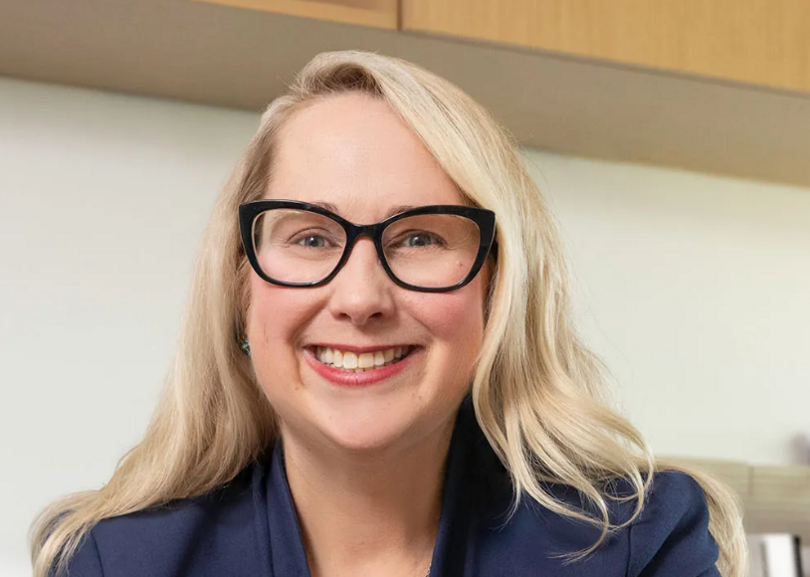
“I’m in a very feminist space again.” Katherine MacFarlane, an SU college of Law professor who teaches disability law, achieved a “full circle” moment after being elected chair to the Women in Legal Education section of the AALS. Courtesy of Katherine MacFarlane
Student Press Freedom Day is a reminder of the vital role student journalists play in holding institutions accountable. The money raised between now and March 6 will go directly toward supporting our independent newsroom. Donate today.
When Katherine MacFarlane, a Syracuse University College of Law professor, was elected chair of the Women in Legal Education section of the Association of American Law Schools back in February, she said she reached a “full-circle moment.”
On Feb. 18, SU announced MacFarlane, who also serves as the College of Law’s Disability Law and Policy Program director, would lead the largest sector of the AALS, which serves as the “umbrella” organization for law professors in the U.S.
WILE welcomes 2,400 members joining every year. MacFarlane will spearhead the section’s contributions to AALS’ national conference in January.
As chair, MacFarlane represents the section of the conference that designates advocacy programming for women in law, and at the individual level, the section serves as an outlet for women seeking career guidance.
“What I find myself doing on an individual basis as leader of this section (is talking) to women who need advice,” MacFarlane said. “I talk to a lot of women with disabilities who want to enter the legal profession and what that looks like, and whether they can be accommodated.”
Macfarlane’s work specializes in civil rights and disability law, as one of the “leading national experts” on reasonable accommodations for those with disabilities in the workplace and in higher education.
As a law professor living with a disability, she emphasizes the importance of recognizing disability in the legal and educational fields.
“There was no affinity group for (disabled legal educators) before (creating the section), and I started to get more national exposure and be invited to sit on national committees associated with the Association of American Law Schools,” MacFarlane said.
This position is not MacFarlane’s first time taking on a leadership role in a woman-led space. In her time as an undergraduate at Northwestern University, she described herself as “the campus feminist.” She created a feminist zine with her peers, contributed opinion pieces to her campus newspaper, she said, and led various The Women’s Coalition activities.
At previous AALS conferences, MacFarlane led a section on disability law, co-founded a section for law professors with disabilities and served on the WILE section before being elected chair.
AALS Executive Director Kellye Testy expressed confidence in MacFarlane’s successes, past and present. In a statement, she said MacFarlane’s leadership and “extraordinary dedication” at AALS conferences help strengthen the association’s impact on the field.
“Her leadership across multiple AALS sections, her work in creating a section for law faculty with disabilities and allies,” Testy said. “Her support of adjunct professors and aspiring law professors reflects a deep commitment to excellence in legal education.”
Third-year law student Jude Unland spoke highly of their experience learning from MacFarlane as a mentor, crediting her with helping them with their first year of law school.
“I always like to say that she somehow strikes the balance perfectly between someone who cares so deeply for her students while also being so incredibly brilliant,” Unland said. “And her resume speaks for itself.”
MacFarlane said she hopes to grow both personally and professionally in the new position, seeking to learn from other law school deans and advanced academic positions across the country.
The new chair hopes to continue advocating and serving her community while honing her leadership skills.
“I’ve had a career (that focuses) generally on civil rights and a lot on disability rights, but this feels full circle,” MacFarlane said. “I feel like I’m in a very feminist space again, and it’s an honor to advocate on behalf of other women.”