Opinion: Prioritize healthy habits to succeed during finals week
Get the latest Syracuse news delivered right to your inbox.
Subscribe to our newsletter here.
My alarm went off at 11 p.m., signaling bedtime. The open laptop on my desk reminded me that I still had to finish studying for my chemistry exam and edit my public service announcement project.
After five hours of sleep, I awoke with a headache, weary eyes and a body longing to go back to bed. This was my reality last semester during finals week.
I remember hearing from my friends about similar experiences, worrying over essays and exams on the last day of the semester. We bonded over the struggle, laughing about getting little sleep and turning it into a friendly competition with no real winner.
The stress my friends and I experienced inspired me to reflect on how to implement healthier strategies during finals week, so I created and shared an anonymous survey to assess their habits. They shared it with others, resulting in 24 Syracuse University undergraduate participants.
The survey results confirmed that stress is a universal experience. On a scale of one to 10 — with 10 being extremely stressed — 50% of participants reported stress levels between seven and nine during finals week last semester.
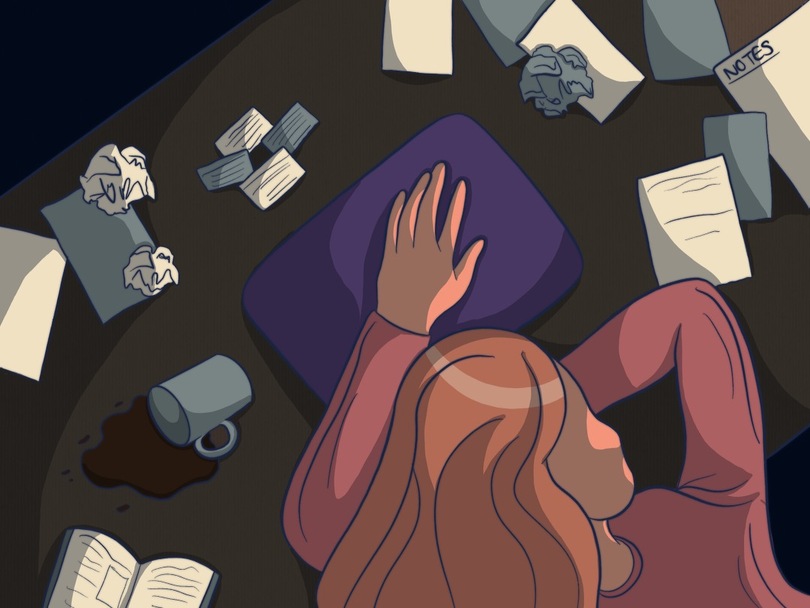
These responses painted a vivid portrait of stress in students’ lives. Imagine empty cans of energy drinks strewn across your desk. You’re wide awake. It’s nearly midnight and too late to continue studying effectively. A 30-minute break scrolling on social media stretches into one hour. You finally fall asleep, only to wake up exhausted the next morning.
These cram sessions are often accompanied by common symptoms of stress, including shortness of breath, increased heart rate, muscle tension and headaches.
When stressed, the sympathetic nervous system drives the release of hormones like cortisol or adrenaline, activating fight, flight, freeze or fawn. These survival responses are triggered by academic pressure during finals week, harming mental and physical health.
When I felt this pressure, I comforted myself with social media study breaks, whether it was doomscrolling on TikTok or checking what my favorite celebrities were doing on Instagram. The entertainment was temporary and often left me feeling unproductive.
In fact, 91.7% of students reported using social media to cope with stress. Yet, over a third of students said these breaks weren’t helpful.
Students also rely on social media to try to stay connected during study sessions. Seventy-five percent of survey participants reported studying alone during finals week last semester. While using social media can help us feel connected to the outside world, it can become a time-consuming distraction.
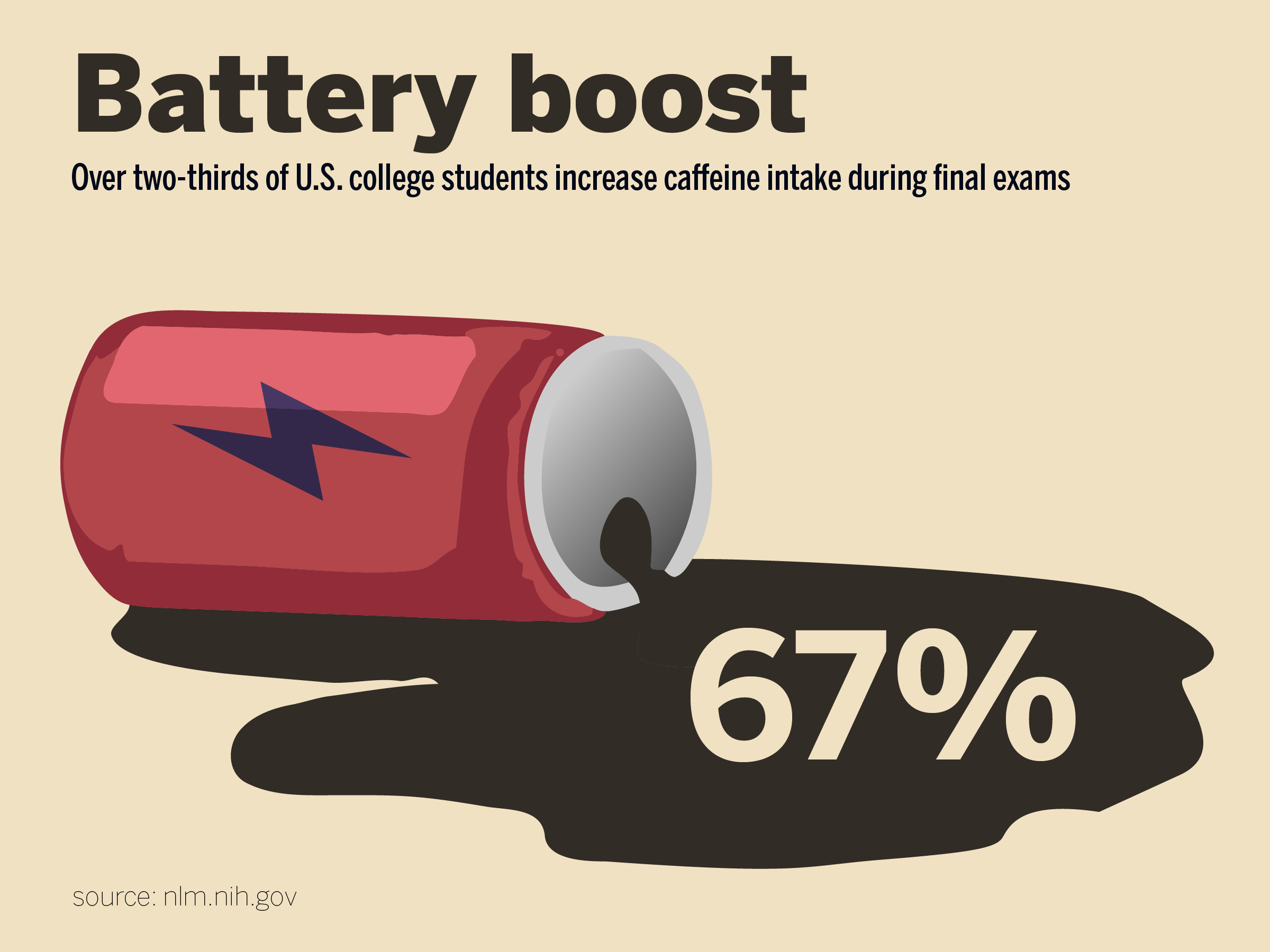
Apart from social media, students indulge in other unhealthy habits during finals week. Over 41% of participants reported using energy drinks while studying for exams. Caffeine is increasingly popular amongst college students trying to stay awake and concentrated while studying.
Energy drinks contain high levels of sugar, additives and caffeine. Overconsumption can cause dehydration and elevated blood pressure. Caffeine also blocks your brain from detecting adenosine — the chemical signal that tells you to rest — masking sleep deprivation.
Last semester, I stayed up late studying most nights to reduce my workload for the next day. Similarly, 79.2% of survey participants reported studying until midnight or later.
While staying up late helped me complete work, it ultimately increased my stress as I’d wake up too tired to perform at my best.
Abby Aggarwala | Digital Design Director
All-nighters may seem convenient during finals week, but better alternatives exist. Imagine this: You go to bed by 10 p.m. and wake up at 6 a.m., feeling refreshed. You drink one cup of coffee while studying, finish your work by noon and spend time outside relaxing on the quad with friends. That could be our experience this finals week if we implement healthier habits.
It isn’t always easy, considering the busy schedules of college students. It requires careful planning and sometimes sacrificing short-term fun to fully enjoy a stress-free tomorrow.
I’m proud of myself for ending my first semester of freshman year with a 4.0 GPA. But it did require a few sleepless nights before I discovered stress coping mechanisms that work for me.
Procrastination caused many of my late nights studying. I prioritized small assignments due tomorrow over larger projects due later. Now, I manage my time more effectively by pacing myself, tracking deadlines in a calendar to make consistent progress on major projects.
I made sleep a priority this semester by aiming to go to bed by 10 p.m. and wake up by 6 a.m. to complete assignments. As a result, I feel more alert and work more efficiently. I’ve had more sustained energy, allowing me to stay awake without caffeine.
I also deleted TikTok and would only redownload it to post a few times per month. During study breaks, I went to the dining hall to find connections in person rather than online. Prioritizing 30 minutes to socialize with my friends turned my study breaks into a brief recharge rather than a long distraction.
Anticipating their struggle for the upcoming finals week, 50% of students rated their stress level anywhere from a seven to a 10. This indicates the need for students to implement new strategies to succeed.
Some friends expressed interest in implementing my coping strategies for stress, but not everything that works for me will work for you. Sometimes, procrastinating on assignments due at midnight mandates an all-nighter.
If change were easy, my survey results would’ve been different. The first step toward building new habits was acknowledging that I wasn’t alone. The second step was an honest reflection on how effectively I coped with stress last semester. What comes next is up to you, and you must work to reform old habits.
OlaRose Ndubuisi is a freshman majoring in biology and journalism. She can be reached at oandubui@syr.edu.