NYT’s Jodi Kantor tells Syracuse audience what she learned from failure
Get the latest Syracuse news delivered right to your inbox.
Subscribe to our newsletter here.
Pulitzer Prize winner Jodi Kantor’s journalism career began after being kicked off Columbia University’s independent newspaper, the Columbia Daily Spectator.
Although it may have seemed like the end of Kantor’s journalism career, she later attended Harvard Law School but dropped out to become a journalist — the basis for Kantor’s upcoming book, “How to Start: Discovering Your Life’s Work.”
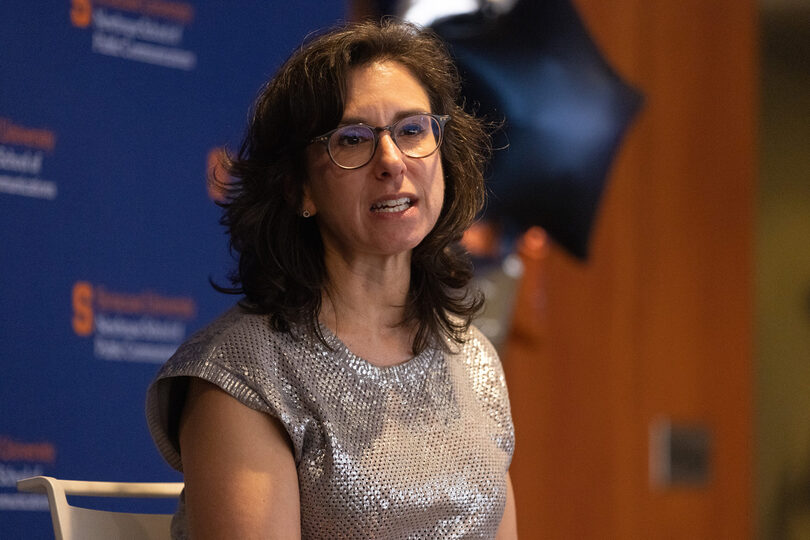
The now-New York Times investigative reporter visited Syracuse University’s Newhouse School of Public Communications and Syracuse’s Oncenter Crouse Hinds Theater in partnership with the Friends Of The Central Library Author Series Tuesday.
Haley Moreland and Mikayla Melo, both Newhouse seniors, introduced Kantor in the school’s Miron room. Then, journalism professor Lauren Bavis started the conversation, later inviting students to lead the rest of the questions.
At the Oncenter, Kantor began her lecture by asking audience members to raise their hands if they were New York Times subscribers, loved libraries, followed the Supreme Court and more. Then, she spoke on the reporting processes and investigations that inspired her upcoming book.
“I think that goes to show that beginnings are often rocky, and starting has always been hard,” Kantor told The Daily Orange. “This era is making it much harder, and we need to bring young people all the help we can provide.”
Kantor won a Pulitzer Prize in 2018 for her work with fellow NYT reporter Megan Twohey investigating sexual misconduct in Hollywood — most famously Harvey Weinstein. While she previously wrote about her reporting process in “She Said: Breaking the Sexual Harassment Story That Helped Ignite a Movement,” her new book is the advice she wishes she had received before graduating college.
At both Syracuse events, Kantor said her lessons are not only for aspiring journalists, but apply to anyone starting a job or considering a career change.
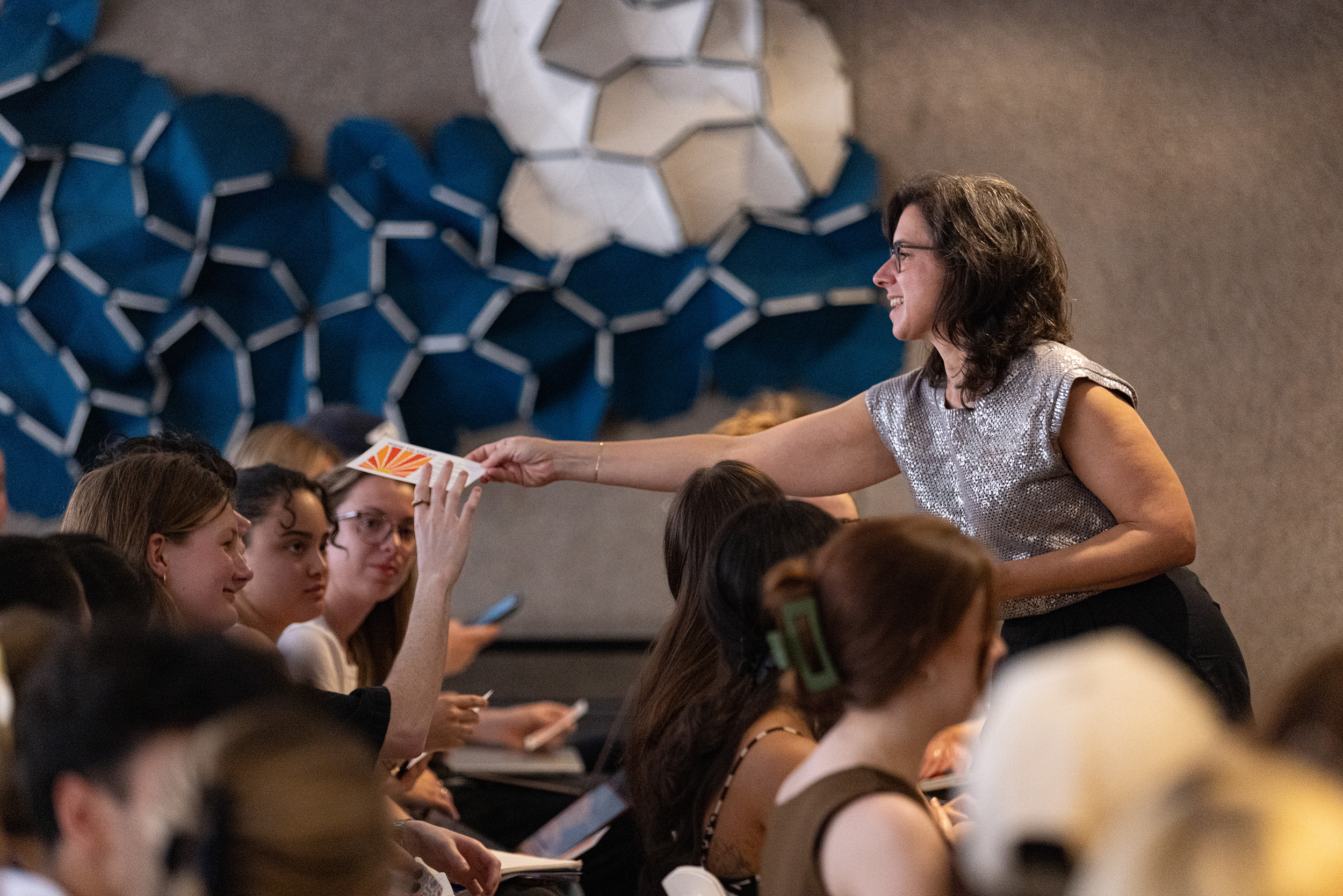
Kantor hands out flyers promoting her new book, “How to Start: Discovering Your Life’s Work.” Kantor shared her mindset learning from failure and her inspiration as an author. Cassie Roshu | Senior Staff Photographer
Kantor’s appearance drew SU students outside Newhouse, like freshman Maureen Harrington, who is studying information management and technology in the School of Information Studies.
Harrington doesn’t plan to pursue a career in journalism, but right now, she is rethinking her major, hoping to add a double major in television, radio and film. After hearing Kantor’s advice on where to begin in starting a career, Harrington took note of a few of Kantor’s words that she said will help her for the rest of college.
“I hear it all the time, but it made me realize that it is just so true,” Harrington said. “You have to take failure the same way you would take criticism.”
The inspiration for Kantor’s new book came last year, when she was asked to deliver the keynote address to the graduating class of her alma mater, she said. Before drafting what she wanted to say, Kantor asked the graduating class what they wanted to hear from her speech.
The students overwhelmingly sought the answer to one question: How are we supposed to find and start our life’s work?
That’s when Kantor said she found herself writing more than just a commencement speech; she spent early mornings, late nights and weekends writing to find those students an answer.
Whether pursuing a degree or retiring after decades of work, many attendees of Kantor’s lectures at both Newhouse and the Oncenter reached the same conclusion about why Kantor’s advice is particularly relevant today amidst artificial intelligence interviews.
Joseph Fahey, a 1975 graduate of SU’s College of Law, attended Kantor’s lecture at the Oncenter to learn more about Kantor’s investigation into Weinstein.
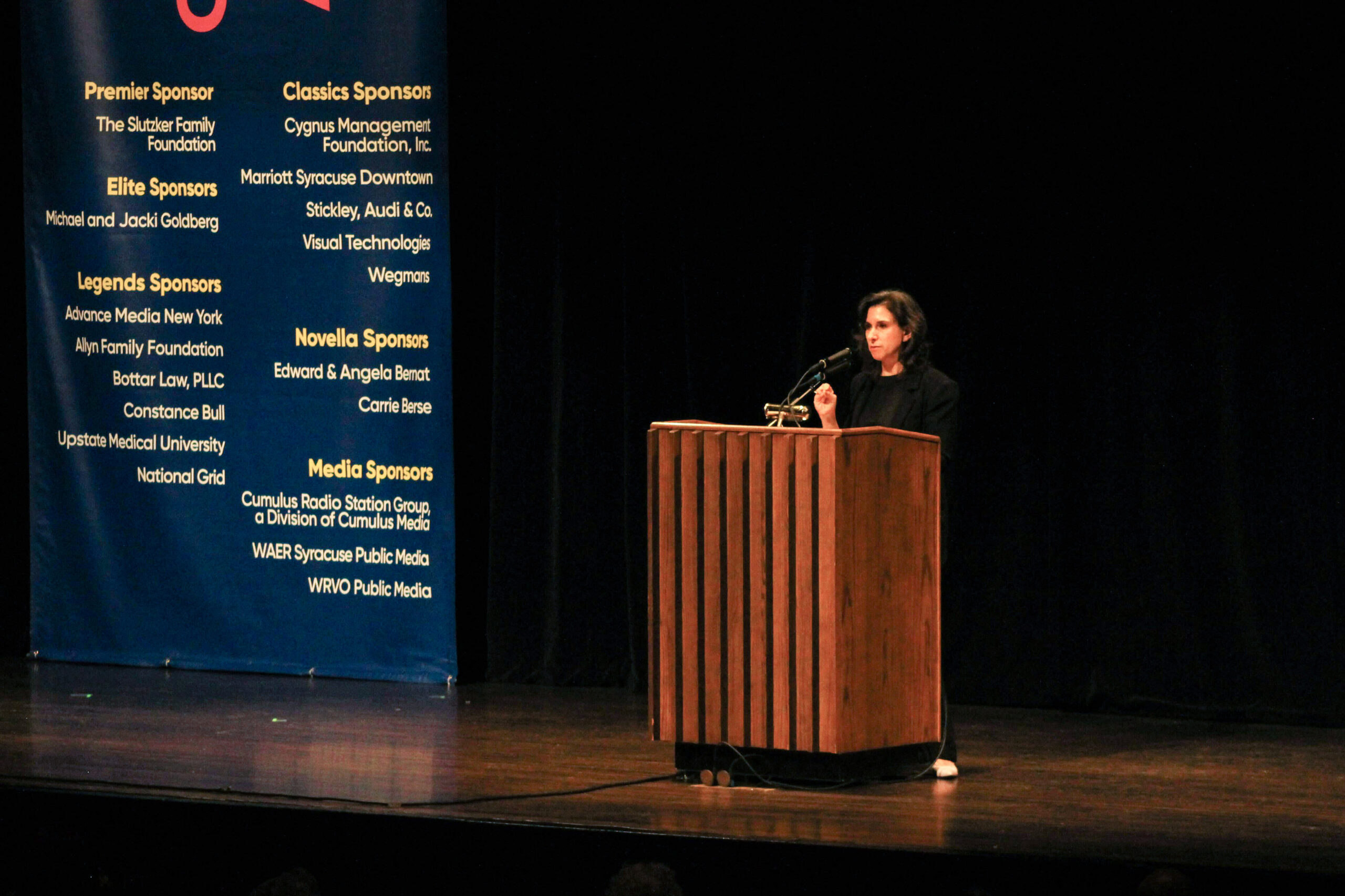
Kantor speaking during the Friends of The Central Library partnership event. Alexandra Rice | Asst. Copy Editor
But after leaving, Kantor’s advice to “never portray yourself with a label” or “prejudge anyone” was his biggest takeaway, even though Fahey retired in 2015 after working as an Onondaga County judge and criminal defense lawyer for 40 years.
When writing the book, Kantor said she had a certain reader in mind: a 23-year-old with a good resume who attended college and received good grades, who applied to 200 jobs since graduating, yet remains jobless.
Much like the person Kantor imagined writing to, Sofia Prieto, a first-year museum studies graduate student at SU, said the advice felt particularly relevant as she navigates higher education and the rising fees.
The 24-year-old graduate student also attended Kantor’s event at the Oncenter. But Kantor’s acknowledgment of the struggles that Prieto said many of her friends are currently facing was “refreshing.”
“It’s not that my friend can’t get a job. I can’t get a job, and we’re not the only ones seeing this effect,” Prieto said. “It was the first time I saw somebody from another generation per se fully acknowledge this ongoing issue.”
Before SU, Prieto attended Saint Joseph’s University, and after graduation, she plans on attending law school. After higher education, Prieto said she fears all the money put into obtaining her degrees will just bring her into “a world where employment isn’t a factor.”
But Kantor’s advice to “not give up before you don’t even start your career” changed Prieto’s mindset as she navigates her career goals.
“To have a job, it’s an insane privilege. It’s crazy to even think that it’s something that one needs to survive, but now it’s been converted into a privilege,” Prieto said. “Her advice and her words of wisdom, and her story also is just like another nod that we have no other option than to keep going through it.”