Opinion: Betting on politics hinders legitimate civic engagement
Get the latest Syracuse news delivered right to your inbox.
Subscribe to our newsletter here.
In April 2026, Mark Moran, Ezekiel Enriquez and Matt Klein all attempted to bet on their political races using the prediction market platform Kalshi. Although they were unsuccessful, the notion displays an ethical struggle within the modern betting market.
Kalshi went public in 2021. The platform introduced a new kind of betting: instead of focusing only on sports or casino games, users can bet on the weather, pop culture events, campaigns or even legislation.
On Kalshi, everything is framed as a simple yes-or-no question. Users can bet on whether Kamala Harris will receive a 2028 presidential nomination, if Syracuse University will go to March Madness in the 2026-27 basketball season or if the United States will bomb Iran. The latter is a real bet that led to over 100 people earning $10,000.
These questions, based on real-world occurrences, are detrimental to our society, as they increase the likelihood of insider trading.
In this case, insider trading refers to making a bet based on private information that could alter the outcome of the bet. For example, a politician could place a bet on their campaign, knowing that it’s likely to fail, and profit as a result.
Betting on campaigns isn’t only unethical when done by politicians. When ordinary citizens do so, they take what is supposed to be a confidential process of political participation and turn it into public knowledge.
If users plan to bet on a candidate using Kalshi, they may change their political vote in hopes of winning. On the contrary, people may view Kalshi odds as an indicator of election results. This may lead to them not voting if they feel an election is a lost cause.
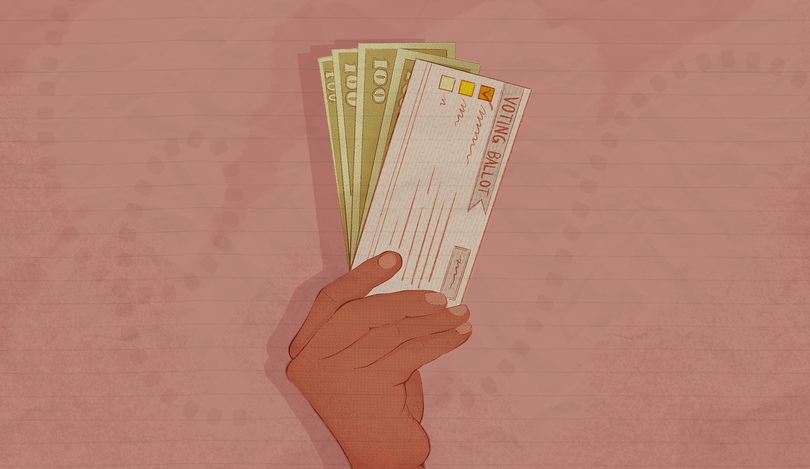
Zoey Grimes | Design Editor
The concern extends beyond elections. By enabling people to bet on any kind of real-world occurrence, odds might be skewed.
On Jan. 2, a Polymarket bettor gambled $34,000 and earned over $400,000 for predicting that Nicolás Maduro would fall from power just hours before his abduction from Venezuela.
With the ability to bet on military action — like whether or not the U.S. would bomb Iran — there’s a giant national security risk at hand. If one goes to Kalshi and sees a large amount of money put on a military strike, that’s a tell that the U.S. is about to conduct a strike.
Kalshi may also have a real impact on college campuses. Three out of four college students have gambled in the last year, with 6% having gambling problems. Although Kalshi has gambling age restrictions, they’re easy to bypass, perpetuating what is already an issue among college students.
Kalshi and similar betting markets are dangerous. They’re reinforcing greed in our society and discouraging political action.
On Feb. 28, a bipartisan bill was introduced into the Senate discussing the need for regulations on betting markets like Kalshi.
Some states are taking individual action. On April 21, the governor of Illinois, JB Pritzker, signed an executive order prohibiting state employees from using insider information to place bets on online platforms.
On April 22, New York Gov. Kathy Hochul issued a similar order.
Kalshi also faces an additional 19 federal lawsuits revolving around the app’s legality with state gambling laws.
All of these lawsuits have valid reasoning behind them. Kalshi and other prediction markets are harming our society as they’ve turned private decisions into ones based on public input.
Legislators must recognize the dangers of insider training and advocate for bills to protect U.S. citizens and our society as we know it.
Otherwise, we’ll move toward a world where important events with real implications are simplified to yes-or-no questions, evaluated on their potential monetary value.
Ally Price is a sophomore political science major. She can be reached at aprice09@syr.edu.