Opinion: Limited transparency around Big Bend proposals neglects consequences
Get the latest Syracuse news delivered right to your inbox.
Subscribe to our newsletter here.
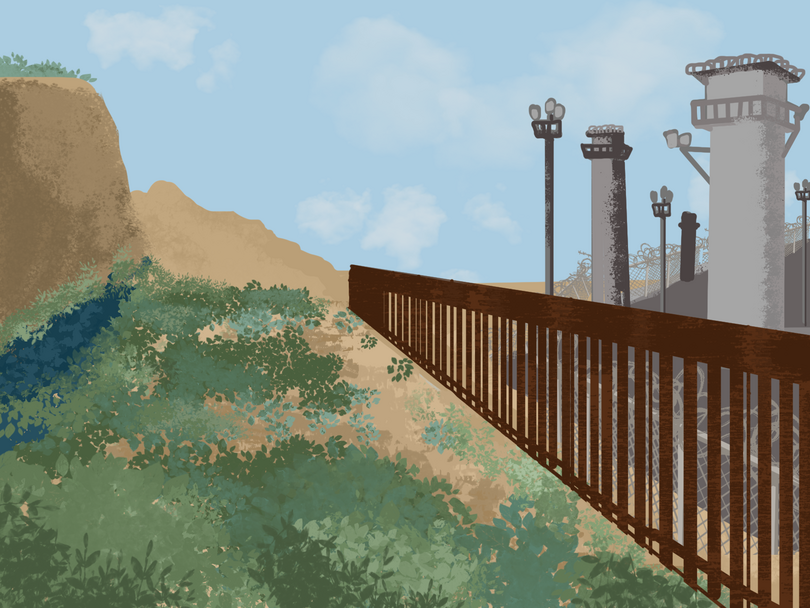
In February, online maps revealed potential construction along the United States-Mexico border cutting through Big Bend National Park. Within weeks, U.S. Customs and Border Protection altered these plans, removing some projects from official maps without a clear explanation, while leaving others in place.
Plans for border infrastructure in the Big Bend region under President Donald Trump’s administration haven’t been introduced through public announcement, but rather through quiet updates to federal maps and agency planning documents.
These hushed proposals make it difficult to pin down the full scope of the project. That lack of clarity should give pause. One of the nation’s most ecologically intact regions may be at risk without much public understanding or input.
Border security is a legitimate federal responsibility, and physical barriers can have a real effect. But impact depends on context. In Big Bend, where geography already limits movement and crossings are relatively low, the justification weakens.
The proposed border infrastructure expansion through the Big Bend region mistakes visibility for effectiveness, a familiar pattern in policymaking.
The issue isn’t simply whether a wall should be built in Big Bend — it’s how decisions like this are being made. Plans to implement physical barriers at one moment and virtual surveillance the next suggest a lack of coherence that undermines public trust.
Physical barriers should be tangible and signal action. Big Bend’s terrain is rugged and mountainous, making the area largely inaccessible. This isn’t a region where crossings occur as they do elsewhere along the border. Given that the geography already functions as a natural deterrent, imposing a physical barrier here is more symbolic than strategically necessary.
This distinction matters. Policy driven by symbolism tends to prioritize appearance over outcome, and in this case, the consequences are measurable.
The issue isn’t simply whether a wall should be built in Big Bend — it’s how decisions like this are being made.Gain Lim, Columnist
Such ineffective policies are not only unnecessary but also ignore the concerns of Big Bend locals. Local communities that are most directly affected have repeatedly expressed concern, yet members’ input is placed second to broader political narratives. This approach treats land as a backdrop rather than an environment with its own constraints and value.
Big Bend drives tourism in West Texas, precisely because of its remoteness and minimal development. In other words, the local economy depends on the very conditions the plan risks undermining.
A border wall, especially one cutting through protected land, would harm the qualities that sustain that economy. The government would be investing in a project that disrupts an existing, functional source of revenue, all for a questionable security benefit.
The vast ecological system that Big Bend supports is another concern. Wildlife depends on uninterrupted migration routes that extend across the U.S.-Mexico border. Large-scale barriers would fragment habitats and destabilize entire populations. Ecosystems aren’t easily repaired once disrupted. Structures can be removed, but original conditions can’t be fully restored.
The environmental impact is only part of the issue. The Big Bend region contains archaeological sites and others important in Indigenous history that exceed their economic value. Treating them as expendable for a generalized policy goal reflects a failure to account for what makes a place worth preserving.
This situation is even more frustrating because alternatives already exist. Officials have pointed to a “virtual wall,” using surveillance, sensors and targeted monitoring that adapt to the terrain rather than override it. This approach focuses resources where crossing actually occurs. Supporting these methods aligns means with ends.
Policy should respond to conditions, not be applied uniformly for the sake of consistency.
What seems like a simple stretch of border is really a question of how the U.S. defines the purpose of its protected lands. National and state parks are deliberately protected as a commitment to preservation. To compromise this commitment for an unnecessary project shifts expectations of these lands’ purpose. It suggests that even the most protected environments are ultimately conditional and subject to alteration when political priorities demand it.
A central issue in the Big Bend controversy is how major federal decisions can unfold without transparency. This lack of clarity should concern Syracuse University students, considering how much the Trump administration has been targeting higher education lately.
Big Bend’s uncertain future can’t be treated as distant or irrelevant when the same policymaking mindset can be applied universally.
Gain Lim is a freshman majoring in Health & Exercise Science. She can be reached at glim06@syr.edu.