Opinion: Trump’s defense budget will bring daily costs, harm higher education
Get the latest Syracuse news delivered right to your inbox.
Subscribe to our newsletter here.
As the conflict between the United States and Iran approaches its 50th day, President Donald Trump has proposed an increase to the nation’s defense budget for the next fiscal year. The conflict has already cost U.S. taxpayers billions of dollars and has claimed the lives of 13 U.S. service members with hundreds more wounded.
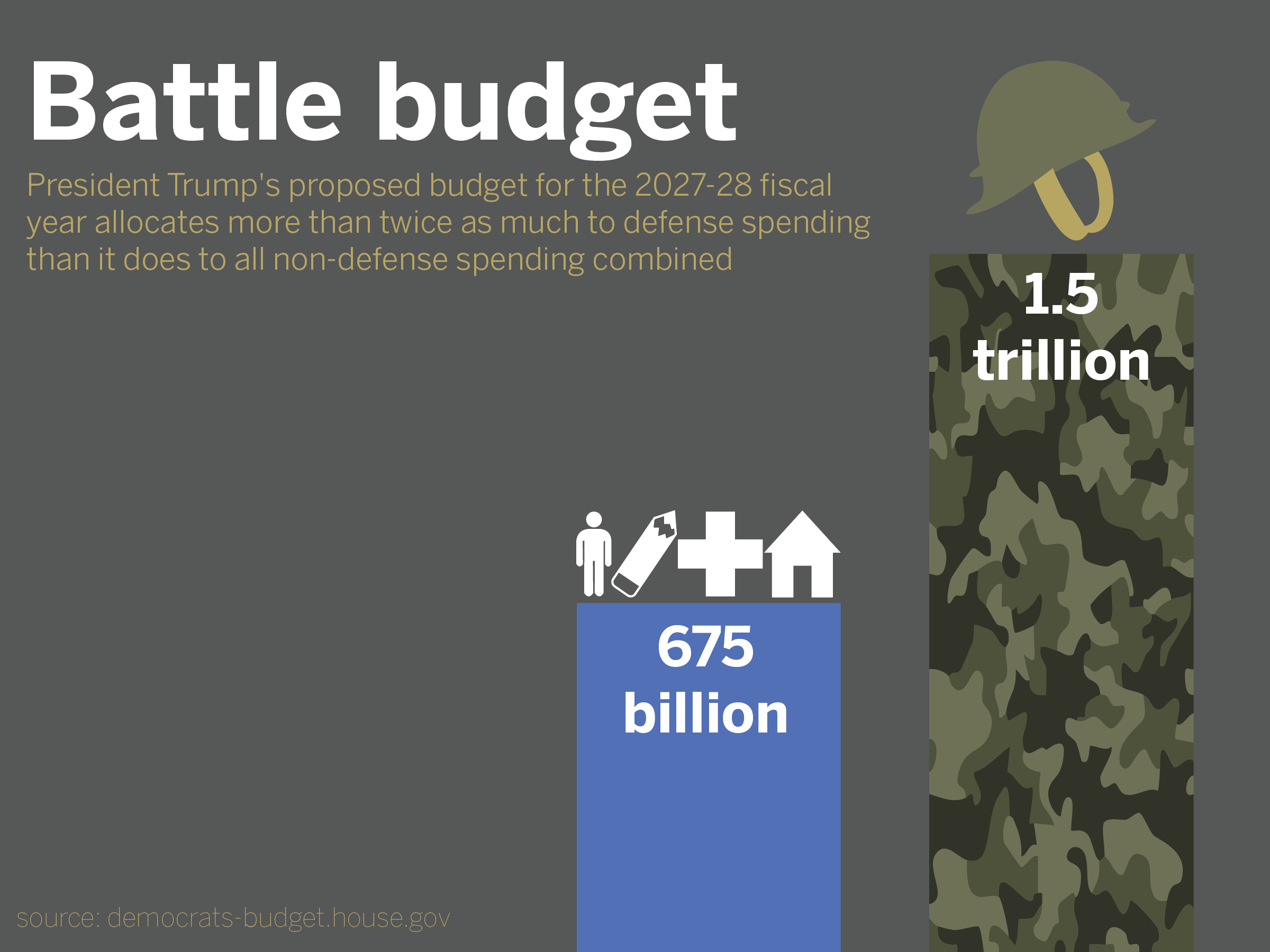
The revised budget calls for a 42% increase in defense spending from the current budget, allocating an outrageous $1.5 trillion toward the U.S. military. This would be the highest military budget in U.S. history. The funds would be used for munitions resupply, increased pay for service members and the construction of the Golden Dome, a missile defense shield similar to Israel’s Iron Dome.
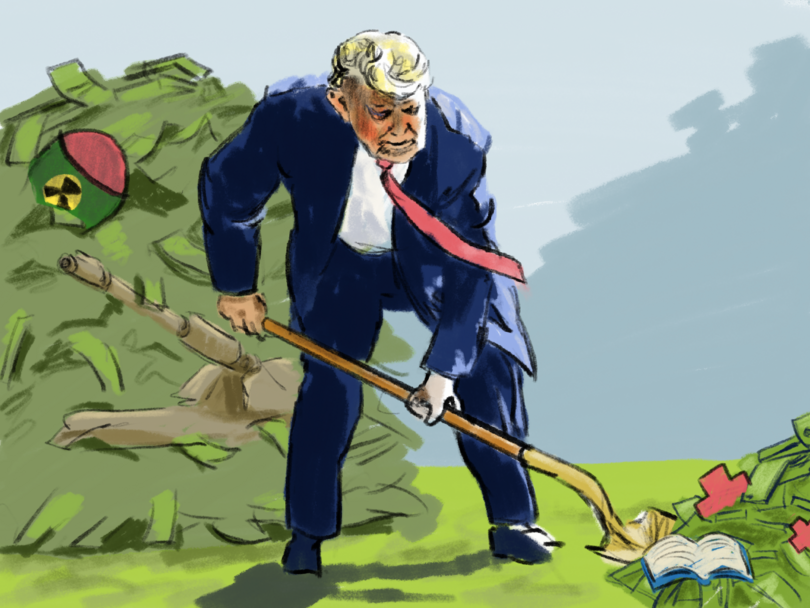
To fund this proposed defense budget, the administration would need to make substantial cuts to social services, such as the Unaccompanied Alien Children program and the Refugee Resettlement Program. The administration even proposed a $5 billion budget slash for the National Institutes of Health, proving the White House is more concerned with its foreign influence than economic challenges or citizens’ well-being.
The White House has no interest in helping the average American through its budgeting.
“It’s not possible for us to take care of day care, Medicaid, Medicare, all of these individual things,” President Trump said.
He later reiterated this sentiment, claiming military strength as the nation’s top priority. These actions suggest Trump won’t hesitate to brush off federal programs built to aid the American public.
Zoey Grimes | Design Editor
An already weak economy is affecting Americans nationwide. As students, parents and workers struggle to keep up with rising costs of living, our government is simultaneously cutting programs designed to help them. To fund the remaining portion of the budget, the president will likely pursue aggressive tariffs globally, which would function as a tax against Americans and raise prices for low-income families once again.
Unsurprisingly, the war in Iran has resulted in skyrocketing oil prices, pushing the average price of gas to $4.12 per gallon, with experts predicting it could exceed $5. Rather than focusing on corralling that issue, the Trump Administration finds foreign policy and militant power to be a more pressing matter.
College students rely heavily on their vehicles, with 85% commuting to school rather than living on campus nationwide. Students are already forced to deal with the financial burden that a four-year degree in the U.S. brings. Rising oil prices and costs of living can easily push education out of reach for many Americans.
But student troubles don’t stop there. SU and other private universities nationwide have recently faced fallout from budget cuts. Instead of unnecessarily bolstering our defense budget, federal funds should be refocused on universities. This would allow for an accessible education, where universities aren’t forced to cut programs or layoff faculty when experiencing financial hardship.
Students need to be conscious of the impact the U.S. budget has on their education and even personal finances. Understanding how our government directs funds and can impact our learning is vital. Advocating against this hyperfixation on militant spending is necessary to ensure that essential programs are allotted necessary resources.
James Reed is a freshman studying political science. He can be reached at jcreed@syr.edu.