Personal Essay: My time abroad put immigration experience into perspective
Get the latest Syracuse news delivered right to your inbox.
Subscribe to our newsletter here.
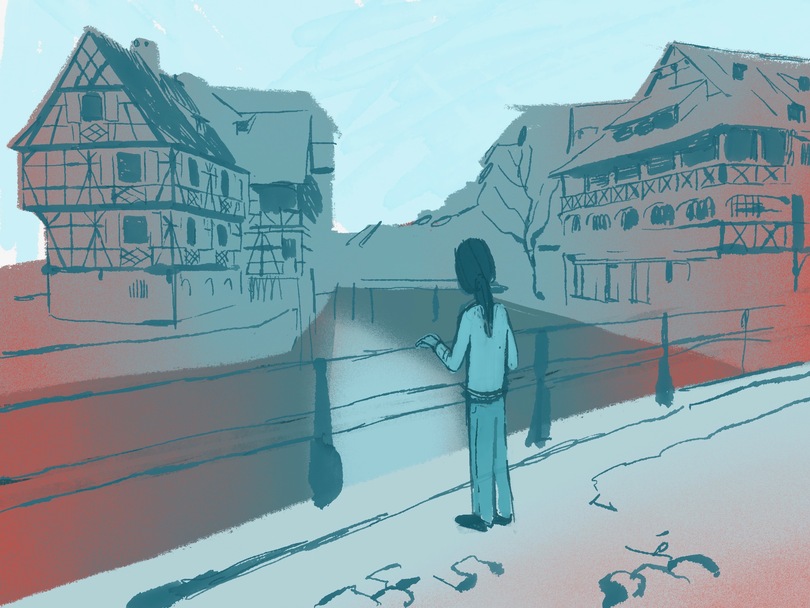
After a challenging fall semester, I was grateful for the opportunity to unwind and let go of my inhibitions during my spring semester abroad in Strasbourg, France. But I soon realized this experience would force me to confront some uncomfortable realities about my identity, especially in relation to my parents.
I wanted to come to Strasbourg to improve my intermediate French and immerse myself in a multicultural, mid-sized European city. Although most locals I meet, on the tram or in cafes, are relatively friendly and cooperative with my choppy French, the inevitable moments when I’m met with less patience remind me of my parents.
They leave me feeling a sense of hurt — not for myself, but for them.
English is a useful crutch in France when my limited French fails me, as around 30% to 50% of French people speak English. When English fails, online translation services can save the day. But for immigrants like my parents, migrating to a country where they had no crutch or Google Translate and were immediately pushed into the workforce and the demands of daily life, continues to be a harrowing experience. There’s less forgiveness for honest mistakes and real stakes at hand.
Studying abroad has often felt like a glorified form of migration, a realization that has often made me feel uncomfortable and guilty during my time in Strasbourg.
The immigrant experience is something I felt deeply connected to through my parents, but it wasn’t until experiencing firsthand being the target of annoyance that I realized I understood very little about the emotional side of immigration. While abroad, my most common daily obstacles include making sure I’m at the right bus stop or deciphering a cafe menu. For immigrants, the everyday struggle includes navigating unfamiliar billing and administrative systems, communicating with customers and coworkers and enduring social isolation.
Studying abroad has often felt like a glorified form of migration, a realization that has often made me feel uncomfortable and guilty during my time in Strasbourg.Christy Joshy, Personal Essayist
Especially given the tumultuous past few months in the United States, with Immigration and Customs Enforcement ravaging neighborhoods, schools and streets around the country, and with President Donald Trump’s administration carelessly wielding anti-immigrant and xenophobic rhetoric regularly, the added guilt of escaping the chaos has weighed on me.
Although I’ll return to the U.S. soon, I’m reminded of all the immigrants and refugees who’ve escaped violent regimes, terrorist attacks and poverty in their home countries to never return again, and the guilt they must feel at leaving others behind. My privilege as a legal citizen who’s enjoyed a relatively safe and comfortable life in the U.S., and now in France, has never been clearer to me than this semester.
All of this being said, my four months here have left me more grateful — not just for the opportunity to experience life abroad, but also for the ability to step into my parents’ shoes. It helped me feel more connected and appreciative of their sacrifices for me and proud of how far they have come — not only adjusting to the U.S., but also keeping their culture, traditions and native language alive in our home and within me.
As I reach the end of my semester abroad, I’m overwhelmed by the amount of growth and introspection I’ve experienced here.
Although the current political climate in the U.S. intimidates me as I prepare to return home, I leave this experience still knowing that multiculturalism is America’s greatest strength and that we will hopefully come away from this difficult time with greater solidarity, understanding and compassion for those whose shoes we haven’t walked in.
Christy Joshy is a junior international relations and supply chain major. She can be reached at cjoshy@syr.edu.