Raíces y Ritmo bridges Latino communities through diverse tapestry of music
Get the latest Syracuse news delivered right to your inbox.
Subscribe to our newsletter here.
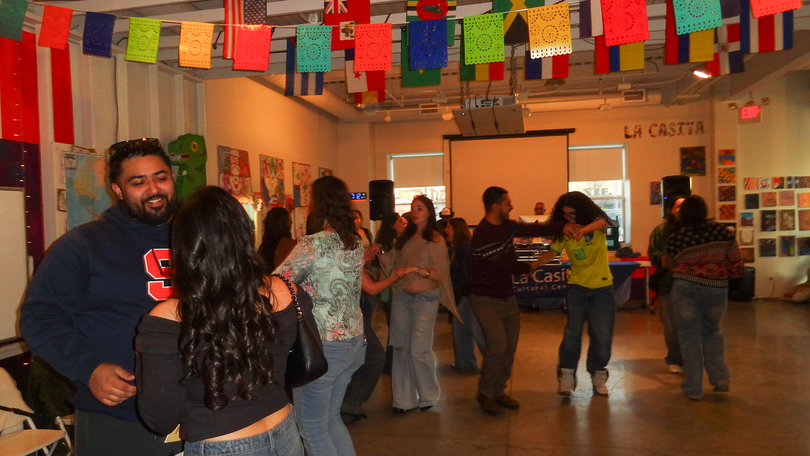
“AA Café” started as a Latin music broadcast show focusing on different genres. On Saturday, it transitioned into a live event with colorful pieces of art, laughter from people dancing, smells of food and Latin music bouncing off the walls, all creating a place full of life and community.
“We felt that we needed to bridge the gap between Latino students in the university and Latino people in Syracuse,” Syracuse University senior Adriana Vivas said. “Since we felt there was a bit of a barrier.”
To break the barrier, Vivas worked with SU senior Amanda Long to co-host “Raíces y Ritmo: An Evening of Latin Music, Culture, and Dance” at La Casita Cultural Center on Saturday evening.
The event was just one aspect of the duo’s capstone project this semester, marking the first collaboration between The Bandier Program for Recording and Entertainment Industries and La Casita.
DJs from the city of Syracuse and SU played tunes spanning from all areas of Latin America. Genres included Puerto Rican reggaeton, Brazilian funk, 90’s hip-hop, American pop and Bachata.
Mariah Brown, who goes by “NORTHWAY” onstage, was one of the two SU student DJs to perform at the event, along with two Syracuse-based professional DJs, including the host of Pulso Central station, Renzo Quesada, DJ Lorenz-The Experience.
“It was cool to highlight different countries’ take on reggaeton, because it’s all good music. It’s all fire,” Brown, an SU senior, said.
The event is just one installment of Vivas and Long’s capstone project, through which they hope to connectSU students and the Latin community. They also created a newsletter called “AA Café,” which aims to “highlight more genres of Latin music by writing profiles with lesser known Latin artists, writing excerpts on Latin music news and listing Latin song recommendations throughout genres,” Vivas said.
Since freshman year, the two have also hosted a radio broadcast of the same name, where they would focus on different Latin genres to introduce itslisteners to a wider variety of music.
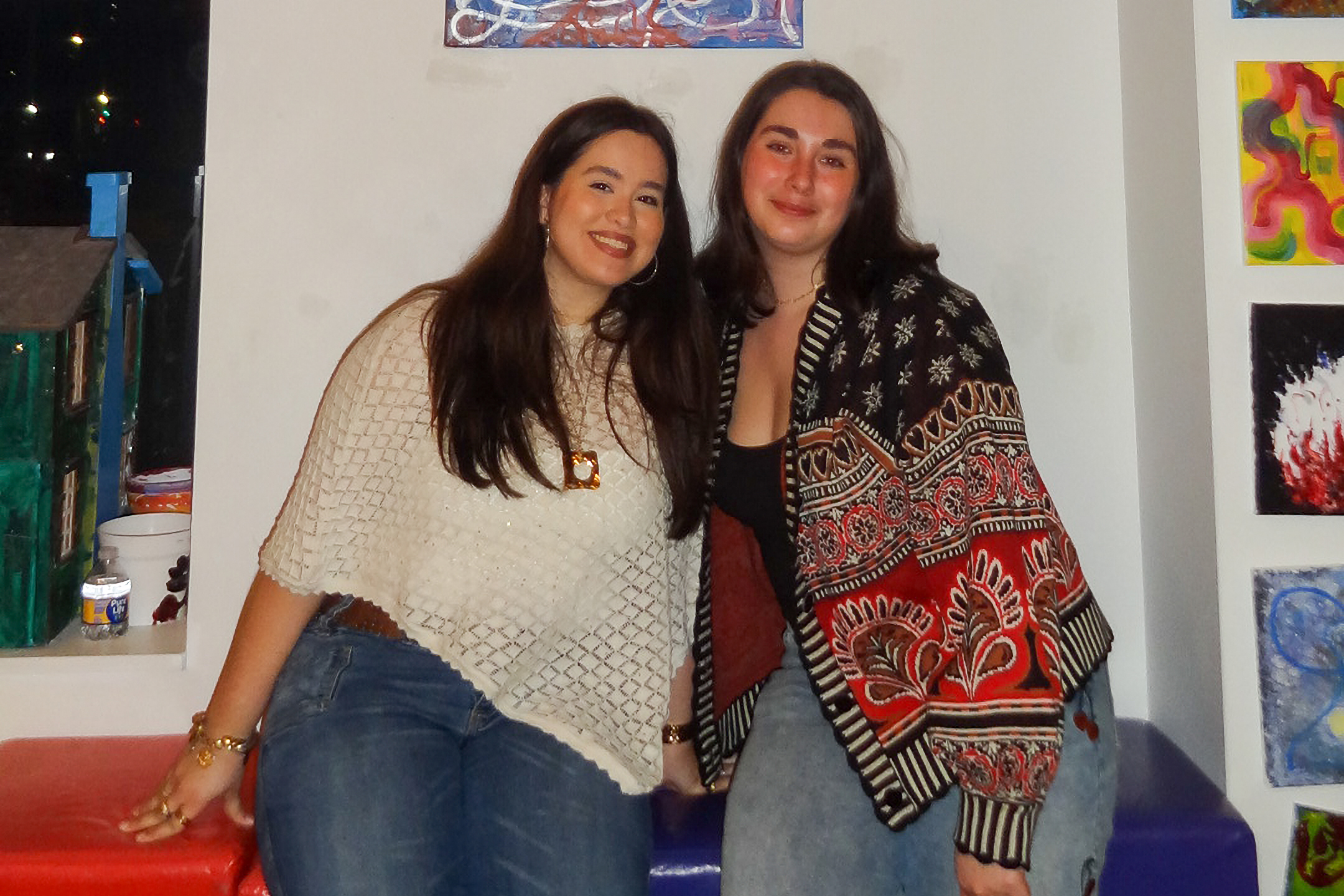
As part of their senior capstone, Adriana Vivas and Amanda Long co-hosted the event on Saturday. It marked La Casita’s first collaboration with The Bandier Program for Recording and Entertainment Industries. Andrea Hernandez | Contributing Writer
“The goal of the event is to highlight different genres outside of reggaeton because Bad Bunny is super popular, but there’s a million other Latin genres,” Long said.
La Casita is an SU cultural hub focusing on Latin education events for children and teenagers in the area. First established in the Bronx, the branch has reached across the state, creating a thriving community for Latinos in Syracuse. The hub’s events range from music performances to art exhibits, with the goal of preserving cultural heritage.
Many of their friends regularly volunteer at La Casita, so they proposed the idea to the cultural center. They created a pitch deck outlining their goal of bringing together the student and local communities through a Latin night event.
Tere Paniagua, executive director of SU’s Office of Cultural Engagement for the Hispanic Community and director of La Casita, became one of the main supporters for Vivas and Long’s event by providing them a space to host it for free.
Paniagua said Vivas and Long have opened the door for more Bandier students to contribute to Syracuse’s Latin community and celebrate the fusion of culture.
SU students and the Latin community have the starting point to create more opportunities for people to connect and provide local Latin artists with the chance to be recognized, Paniagua said.
“As Latin music continues to grow and revolutionize the music scene globally, it is important for students to be exposed and connect with the thriving culture,” Paniagua said.
Long saw music as a mechanism to share Latin cultures with SU students and establish a connection for future Bandier students to celebrate and contribute to the Latino community.
“There’s a whole world to explore and love,” Long said. ”It’s a good way to celebrate culture rather than have it be divisive.”