Founded by SU senior, Miirror app bridges gaps in eating disorder recovery
Get the latest Syracuse news delivered right to your inbox.
Subscribe to our newsletter here.
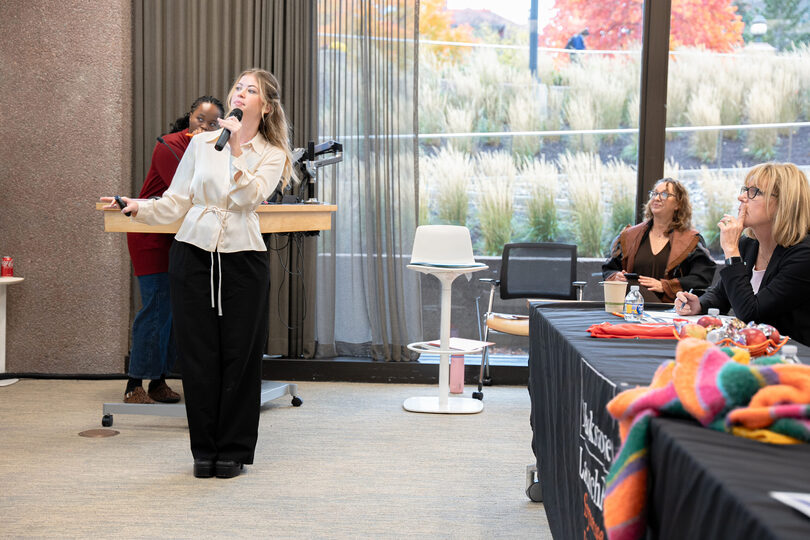
Alongside her chaotic schedule, Syracuse University senior Haley Greene spent the past 11 months working on her passion project — a digital platform aimed at addressing “critical gaps” in eating disorder treatment.
Miirror, Greene’s startup now operating as a C corporation, seeks to support individuals in recovery by offering tools for the hours when patients face gaps in professional support. The company, which has a team of around 15, combines peer support, recovery tools and clinician-informed resources into a centralized system.
Growing up in Los Angeles and previously working as a model and actress, Greene witnessed eating disorders firsthand — both in her professional life and among those close to her. Recognizing systemic failures in treatment access for those that struggle inspired her to start Miirror, Greene said.
“It started as a passion project of seeing this huge gap in the healthcare system and trying to figure out a way to fix it,” Greene said. “I found a solution to a problem that I really, really wanted to solve.”
With a mission to build the “nation’s first comprehensive peer support ecosystem for eating disorders,” according to its website, the app will be designed to address the barriers that make recovery difficult. The website highlights obstacles like long waitlists for treatment, the high cost of care and limited support outside of clinical appointments.
“This is a 24-hour mental disorder,” Greene said. “What happens in those hours between care at 3 a.m. in the morning, when you’re not with a professional?”
Miirror, currently going through internal testing, works with hospitals around the United States to gain clinical input from medical professionals. While Greene said her goal is to have the platform be available for anyone struggling, it currently targets students.
Eating disorder treatment can cost tens of thousands of dollars, putting care out of reach for many families and students. Even for those with access to treatment teams, support can be fragmented, Greene said. She added that one goal is to integrate the platform into institutional health plans in a model similar to how universities provide students access to wellness apps.
Miirror’s free model will include daily recovery tools based on therapeutic frameworks used in inpatient treatment centers, as well as educational resources and crisis support information. A premium model would offer therapy matching, peer mentorship and personalized care pathways.
A major component of the platform is its peer-support network, which would connect users with people who’ve been in recovery for two or more years.
SU senior Fernanda Kligerman, the user interface and user experience designer for the team, said in addition to the peer support system, the “voice journaling” aspect is what she most valued contributing to.
The system allows users to record themselves talking about their struggles and progress. The information users share will be synthesized, and key themes will be analyzed to form a response with advice.
“Its so simple yet so effective, because things that a lot of people struggle with don’t just pertain to eating disorders,” Kligerman said.
The startup is developing tools clinicians can use to monitor patient progress between appointments, allowing them to identify patterns, recommend coping skills and better understand patients’ triggers outside of clinical settings, Greene said.
Miirror is entering a field with few specialized digital tools despite the prevalence of eating disorders.
“There’s over 10,000 mental health apps, and there’s zero in eating disorder recovery with any proven outcome,” Greene said.
For people who have experienced an eating disorder, the lack of consistent support between formal treatment settings can be felt deeply, Greene said.
“Eating disorders are very competitive, so if you don’t have the right kind of support or professionals looking after that, it can become a spiral,” SU senior Isabel Marin Young said.
Using her own experience to help others with eating disorder struggles, Young has seen many societal misconceptions around them including what Greene hopes to address through her platform.
“It’s not about the food, it’s not about the look. It’s not about vanity or this shallow layer that people assume it is. It’s all based on fear, trauma and need for control,” Young said.
Young said Miirror will be a “good middle ground” for people who want to take a next step in recovery by getting “honest advice” from people who have previously gone through similar things. But “being ready to recover yourself” is an important step.
“Give yourself some love, you have to give yourself grace,” Young said. “When you do reach the moments in recovery where you are in a better place, life is more fun.”