When student March Madness brackets flop, chaotic punishments roll in
Get the latest Syracuse news delivered right to your inbox.
Subscribe to our newsletter here.
March means a lot of things on a college campus — the end of midterms, the first warm days of spring and, for many students, the sometimes-friendly competition of March Madness brackets.
Syracuse University sophomore Aaliyah Avalo played basketball growing up and enjoys watching the NBA. This year, she ventured into college basketball, participating in multiple March Madness bracket pools for the first time, one of them with her close friends.
“We were just bullying each other,” Avalo said. “Like, I need to win. I hope they lose.”
This year, all men’s brackets had to be submitted before the NCAA Tournament began on March 19. The tournament ended Monday, with the University of Michigan taking the men’s title. SU men’s basketball hasn’t reached March Madness since 2021, but the women’s team made it to the second round this season.
College basketball fans participate in the season by making brackets, selecting which teams will win each game and who will come out on top. Many SU students are enrolled in multiple brackets simultaneously. With friend groups, campus jobs and student organizations all running their own pools, some competitive brackets came with punishments for the losers.
That’s not a new concept, though. Fantasy football leagues have long been defined by elaborate loser punishments, gaining popularity in the 2000s and establishing the norm that losing a sports pool should cost something beyond bragging rights.
One viral punishment came during the 2017-18 season, when a last-place fantasy football finisher was forced to spend 24 hours in a Waffle House. Now, videos of similar stunts after March Madness spread across TikTok, turning personal humiliation into content and raising the stakes each year.
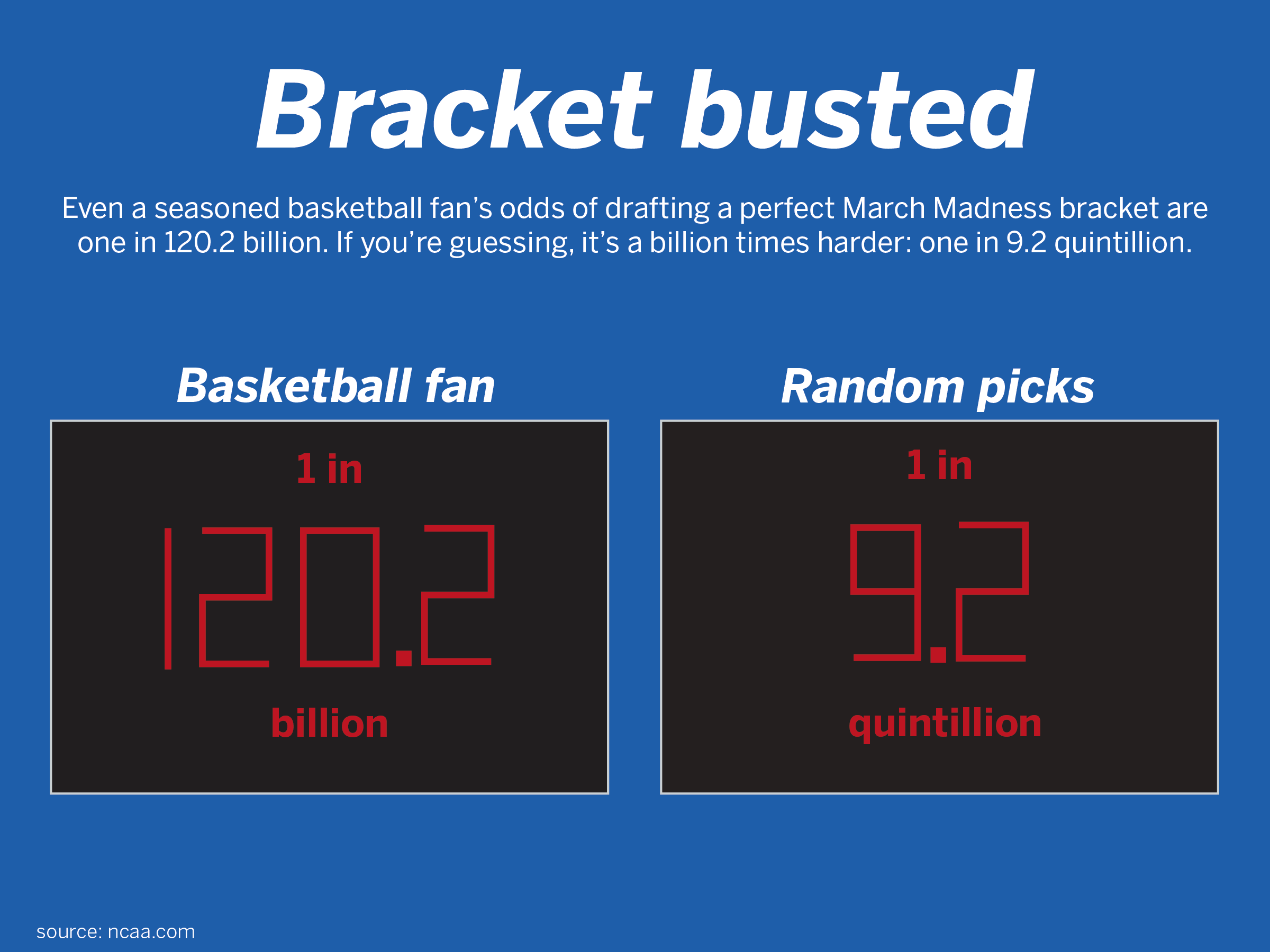
Between 60 and 100 million brackets are estimated to be submitted every year, and this year’s ESPN Tournament Challenge alone recorded 26.6 million completed brackets, a new record. The tournament’s single-elimination chaos has yet to produce a single perfect bracket, making anyone a candidate for punishment.
Avalo entered two brackets this year, both for the men’s tournament. One was called “Let’s Go Otto” with a group of six; the other had 16 entrants from her professional fraternity, Kappa Theta Pi. She meticulously crafted her brackets, looking at the teams’ statistics and potential previous matchups.
In the KTP bracket, the effort paid off: She finished fourth. In Let’s Go Otto, Avalo had Gonzaga University going all the way. The Bulldogs did not. They were eliminated by the University of Texas in the Round of 32.
The rule for the Let’s Go Otto bracket was that the winner gets to choose the loser’s punishment. Sophomore Sarah Gorenstein won the pool and made the “difficult” decision.
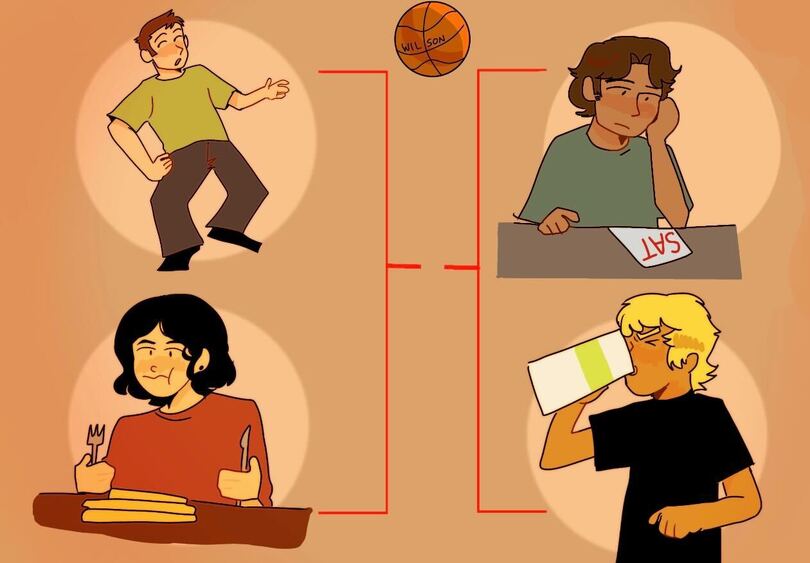
Though Avalo doesn’t know it yet, Gorenstein plans to make Avalo take a practice SAT during a friend group game night this weekend, while everyone else plays around her. This punishment is one of the more well-known viral fantasy football punishments.
Last year, the group’s punishment was wearing an embarrassing Five Below T-shirt in public.
The competitive edge, Avalo said, comes naturally when you watch games with people whose selections differ from yours. Her bracket group often studies together in the Schine Student Center, where they watch basketball games on the video wall.
Ilyan Sarech | Design Editor
She remembered one game in particular in the second round — Iowa State versus Kentucky — where Avalo was the only one in her group who had Iowa State winning.
The trash talk was immediate once the Cyclones prevailed. That investment is part of what makes bracket culture feel distinct on a college campus, Avalo said.
“You see a lot of people talking about it, so you’re just more inclined to do it,” she said.
SU senior Giavanna Rebstock also sees bracket-making as an essential college experience. She joined her bracket, a 22-person pool called “Orange Woman,” because her guy friends sent it to their group chat and asked everyone to join, “bribing” them by providing a prize for the winner.
The prize is a free beer and a packed bowl, courtesy of the guys’ apartment. Rebstock said the incentive worked.
“We’re broke college students. I don’t even smoke weed, but I’ll take a free beer any day,” Rebstock said.
Rebstock picked Villanova University to win the tournament, and she came in last place after it was eliminated in the first round. Initially, there wasn’t supposed to be a punishment for the loser, but when Rebstock’s friends realized it’d be her, they knew they had to think of something.
Ironically, the punishment was self-inflicted, she said. Her friends suggested she go out and take shots, but Rebstock countered with something better: Sshe would perform the worm at Faegan’s Cafe & Pub, aided by being a former competitive dancer. Her friends thought it was hilarious and agreed immediately.
“I’m actually just gonna be super chill and nonchalant in the bar and then I’m just gonna do it,” Rebstock said.
The punishment is beside the point. Rebstock saw the bracket as less about basketball and more about one more thing to do with her friends before they graduate.
“I’m trying to just say yes to things these days because I know I only have a certain amount of time,” Rebstock said. “I have literally two seconds left, I’m not gonna say no.”
Not every bracket pool operates on punishments. At the Ernie Davis Fitness Center, Syracuse graduate student and supervisor Dylan Phillips had a different vision. A few weeks before the tournament, he left a stack of paper brackets at the center’s front desk with a sticky note: fill one out and we’ll have a little competition. No prize or punishment, just something to keep track of between shifts.
“Every time I came in to work, I was checking which teams had been crossed off and how my bracket was doing,” said Caitlin Shephard, an SU sophomore who works at the center. “It was fun to have something to check in on every time I came in.”
Shephard had never participated in a bracket before. She chose Michigan to win because her boyfriend lives there, then she finished second in the pool when the Wolverines captured the title.
Maya Philips, a senior who has worked at Ernie Davis Fitness Center since her freshman year, came 16th in the bracket of 20. She said she completed her choices by assessing the teams “vibes,” only noticing the win-loss record numbers partway through filling out her bracket.
What made the pool fun, Shephard said, was not basketball knowledge or competition. Instead, it was because it sparked conversations between coworkers.
Phillips constantly sent score updates to the work group chat. One co-worker drew a picture on his bracket instead of filling it out and received zero points, until their boss advocated for him to get 20 points for artistic merit. He still placed last.
Philips and Shephard both agreed the pool would benefit from stakes next year. Though when told that another group’s last-place finisher would be taking a practice SAT as punishment, Shephard was quick to respond.
“Oh my God, that’s horrible,” she said. “I would die.”
Despite the grueling punishment, some believe the competition was never really about basketball. For Rebstock, it was about having one more reason to say yes before the year ends.
“I’m gonna have a punishment,” she said, “but we’ll all be together. It’ll be a funny memory to tell.”