Beneath absurdities of ‘Euphoria’ lies stark truth of addiction, redemption
Get the latest Syracuse news delivered right to your inbox.
Subscribe to our newsletter here.
Editor’s note: This article includes mentions of drugs and violence.
In 2019, at the height of internet trends and flashy aesthetics, I found myself drawn to the glittery, hypnotic world of HBO’s “Euphoria,” which debuted that same year. Its intoxicating visuals and picturesque, purple eyeshadow-wearing stars became a phenomenon among the youth — including me.
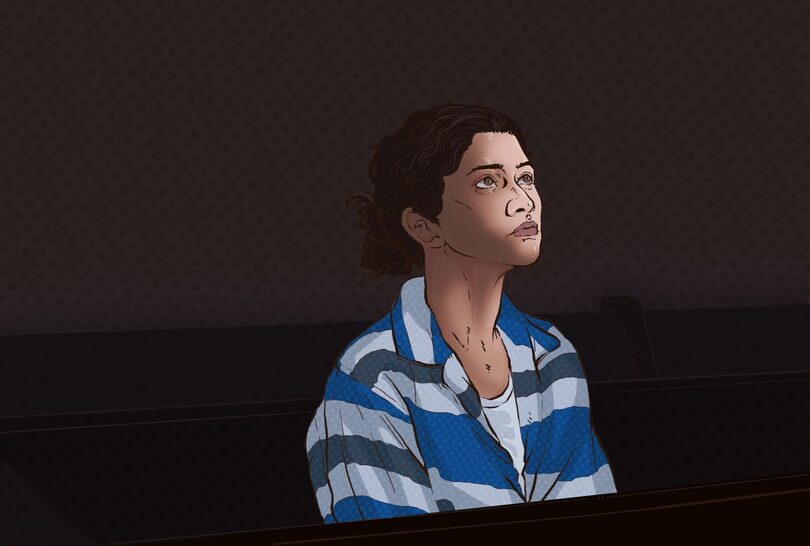
But beneath the glitz and glamour, “Euphoria” — creator Sam Levinson’s defining work — has been and always will be a show about addiction. While tonal and aesthetic shifts across seasons have strayed fans over the years, the throughline of the series is Rue Bennett’s (Zendaya) battle with drugs.
That plotline carries over to the third and final season, but in a broader context. It opens with a setting that’s unfamiliar to Levinson’s high school drama. Hallways and basement parties turn to Western frontiers and the underbelly of Hollywood’s drug and sex markets. Rather than grappling with her own drug use, Rue’s now more deeply involved with the shadowy world of drug dealing.
We last saw Rue and the ensemble of Cassie Howard (Sydney Sweeney), Nate Jacobs (Jacob Elordi), Jules Vaughn (Hunter Schafer), Maddy Perez (Alexa Demie) and more in a fractured, but familiar state, at the end of Season 2. At the end of their high school careers, friendships had blown up and secrets had been exposed, yet their lives crept on.
Season 2 followed Rue through the depths of the worst of her addiction. But after burning nearly every bridge in her life, it miraculously ends somewhat optimistically, as she’s clean and has repaired relationships.
Still, the elephant in the room was the suitcase stuffed full of $20,000 worth of drugs that Rue borrowed from Laurie (Martha Kelly), the strange yet calculated drug lord. By Season 2’s finale in 2022, Rue’s mom, Leslie Bennett (Nika King), had flushed every pill in the suitcase down the toilet, putting Rue in debt to Laurie.
So inevitably, when Season 3 was announced, fans — myself included — still had residual anxieties over what this predicament meant for Rue. It explained why when the season opened with a five-year post-high school time jump, instead of lounging with her friends, she was drug muling for Laurie, then tangling herself with the underworld of ruthless kingpin Alamo Brown’s (Adewale Akinnuoye-Agbaje) strip club.
Rue spends the season caught in the crossfire of a tense narco-war and eventually becomes an informant to the Drug Enforcement Administration. It’s a jump up from her previous drug-induced escapades with less consequence. Now, Rue’s met with the dark realities of her habits, as her involvement in the drug trade intensifies.
On the other hand, supporting storylines developed in a far more absurd fashion. Cassie is engaged to Nate, throwing any remaining loyalty to her ex-best friend Maddy (who dated Nate for a majority of the show) out the window. More bizarrely, she’s an OnlyFans model, desperate to win the adoration of online fans and propel herself into Hollywood. Scenes of Cassie posing pornographically were some of the hardest to endure.
Maddy’s headstrong nature led her into the heart of talent management, but she’s hungry for more success. Nate’s taken over his father’s real estate empire, yet faces challenge after challenge, spending the majority of the season indebted to and beaten up by Armenian loan sharks.
It’s all wildly entertaining but feels like a sensational spinoff of the show we once knew, using some characters as mere vessels to chug the series along. Season 3’s Western aesthetic — Black cowboys, outlaw-style shootouts and Quentin Tarantino-esque cinematography — is a stark contrast from the show’s previous settings of suburban California.
A majority of the pitfalls of Season 3 are a result of the four-year gap between the releases since the last season.
In the “Euphoria” universe, our characters grew up, and their compulsive habits faced real-world consequences, but we missed out on the five years of potential character development since they were last in high school.
Off-screen, Levinson and his team had to grapple with the writers’ strike and the overdose and death of Angus Cloud — who stole hearts with his portrayal of Rue’s dealer and best friend Fezco — all while the show’s star-studded cast skyrocketed in fame.
If you’re forgiving, these obstacles can help explain the lack of continuity and tonal disconnect felt between the second and third seasons. But as a longtime fan of the emotional resonance that made “Euphoria” work, it’s only right to be disappointed in the rollout of certain character arcs. Some, like Jules and Lexi Howard (Maude Apatow), were completely abandoned.
Mostly Jules, who served practically no purpose to the entire season’s plot. She’s a sugar baby who’s cooped up in a gorgeous Los Angeles penthouse. Rue longingly visits her time after time, but beyond that, the sensitive, sweet and complicated character is gone.
Besides problems with the script, Season 3 was missing an essential piece of the show: Labrinth’s iconic soundtrack. The artist whose transcendent sound had trademarked the show faced personal challenges with Levinson, eventually leaving the show to be replaced by Hans Zimmer.
While Zimmer is a successful film composer in his own right, Labrinth’s music had become instrumental to the show’s identity. Zimmer’s starker orchestral approach was lackluster in comparison to Labrinth’s psychedelic beats, but marked a clear transition the show was making with the final season.
It seemed Levinson wanted to move the people and themes of “Euphoria” into a world without the forgiveness of adolescence. He paired darker plots with heavy Christian messaging, including biblical references in almost every episode.
While it’s slightly over the top, I found the religious motifs fitting for Rue’s character arc, particularly in her interactions with Ali Muhammad (Colman Domingo), her quietly profound sponsor. As she searches for redemption, Rue is guided by his wisdom, and their recurring relationship is the one that’s remained uncompromised throughout the chaos of the show.
But above all else, Rue remains the soul of “Euphoria.” Her nonchalant and oftentimes comedic narration was the voice of the series, and in many ways, the voice of the viewers. Her commentary on those around her was often what I was thinking. And despite being a problematic character, Rue approached her shortcomings with surprising moral clarity.
Rue’s tomboyish and forlorn demeanor concealed a kindhearted girl who was just looking to survive. In every scene, Zendaya portrays Rue with empathy, in a way that made me feel like I knew her character. From watching her at rock bottom to then seeking salvation, fans of the show have seen her through it all. It’s why her fate in Season 3 is so heartbreaking, yet so inevitable.
We lose her not even an hour into the finale — aptly titled “In God We Trust.” Her death from a homicidal fentanyl overdose is harrowing. Given the several life-threatening encounters she faces throughout the season, her demise at the hands of her worst opponent, drugs, is unsparing.
Yet, it’s incredibly fitting in the grand scheme of Levinson’s warnings against drug use. In an interview with The New York Times, he called Rue’s ending “a way of honoring Angus and saying a prayer for the future.” In an age where fentanyl poisoning is more rampant than ever, Levinson aimed to bring awareness.
It’s why I found that even after the rollercoaster that was Season 3, the finale redeemed many of the issues I had with the season before.
Where Levinson derails “Euphoria” with oversexualization and inconsistent writing, he somehow makes up for in personal and relevant themes, specifically regarding Rue’s story. But it would’ve never worked without the extraordinary cast he was gifted with.
After days of brewing on this concluding season, I regret to say I still can’t form an ironclad opinion on it. All I do know is that “Euphoria” was always a frenzy of a show, and its ending was wildly unrestrained yet somehow acutely honest.