Q&A: SU’s Emmy-winning producer maps road to acceptance in memoir ‘Stunted’
Get the latest Syracuse news delivered right to your inbox.
Subscribe to our newsletter here.
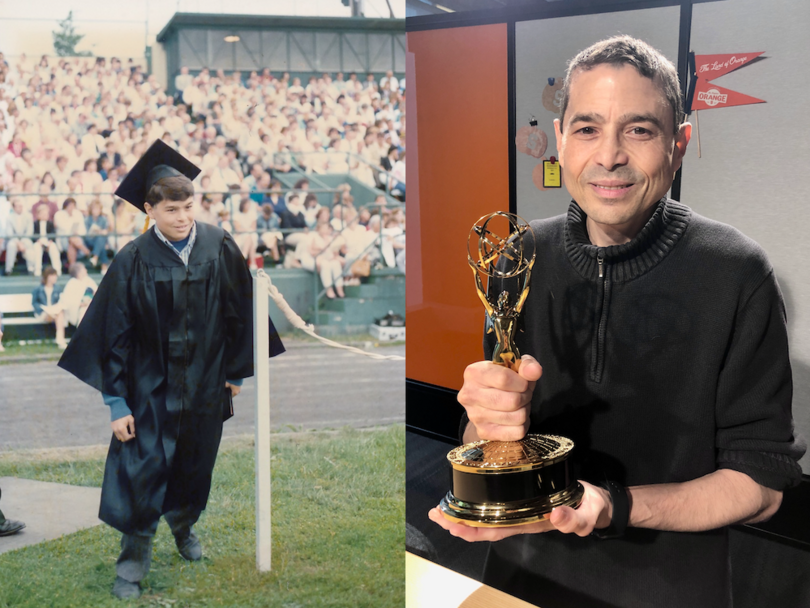
On weekdays, Francis DiClemente — a senior producer for Syracuse University’s Division of Marketing — sets his alarm for 3:20 a.m. and writes before his workday begins.
Those writing sessions contributed to DiClemente’s latest publication, “Stunted: A Memoir of Delayed Manhood,” which was released on May 25. After growing up in Rome, New York, DiClemente studied communications and journalism at St. John Fisher University and received his master’s degree in film and video from American University. In 2007, DiClemente began working at SU.
He’s authored several poetry collections and has directed New York-based documentaries, like “Ralph Rotella: The Sole of Syracuse” and “The Real Bedford Falls: It’s a Wonderful Life,” which earned him a New York Emmy award in 2021.
DiClemente said he hopes his memoir connects with readers and helps them learn to accept themselves. He’s currently working on a poetry manuscript and is in the drafting stage of another memoir, which will pick up where “Stunted: A Memoir of Delayed Manhood” left off.
The Daily Orange spoke with DiClemente about his memoir, which navigates his struggles with delayed growth and his journey toward self-acceptance after being diagnosed with hypopituitarism at 15 years old.
Q: What inspired you to write “Stunted: A Memoir of Delayed Manhood”?
DiClemente: What precipitated it was my growing up and being delayed — being behind, being a late bloomer compared to my peers. When I was 15 years old, they found a brain tumor on my pituitary gland, and that’s what was causing my stunted growth.
When I entered college, I looked a lot younger than everybody else. It was almost like I was a prodigy, except I wasn’t super smart. Even at that time, I kind of thought that was an interesting idea for a story. I always thought that it could be a good book, but I needed to grow, mature and live.
I have medical records from 1984 and journal entries from the early ’90s, so I always thought it could be a good possible project, but I didn’t really start attacking it until like 2013. Because I work full-time, have a family and work on other projects, it took me a while to get a first draft done and revise it. It took me more than 10 years to write.
Q: You spent more than a decade working on this book. What was that process like?
DiClemente: I had so much stuff. I had source materials of medical records, archival photos and journal entries, so it took me a while to sift through everything. As you do with a story, you’re gathering all materials, so it took me a while.
Then, I drafted scenes. I drafted sections. And then I started putting (sections) together until I found the structure for it, dividing the book into three different parts: having the delayed growth, going away to college and then starting my professional life, so it kind of goes in chronological order.
After I did the draft, I did multiple revisions and had developmental editors that I got on Fiverr. It
finalized from there. I sent out a bunch of queries and pitches that went nowhere, and, fortunately, McFarland & Company said yes.
Q: How did you balance writing and editing the drafts with a full-time job and family responsibilities?
DiClemente: It’s like compartmentalizing my life: the writing part in the morning, then I go to work and then there’s family time in the evening. And our son, he’s autistic. He’s 10 years old, and so that’s kind of really a challenge.
It’s also understanding that you’re not going to be able to finish it all at once. If you have 15 minutes, you can do something. When I was doing drafts, I would print up chapters. I ride the bus every day to work, and I’d edit it with a red pen on the bus. You just find a little bit of time here and there.
Q: Why was it important to share your experiences with hypopituitarism and delayed growth?
DiClemente: Selfishly, I sort of just wanted to exorcise that part of my life, to just get it out. I had the ability to look back on many decades and say, “OK, this could be a story, and I want to purge it from me but also not bombard the reader.”
It was, for me, to process (my experiences) in a creative way, and I think that story could resonate. Anyone who’s maybe felt out of step with the world or uncomfortable in their own skin can relate to the book. That’s what I hope.
Q: You described listening to U2’s album “The Joshua Tree” in your undergraduate college dorm after a tough night. Whether it’s music or not, is there something you leaned on during the writing process?
DiClemente: My wife Pam was a huge supporter, and she inspired me to write it. After we got married in 2013, she’s like, “You know, you should really dedicate to writing the book.” I only touched on the subject in blogs, and I touched on it in a lot of the poems that I wrote, but I never really tackled it head-on, and she encouraged me to do that.
Q: What advice would you give to your younger self?
DiClemente: Overall, I would say, be more gentle to yourself. Realize that you’re a 15-year-old boy who has a tumor. You’re not like everybody else, so don’t try to be like everybody else.
But, I have a very specific thing that I would tell that person. When I graduated from undergrad, part of me really wanted to go to Los Angeles and try to break into the film industry. Even after I got out of American (University) in ‘93, that’s what I wanted to do, but I kind of chickened out.
My mom and my sister basically convinced me to go to Florida because my aunt was there and I had family there and they knew I had medical issues. But I had worked over the summers. I had enough money, and I just wanted to go to Los Angeles to see if I could start as a production assistant and see where it went.
I never did, and so I would tell that person to have the confidence, don’t let anybody decide for you and go for it.
Q: If someone wanted to start writing a memoir, what advice would you give them?
DiClemente: If you’re going to write a memoir, start small. Think about the scenes that are really the most memorable to you, that really come across. Draft those scenes, draft a whole bunch of them, and then see where they fit. There’s different strategies that different writers use. They put scenes on index cards and then move them around on the floor or something digitally like that.
Just dig in and start, and the other thing is, don’t worry about the first draft. Just get it all down, and then you can always revise.
Q: You mentioned sifting through archival photos, diary entries and medical records. How did you decide what to include?
DiClemente: You have to stay close to what the theme was. For me, it was coming of age and the story of self-acceptance as told through this medical journey that I went on. So, like, is this a good story? Well, maybe it is, but it doesn’t fit. That’s what I had to decide along the way to see what was most relevant.
Q: Is there a specific moment where your self-acceptance blossomed, or is it something that happened more gradually?
DiClemente: I think it happened more gradually. That’s one part of it. (Self-acceptance) is the major theme of it, but it’s also resilience and perseverance. I think the thing with self-acceptance, it’s a daily thing. Liking yourself and treating yourself well, that’s a journey that continues all the time.
What it was for me, in the sense of masculinity and manhood, is seeing manhood in action by my peers, and seeing that it’s not defined by the appearance or the body, but more about who you are — who you are as a person, your work ethic, your compassion for others and taking responsibility for your life.