Internet’s many microtrends kill authenticity, personal style
Get the latest Syracuse news delivered right to your inbox.
Subscribe to our newsletter here.
There’s a particular kind of embarrassment that comes with liking something at the wrong time.
Wear a certain pair of shoes while they’re in, it signifies good taste. Wear the same shoes two years later, and they’re outdated. A song can go from being everywhere to embarrassing to play on aux. A hobby becomes cool, everyone picks it up and then almost as quickly, everyone abandons it. Clothes, music, hobbies and aesthetics are considered forms of self-expression. But it’s begun to feel like everyone is expressing the same self.
Generation Z emphasizes authenticity. A study found 92% of Gen Z considers being authentic and true to themselves “extremely” or “very important.” Being niche has become a defining characteristic of online aesthetics, and individuality is constantly celebrated. Yet social media has also made it easier to sort those individual identities into recognizable categories, from “clean girl” to “coquette” to countless “core” aesthetics that can eventually be declared in or out.
Trends aren’t new. People have always been subject to influence. Fashion has always changed, music has always evolved through eras and every generation has embraced trends until they suddenly weren’t popular anymore. The difference now is the speed at which this happens.
With social media, trends now spread and lose relevance faster than ever. These short-lived cycles are often referred to as microtrends: styles, products or aesthetics that gain widespread popularity and disappear just as quickly. Unlike trends that can define an era, microtrends can rise and fall within a single season.
Consider the rise of bag charms and the resurgence of polka dots. These style choices became recognizable cultural phenomena. In 2025, Vogue examined how the widespread popularity of polka dots complicated the relationship between personal style and trend fatigue. By early 2026, the magazine’s editors were already advocating for charm-free handbags after years of accessories being marketed as expressions of individuality.
The pattern is everywhere. Not long ago, everyone wanted the same Adidas Sambas. Then they became too common, and attention shifted to Onitsuka Tiger Mexico 66s and, more recently, the revival of flip-flops. Water bottles followed a similar trajectory: Hydro Flasks gave way to Stanleys, which gave way to Owalas. None of these objects changed — their cultural status did. Something becomes desirable because it’s everywhere, then undesirable for the same reason.
Individuality has become surprisingly standardized.
Of course, following trends doesn’t automatically make someone inauthentic. They can create a sense of community, introduce people to new interests and provide inspiration for developing personal style. Influence is practically unavoidable. Pew Research Center reported that 54% of American social media users aged 18-29 said influencers affect their purchasing decisions.
Abigail Aggarwala | Digital Design Director
Discovering something through other people doesn’t make interest less sincere. The problem emerges when interest fades alongside its social approval. If a pair of shoes is appealing while trending but embarrassing once it’s considered out, taste starts to depend on the approval of others. Inspiration should leave room for someone to decide what stays, but microtrend culture often makes that decision for them.
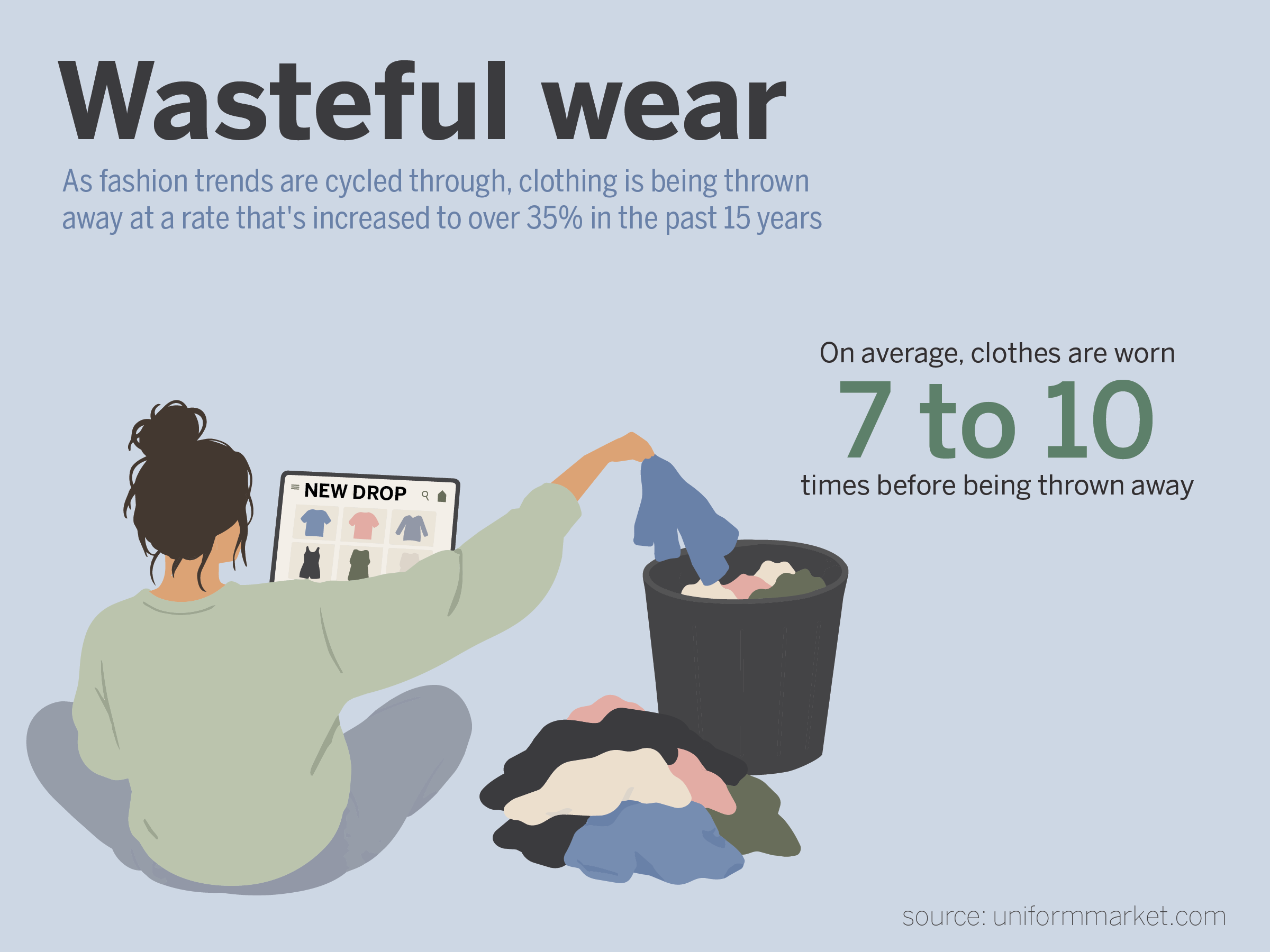
There are environmental consequences to this constant cycle. Microtrends encourage people to replace clothes and accessories because they no longer feel current. The pressure to keep up shortens the lifespan of products, turning changing tastes into physical waste.
A 2025 study found 43% of respondents discarded clothing because it went out of fashion, while 25% reported discarding clothing still in good condition. An estimated 92 million tonnes of textile waste are generated globally every year. Microtrend culture adds another incentive to treat usable clothing as temporary, attaching obsolescence to cultural relevance rather than physical condition.
Even attempts to escape mainstream trends can fall into the same cycle. Research has found consumers balance the desire to belong with the desire to distinguish themselves, sometimes choosing less popular options to express individuality.
An obscure musician, unusual accessory or previously unfashionable article of clothing can become appealing because it feels different. But once enough people discover it, that sense of novelty disappears, and the search begins again. The pursuit of uniqueness becomes strangely repetitive.
This is what makes microtrend culture contradictory. There have never been more ways to develop an individual style. Nearly every fashion era, music genre, hobby and subculture is accessible within seconds. Yet algorithm-driven feeds repeatedly expose users to similar styles and products, reinforcing what’s already popular. Vogue Business described this effect as an “algorithmic sameness,” in which the same looks circulate between consumers and creators. With millions of people drawing inspiration from the same TikTok feeds, Pinterest boards and Instagram posts, endless possibilities can still produce remarkably similar tastes.
Personal style takes time to develop. It’s supposed to be an accumulation of preferences: things discovered years apart, things that never quite matched and things kept simply because someone liked them. Microtrends interrupt that process by encouraging constant reinvention. When preferences are discarded as soon as they become oversaturated, there’s little opportunity for taste to become personal in the first place.
Authenticity doesn’t require rejecting everything popular. Personal taste will always be influenced by other people — what matters is whether preferences can survive after the hype does. Microtrends will continue to come and go, and the next must-have product is likely already beginning its rise. Personal style, however, should last longer than the internet’s attention span.
Gain Lim is a sophomore majoring in health & exercise science. She can be reached at glim06@syr.edu.