Matilda Mann submits to romantic fate in confessional new album ‘Kismet’
Get the latest Syracuse news delivered right to your inbox.
Subscribe to our newsletter here.
For a recent fan of Matilda Mann’s intimate folk songs on her 2025 debut album “Roxwell,” I found the warmer soul and soft rock influences on the third single of her new sophomore album, “Kismet,” released Friday, particularly captivating.
Coming back to Syracuse University from my first summer break, I was forced to let go of stubborn control and accept the uncertainty of life, which was fitting for the progression of Mann’s album evolution from “Roxwell” to “Kismet.”
“Even if the world decides to crumble / the sky falls to my feet / you’re the only thing I’ll ever need,” Mann sings in “The Fig Tree.”
The pre-released single soon became the soundtrack of my summer, building my anticipation for the greater story Mann was unfolding in her next album.
“Kismet” is a collection of 11 lively tracks that together describe her fate-affirming journey of opening herself back up to the unpredictability of love.
Serving as a counterpoint to processing emotional disillusionment portrayed in Mann’s first album, “Kismet” adopts a light and blissful tone through swirling strings, horns and plucky guitars. Paired with equally passionate lyrics, the album carves out a space for individuals to let down their guard and simply bop along to a retro groove.
Immediately, the album sets the romantic scene with its opening track “Chain Reaction.” Mann finds herself suddenly in love even when she isn’t ready to lose someone again. Singing along with a lilting keyboard and drum rhythm, she relinquishes in her newfound state of limerence.
“Out of the blue / you’ve given me something to lose / a chain reaction / I can’t stop falling for you,” Mann sings.
As Mann starts questioning all facets of her life in “The Fig Tree,” she moves toward a belief in herself that she is all she needs to succeed in life in “Chain Reactions.” The playful interjections of flute embody the rise of hope for her future.
The album mellows out in “Imagine That Now,” where Mann learns to trust the process in loving someone again. The entrance of trumpets near the end of the song following the lyrics “so, honey, take your sweet time / I know you’re mine” leaves the listener with a sense of well-deserved triumph.

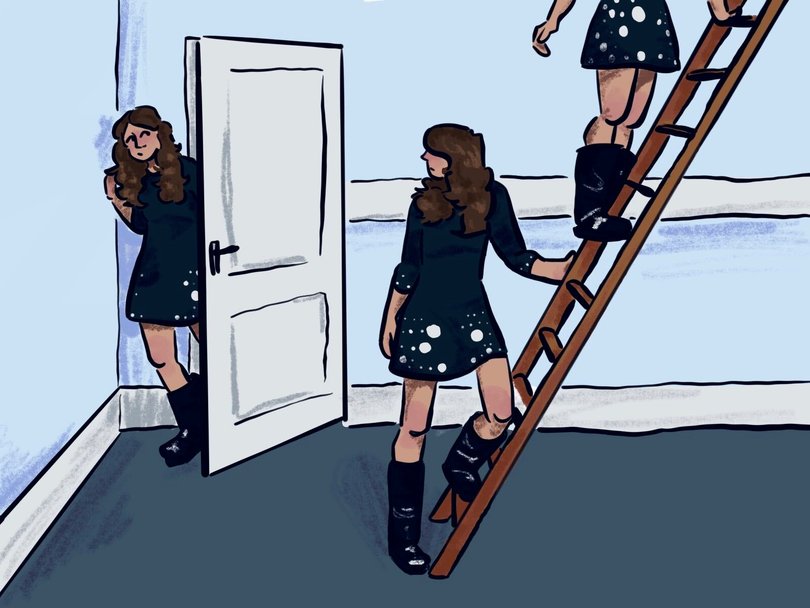
Abigail Aggarwala | Digital Design Director
“Make Up” explores the petty arguments that inevitably occur in new relationships. With Mann realizing fights occur out of care rather than malice, the chorus’ repetitive lines convey a longing to return to a state of pure affection.
Mann breathily sings, “If you really love me, then come on and show me it” and “come on and love me, love, like you did before / like you did before.”
The opening lines of “Inventing” quickly nail the theme of defining one’s destiny in the album. Accompanied by guitar and a subtle flute, Mann sings, “Love is just too weak of a word / I’ve gotta get inventing, something’s gotta hit it.”
This dilemma is never actually answered in the song. By the end, accompanied once more by proud trumpets, Mann expresses, “Don’t overthink it if you’re ready / if the shoe fits, you should wear it / I know it’s scary, but baby, it’s kismet,” where “kismet” literally means fate or destiny.
WHAT YOU SHOULD READ NEXT
‘NEVER ENOUGH: VERSIONS’ becomes punk classic with features, fused genres
“NEVER ENOUGH: VERSIONS” turns the original punk album into a mix of genres like indie and synth-pop covers.
The use of saxophone in “Bittersweet” gives a sound to Mann’s longing for emotional closeness with loved ones who are no longer part of her life. The blending of the saxophone and trumpets symbolize the resolve she has in being proud of the memories she made with a past lover.
“Lovely” returns to Mann’s breathy style of singing as she focuses back on the present love and comfort she feels. Both the midpoint and most acoustic song on the album, the song serves as confirmation of Mann’s shifted mindset, supported by a sparse acoustic guitar and string swells.
“Cinnamon pastries, everything will be alright / and time is a concept, I no longer notice next to you,” she sings.
Mann continues to wonder about the future of her new relationship in “After The Love,” playfully poking the question of whether her lover could be loyal. The simple driving drumbeat creates a sense of tension and determination as Mann continues to pursue love throughout the album.
Following the debate between love and commitment in “After The Love,” the song “Call You From The Car” tackles Mann’s balance between romantic relationships and her career. She faces the reality of working as a touring musician and the distance that brings to her and her partner. Tying in similar themes from “The Fig Tree,” she declares that she has to pursue her dream of being a musician but is also prepared to be a lover.
“When I’m miles away and wondering where you are / and I know there’s nothing we can do / I promise I will make it up to you,” Mann sings.
Mann’s fears of loss return in “Forever and a Day.” The buildup from acoustic confession to full-band declaration of longing for her partner leaves the listener with a sense of faith rather than heartache.
“I’d wait for you to call forever and a day / until I’m old and nothing is the same / except my love, my love for you will grow / my love for you is all I’ll ever know,” she sings.
“Haunt Me,” the final track of the album, concludes her romantic journey with the acceptance of anticipatory grief that inevitably occurs after a breakup. An energetic evolution of the previous song, Mann playfully yet earnestly remarks, “No chance I’ll find / another love like ours, a kiss like this / I need you alive and I need you dead, so / haunt me, baby.”
By the end of “Kismet,” Mann realizes that the loss of love is not completely centered on grief. From reaccepting romance as a part of her life and letting someone get close to her again despite her life’s circumstances, her sophomore album “Kismet” describes an optimistic view of how love endures in one’s memories.
Transitioning from indie-folk to retro soul pop, Mann crafts the natural evolution of her identity as a musician and lover. Bolstered by “The Fig Tree” now belonging to a cohesive narrative in an acceptance of romantic truths, “Kismet” cements itself as the soundtrack of my sophomore year.