Morning doomscrolling kills your productivity. Here’s what to do instead.
Get the latest Syracuse news delivered right to your inbox.
Subscribe to our newsletter here.
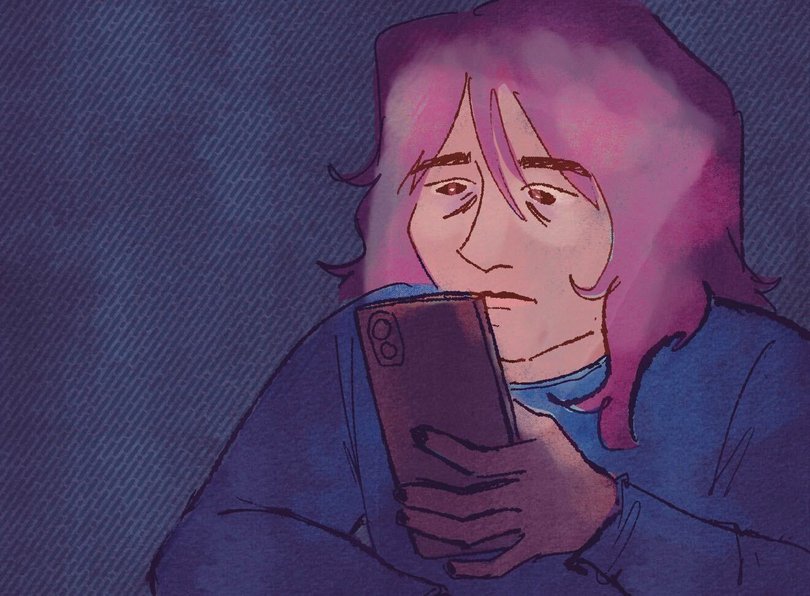
When waking up, students’ minds should jump to the mundane, yet refreshing routines of college life: making their bed, sneaking out of their dorm to not wake their roommate and enjoying an occasionally satisfying breakfast at the dining hall. Yet, for many students, the first thing they see every morning isn’t a cramped dorm room or the dreary weather of central New York. It’s a screen.
Your morning is one of the rare parts of your day that you have some control over. When you wake up and immediately expose yourself to the vast wasteland of memes and poor arguments that is the internet, you surrender control of your attention before you’ve even decided what matters to you.
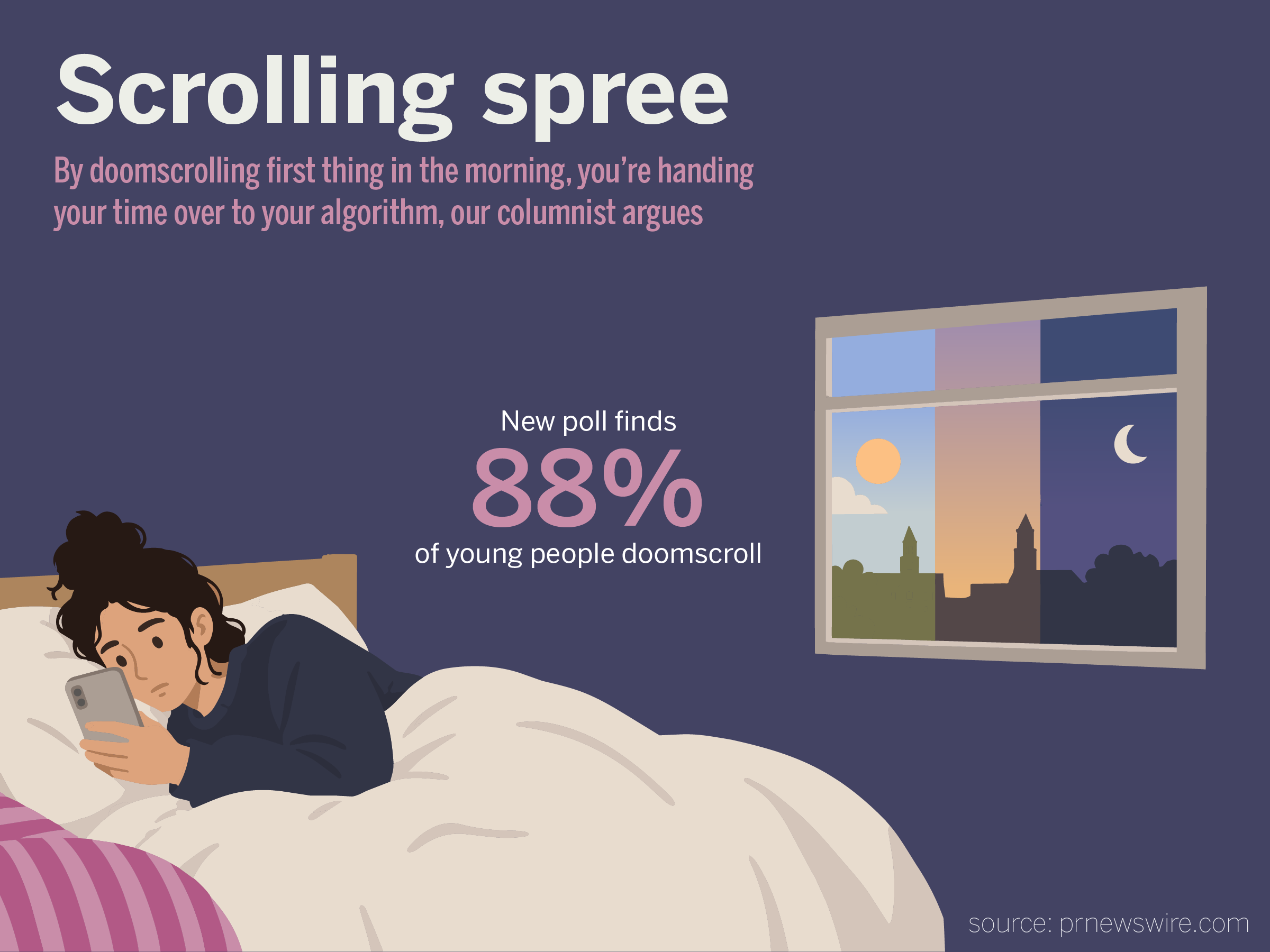
Doomscrolling has been a popular form of escapism since the COVID-19 pandemic. The average Gen Z-er spends upwards of nine hours a day on their phone. Furthermore, 70-80% of people check their phones within five minutes of waking up. The inherent problem with doing this in the morning isn’t just that it wastes time; it’s that an algorithm gets to decide where your mind goes.
Doomscrolling can be far more harmful than people realize. Harvard Health reports that excessive scrolling can lead to distressing physical and psychological symptoms. It’s been associated with nausea, low appetite and difficulty sleeping, while also being linked to chronic stress and reduced attention spans.
A separate study also found that doomscrolling can worsen preexisting anxiety and depression, particularly among college-aged women. It claims that scrolling disrupts productivity by encouraging a cycle of procrastination. Sleep was similarly affected by the constant triggering of the brain’s stress response in the study.
Abigail Aggarwala | Digital Design Director
Scrolling itself isn’t the only thing that’s harmful, but also the content your brain absorbs from it. Whenever you open an app like Instagram or TikTok, you’re often bombarded by depressing news and reports of intense conflict. Do this in the morning, and your brain has already been overwhelmed by negativity before it’s fully awake. It isn’t just a disruption of rhythm; it’s an active detriment to one of the most important cognitive states of the day.
Human bodies are meant to handle short bursts of stress, not the prolonged strain of receiving so much stimulation and often distressing content at once.
For some students at Syracuse University, this trend is slowly becoming a reality
“When I wake up, I go straight to Instagram Reels or TikTok, and I normally scroll for two hours,” SU freshman Olivia LoBue said. “I don’t think it’s the best way to start my day. I don’t know what else to do.”
For students who default to morning scrolling, the problem isn’t necessarily knowing they should stop; it’s knowing what to do instead.
When you wake up, resist the urge to immediately reach for your phone. Instead, take the initiative to get ready, plan your day and start moving.
Take a walk, write in a journal, read a book, eat breakfast, go to the gym or take a shower. Give yourself time before reaching for your phone. None of these activities will magically make you healthier or effortlessly more productive. But what they can do is give you something an algorithm never will: control over how you spend your time.
They’re not mindless habits like doomscrolling, but rather things you choose to do. The most important part of your morning isn’t a screen; it’s that it belongs to you. And that’s something no amount of scrolling can ever give you back.
When you finally open your phone, check what you must but don’t fall victim to a doomscroll session.
Students aren’t wrong for being bored or wanting to know what’s going on in the world when they wake up. There are many important updates busy college students should see in the morning. But we can’t let what starts as a quick check evolve into a siphon of our attention.
You don’t need to put away your phone entirely, but you do need to hold off on scrolling until your brain has established its own starting point.
Jude Magnotti is a freshman majoring in public relations and political science. He can be reached at jpmagnot@syr.edu..