Potential uptick in Syracuse insect population follows high temperatures
Get the latest Syracuse news delivered right to your inbox.
Subscribe to our newsletter here.
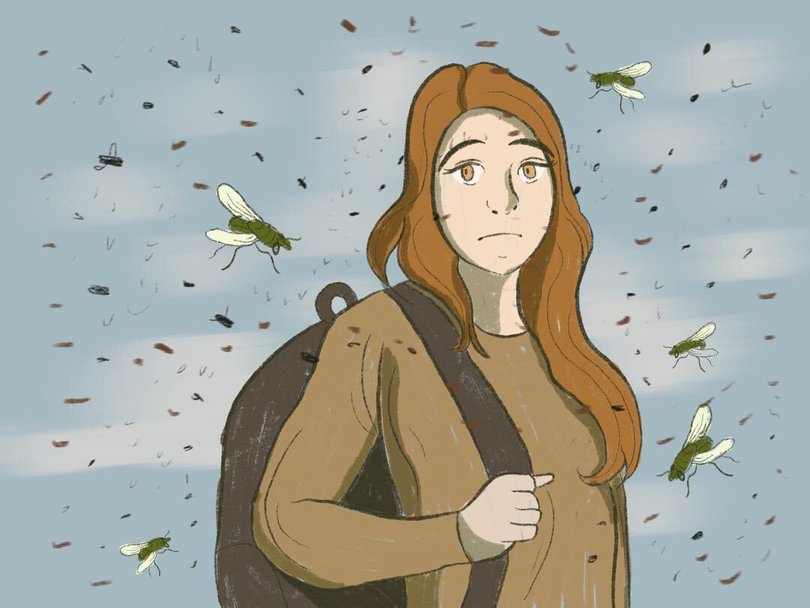
As temperatures this week reach over 80 degrees, Syracuse University students may see more insects on their way to class as the bugs’ life cycles are sped up by warmer weather.
SUNY-ESF Ph.D. candidate David Harris said while he hasn’t personally seen an increase in insects on campus, construction on sewage systems and water mains can release fumes that attract flies and could contribute to students observing more insects. Muscoid flies and drain flies are specific species that Harris said are likely to be drawn to the sewage smells.
SU experienced “one of the most active construction periods in recent years” during summer 2026, the university announced in May.
Humidity related to recent rainstorms could also be a cause for the higher concentration of insects. Harris explained that cold-blooded animals develop faster in warmer temperatures and wet conditions.
On July 14, the city of Syracuse broke a 74-year-old heat record, reaching 97 degrees for the first time since 1952.
“Because it’s been very hot this summer, a number of species have been sort of fast-tracked, so a whole bunch of them came out, and then there was less of a spread,” Harris said.
SU and ESF are both recognized as Bee Campus USA affiliates by the Xeres Society, as both campuses actively encourage native plants to benefit pollinators, Harris said. So, students may be seeing an uptick in pollinators — not just honeybees.
“When people talk about pollinators, it’s not just honeybees. In fact, honeybees are a pretty small percentage,” Harris said. “There are a lot of flies and fairly harmless wasps and beetles that are also (pollinators), as well as many, many native and non-native bees that are associated with that. So there’s definitely an increase in those locally.”
Worldwide, there’s a steady downward trend in the number of insects, but the decrease is inconsistent, Harris said. In certain places, “there’s been observed and measured huge decreases over the course of several decades in both species abundance and total biomass,” he said, while others haven’t seen these decreases.
So, when there are local events like at SU, Harris said sudden spikes in insects don’t indicate a trend.
“I don’t think that people should feel like we need to kill all these insects because they’re a problem,” Harris said. “It’s a very temporary situation.”
For those concerned about spotting more bugs in their dorms and homes, Harris suggested making sure any openings to the outside are filled and encouraged the use of plug-in repellents and citronella products. He also advised against using harsh insecticides like Raid because they’re non-specific, meaning they target anything and can potentially expose people to dangerous chemicals.
Planting native plants, including citronella plants, around your house can also keep insects out of your home, Harris said. Houseplants can also help boost your mental health, according to the Cleveland Clinic Newsroom.
“The more robust of an insect ecosystem that we can support, the better able the environment around us will be to rein in some of those populations without us having to intervene directly,” Harris said.