SU alum honors Afghan culture through bread baking rituals at Everson Museum
Get the latest Syracuse news delivered right to your inbox.
Subscribe to our newsletter here.
UPDATE: This story was updated at 7:55 p.m. on Sept. 7, 2026.
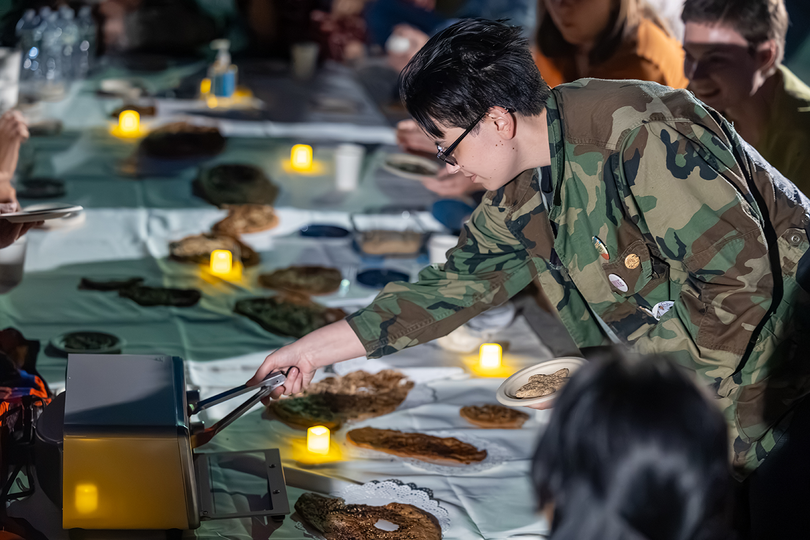
When one person kneaded, another sprinkled salt and seeds on their dough. Once ready, everyone passed their dough to Syracuse University alumn Zelikha Shoja, who placed each piece into one of two toaster ovens.
As the traditional Afghan tandoori bread was baking, people drank tea, ate and shared conversation.
On Friday, attendees of “Guerrilla Bread: Special Event with Zelikha Zohra Shoja” passed dough from hand to hand while sitting around long stretches of communal dining fabrics, called dastarkhwans, outside the Everson Museum of Art.
“The idea is just making something that we don’t see here in the U.S. more public, which is people getting together doing something very intimate and sustaining each other through this act of hospitality, of making bread,” Shoja said.
For Shoja, making bread together wasn’t just a communal meal. It was recreating a ritual she grew up watching in Afghanistan and later encountered again while conducting her Fulbright Program research in Tajikistan and Turkey.
Shoja’s bread-making event at the Everson Museum aimed to bring the Syracuse community together through the simple act of making and sharing bread, Shoja said.
“I didn’t want to get too much into political context because I don’t want to alienate anyone, and I’m not a politician,” Shoja said. “I’m an artist. What I wanted to do is just bring people together.”
In commemoration of five years since the withdrawal of United States troops from Afghanistan on Aug. 30, 2021, Shoja started noticing an increase in workshops and artistic events centered around healing and Afghanistan’s political and social circumstances. After the withdrawal, the Taliban returned to power, beginning a period of political instability and the migration of thousands of Afghans from the country.
Shoja said Syracuse was a natural place for that collaborative and community-building work. She’s lived in the city for the past six years and has watched its Afghan community grow, including through the emergence of Afghan bakeries and restaurants. Since U.S. troops left Afghanistan, more than 400 Afghan families have moved to Syracuse.
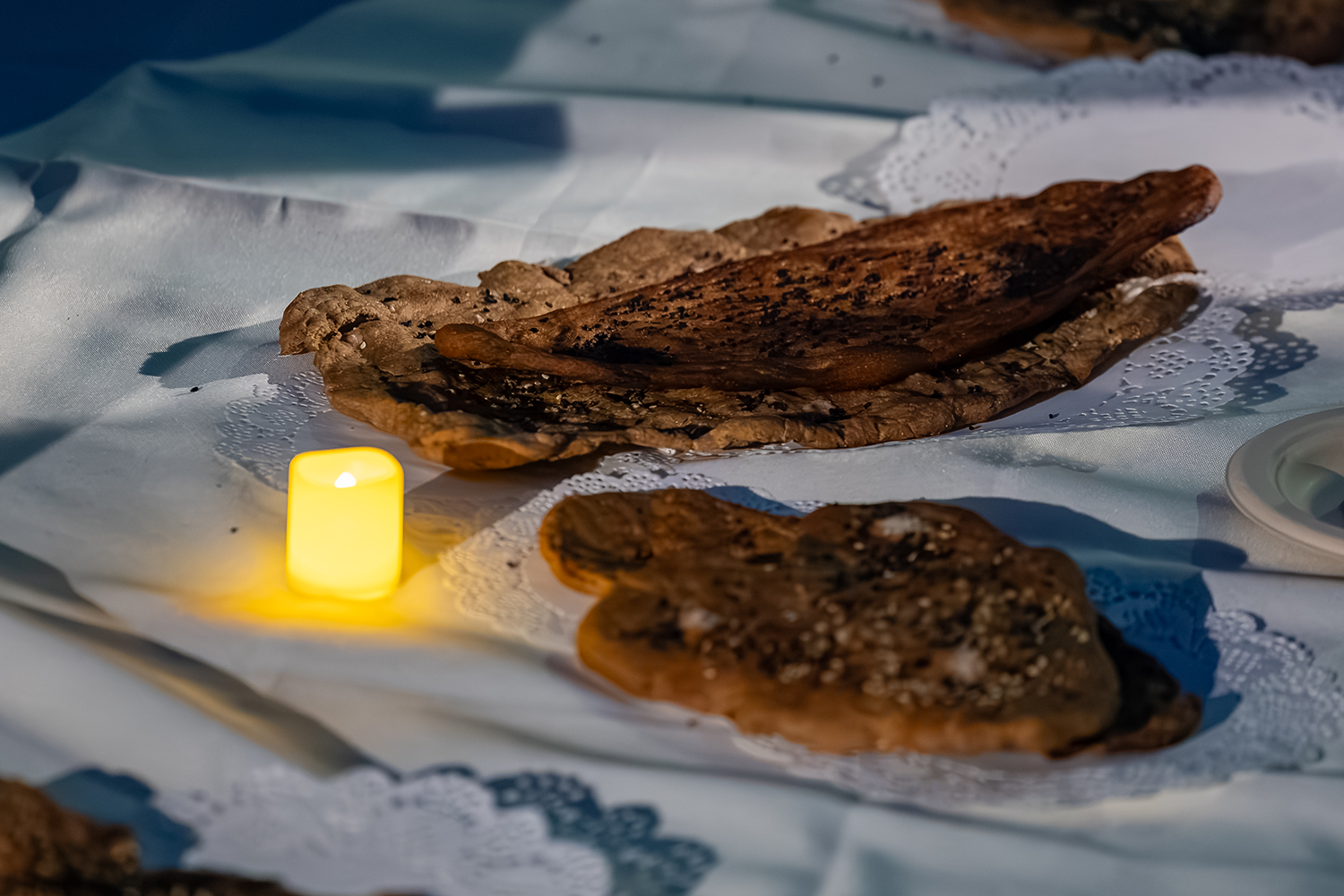
Pieces of tandoori bread rest on a table. On Friday, Syracuse University alumna Zelikha Shoja hosted a bread making event and screened her short film at the Everson Museum of Art. Paul Hakimian | Contributing Photographer
With the increase of Afghan families in Syracuse, Shoja has also seen new Afghan-owned businesses take root in Syracuse. They weren’t just the arrival of new restaurants and bakeries that sell bread. Bread is foundational to Afghan meals, Shoja said, which can be a testament to the process of rebuilding a new sense of home and community.
Shoja said bread is also sacred in Afghan culture, both as a source of nourishment and resource that should never be wasted.
“When you see a piece of bread on the ground, you’re always supposed to pick it up and put it on a high place,” Shoja said.
While living in Turkey, Shoja noticed people leaving bags of fresh bread outside their homes. The ritual immediately reminded her of what she had seen in Tajikistan, Central Asia, Afghanistan and Iran.
“It made me feel at home because it’s this same kind of ritual that people were doing,” Shoja said.
That sense of home and familiarity was central to the “Guerrilla Bread” event. Shoja wanted to create an experience that could bring people together without forcing them to discuss difficult or painful subjects directly.
Urmi Parekh, a Ph.D. candidate in SU’s Writing Studies, Rhetoric and Composition department, who’s worked with Shoja on different community engagement events, said “Guerrilla Bread” demonstrated how Shoja connects personal memory with collective experience.
“Zelikha is connecting the images that she took of the bread and the meaning of how bread is used and the symbol that it is…kind of making it her own, bringing us together making bread,” Parekh said.
The event was in tandem with Shoja’s film, “In Search of Bluer Tongues,” which was projected onto the Everson Museum’s facade as part of Light Work’s Urban Video Project.
WHAT YOU SHOULD READ NEXT
Light Work’s ‘The Temple of Our Survival’ explores sanctuary, black matriarchy
Everson Museum of Art’s latest exhibit, “The Temple of Our Survival,” centers around amplifying one’s relationship to the surrounding community through interviews with matriarchs and land stewards.
The film reimagined memories of Shoja’s family life in Kabul, Afghanistan, with members of the Syracuse community acting in the project. Actors would position themselves in front of a backdrop replicating Shoja’s home and emulate personal memories of hers. She aimed to share another part of her memories from home with Syracuse, this time in the form of a daily ritual: sharing bread with people.
Shoja’s event incorporated that idea through the physical arrangement, like the use of the communal dastarkhwans on the ground. Participants passed ingredients and dough to one another, creating an informal assembly line that required everyone to contribute equally.
For Shokoofeh Jabbari, a part-time instructor at SU’s College of Visual and Performing Arts, the connection between breadmaking and the Syracuse community was immediate and personal.
“It reminds me of my culture, my family and my memories,” Jabbari said.
The event also demonstrated how cultural rituals and community engagement create connections between people who may not share the same background, Shoja said.
“It transcends a lot of linguistic barriers,” Shoja said.
Anneka Herre, program director for Light Work’s Urban Video Project, said the event was part of a larger effort to bring experimental art into Syracuse’s public spaces.
The Urban Video Project is a public initiative of Light Work in partnership with the SU Art Museum. The project, which has operated through Light Work for 16 years, features artists working in experimental media, and it uses the Everson Museum as a site for large-scale projections.
Shoja’s film was selected through Urban Video Project’s regional commission program, which invites artists living and working within 50 miles of Syracuse to submit proposals.
For Shoja, the filmmaking process requires giving up some control of her own memories. However, working with the Syracuse community to reimagine moments from home was worth it, she said.
She wants people to see everyday rituals, like cooking, eating and gathering as forms of artistic expression. Shoja hopes future events can create similar opportunities, particularly for Afghan and SU students.
“Whether that opens conversation for them or they want to talk about a similar memory or they don’t and just want to take the bread and leave, it’s entirely up to them,” Shoja said.