Syracuse Eastside market promotes farm-fresh practices, vendors on Westcott

Get the latest Syracuse news delivered right to your inbox.
Subscribe to our newsletter here.
Emma Sheridan passes by the Syracuse Eastside Farmers Market every Wednesday while walking home from class. From peaches to jalapeños, Sheridan prefers buying produce from the market over chain stores like Wegmans because of the access to fresh goods and the market’s sense of community.
“It’s awesome. There’s a lot of good stuff they have to offer, and I’d rather get it here and give them my money,” Sheridan, a Syracuse University graduate student, said.
Every Wednesday, the Farmers Market hosts local vendors from 2 to 6 p.m. at the Westcott Community Center’s parking lot on Euclid Avenue. The market operates from June through October, or as long as the growing season allows until winter hits.
Since 2007, the market has brought fresh produce, baked chicken pies and rice pudding to support the cultural heritage and life of the community. This year, it featured a range of vendors, such as Syracuse Honey and Stay Sizzled.
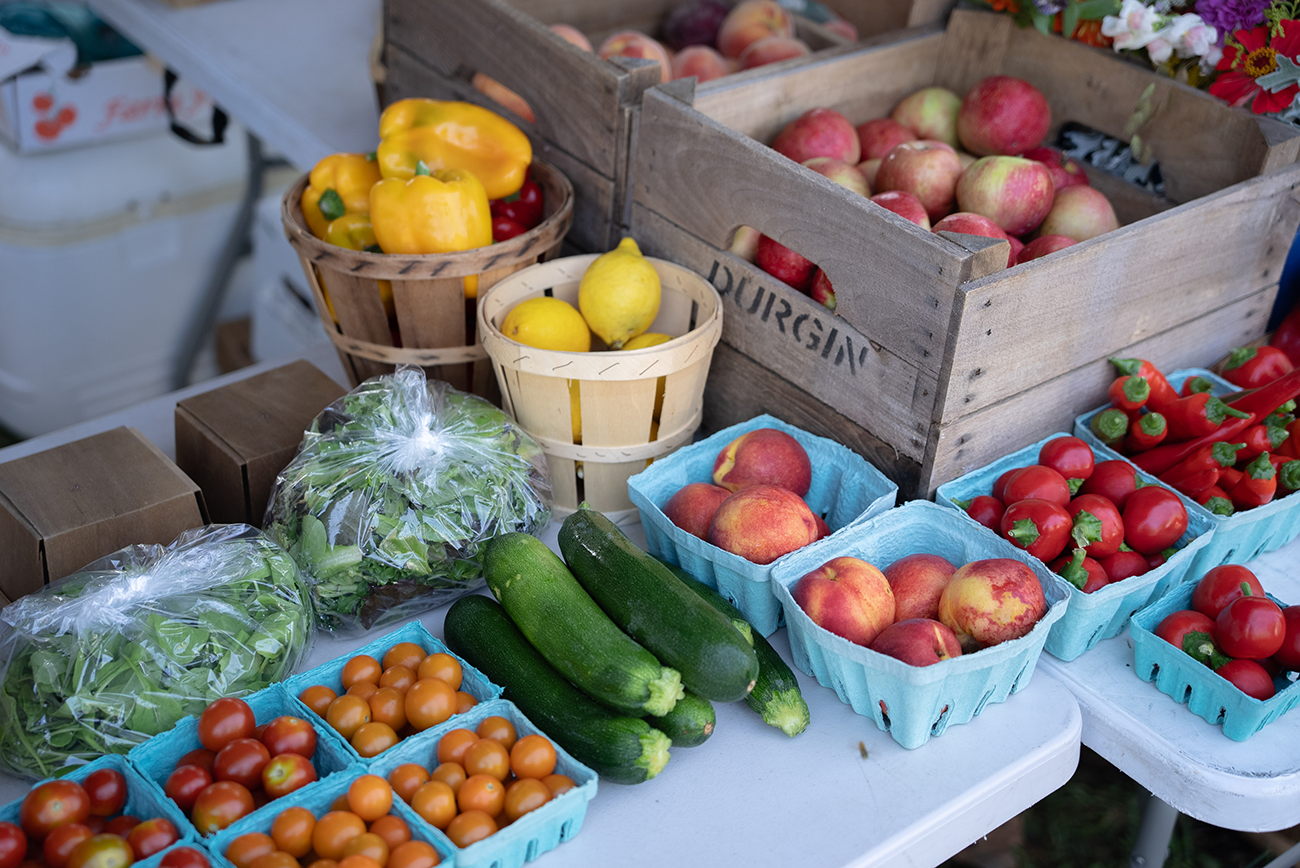
Fresh produce makes up just some of the items for sale at the Syracuse Eastside Farmers Market. With many vendors prioritizing organic farming practices, some visitors of the farmers market look for small businesses rather than chain grocery stores. Peter Shin | Contributing Photographer
Beth Southwick, co-owner of Southwick Family Farm in Onondaga County, has been participating in the market for about 15 years. Despite rotating vendors, the Westcott neighborhood still has a lively spirit every time the market comes around. For Southwick, she believes its longevity and success can be attributed to the continuous student interest throughout the years.
“When the market first started out, we had two vendors. They had really good products, so there was a big neighborhood interest,” Southwick said. “It brings local food directly to the neighborhood, and a lot of this is for the students who need food for the week.”
Though Southwick believes having places like Walmart and Target in the Syracuse area can be more convenient for students, buying local is always the best option to help the Syracuse community, she said.
Bonita Roney, who’s worked at the farmers market for three years, is always excited to sell her baked goods at the market, hoping to provide healthier options to SU students and Syracuse residents. Roney is the baker behind Good Stuff, where she sells over 20 different flatbreads and pound cakes, some of which are available at the farmers market.
“(This market) provides a sample of fresh fruits, vegetables, and meat to local people who might not be able to get it at another site,” she said.
For Eva Essi of Mom’s Diner on Westcott Street, the market helps her connect with the community and spread the word about her business. At this year’s farmers market, Essi offers a variety of homemade goods, including Catskill maple syrup, New York-made local honey and red chili sauce.
Despite working in the neighborhood for over 23 years, this is Mom’s’ first year selling food at the farmers market.
Another vendor, Brady Farm, grows vegetables, fruits and flowers, using organic farming practices for all of its products. Jessi Lyons, Brady Farm’s director, said she views the farmers market as a form of community building, and having a place that people from all over the area can come to and benefit from is important.
WHAT YOU SHOULD READ NEXT
Here are various new restaurants, cafes beyond Syracuse University
From sandwiches at Dell Street Deli to lattes at Market Mocha, several new eateries have opened around Syracuse University.
Brady Farm stands out from other businesses because it’s accessible for Syracuse locals. The farm accepts food stamps, coupons and other food benefits that most farms don’t. Lyons shared that rising food costs — particularly labor and input costs — have been an ongoing challenge. But Brady Farm, a nonprofit organization, subsidizes prices with grant funding.
Lyons not only sells produce at her stall, but also offers services. The farm does educational work with kids, offering tours, teaching them about different plants, encouraging them to eat healthy and exposing them to fresh food from the garden.
“Us being here meant that a lot of people who relied on food benefits had a vendor they could come to, and it enabled the rest of the market to use those benefits as well,” Lyons said.
For Sheridan, the market provides easy access for her weekly meals. Though she lives in a city, Sheridan enjoys how the market uses the available outdoor space to bring the community together.
“It brings more access to these kinds of things, especially in a city,” Sheridan said. “Having the market makes it really easy for me and other students to get non-chain store food.”