CFP expansion proposal favors quantity, kills importance of regular season
Get the latest Syracuse news delivered right to your inbox.
Subscribe to our newsletter here.
On Oct. 17, one of the craziest days in college football history unfolded. Five of the top 10 teams in the country lost for the first time since 2016, including No. 1 Georgia and No. 2 Notre Dame, marking the first time since 2012 the top-2 Associated Press Poll teams lost on the same day.
The beauty of the college football regular season used to be the palpable tension every Saturday. One loss often spelled doom for a team’s season. Undefeated Michigan’s loss to undefeated Ohio State knocked it out of the 2006-07 national championship game. Unbeaten Florida’s loss in the 2009 SEC Championship Game knocked it out of championship contention.
This jeopardy has diminished with the expansion to a four-team playoff in 2014 and a 12-team playoff in 2024. But in 2027, the entire fabric and pageantry of college football will be put into jeopardy.
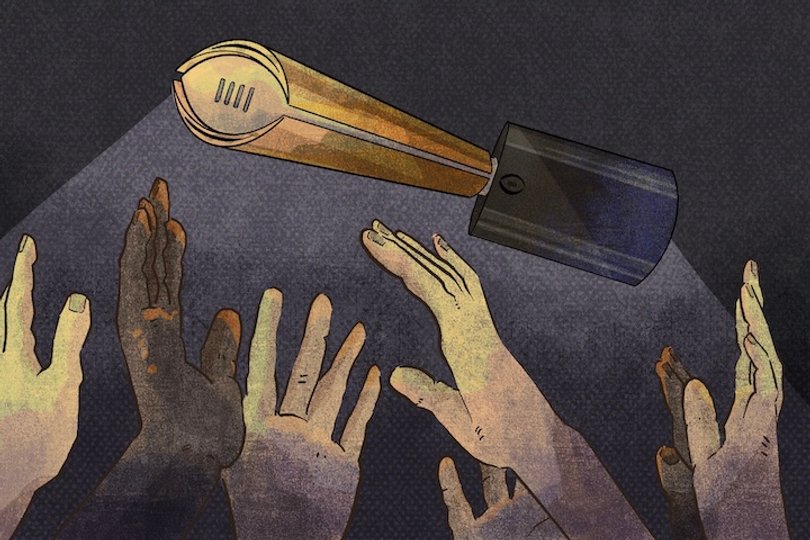
On Oct. 15, it was revealed the College Football Playoff format would likely expand to a 24-team playoff, completely changing the sport. This move completely leaves the importance of the regular season in ruins. I’m sure this move was driven by the opportunity to generate more revenue through high-viewership playoff games. While ESPN may get the viewership it’s looking for, it won’t get quality in return.
The top 24 teams all qualifying for the playoff will result in a tremendous dip in the quality of competition, with three- or even four-loss teams reaching the playoffs. The thought of watching an 8-4 Missouri team led by Eli Drinkwitz make the playoffs doesn’t exactly excite me.
Based on last year’s results, first-round matchups under the proposed 24-team format would’ve included North Texas vs. Alabama, Iowa vs. Notre Dame, Georgia Tech vs. BYU, Houston vs. Miami and Tulane vs. Texas.
Watching money ruin the traditions we all love is a sad reality, one that seems to occur all too often in sports.Charlie Creighton, Columnist
I don’t think any of those matchups would be decided by one score. Programs like Alabama and Texas would typically schedule these opponents in August, hoping for a tune-up game in which they’d be heavy favorites.
Just because more teams make the playoffs doesn’t mean there are more playoff-quality teams. I, along with plenty of college football fans, don’t see the benefit of matchups like these, especially at the expense of important bowl games and the regular season, which used to hold real importance.
In 2008, Tim Tebow, driven to tears after a September loss to Ole Miss at the Swamp, took the podium and laid down a promise. No team would play as hard as Florida for the rest of the season. No player would work as hard as he would.
He was right, and quite frankly, he had no choice. Florida went unbeaten for the rest of that season and won the national championship.
If that game were played in 2027, Tebow would’ve shrugged off the loss as no big deal. Losses won’t carry the same weight anymore. Teams could slip up three or four times and still have a chance at making the playoffs.
High-stakes regular-season games are what make college football special. When you leave so much room for error, you take the sting out of the game. You ruin what makes college football, college football.
A late-season must-win matchup between Florida and Georgia in Jacksonville. A late-season stresser between Alabama and LSU in Death Valley. A low-scoring, low-margin-of-error game between Ohio State and Michigan. Games like these could lose much of their significance.
The potential of Rivalry Week becoming a time when teams rest their best players is a frightening prospect for the future of college football.
When you think about what makes college football special, you also think of tradition. A white-out at Beaver Stadium. Pounding Howard’s Rock at Clemson. Tapping the sign at Notre Dame. Dotting the “i” in Columbus. It’s sad to think these traditions could become part of games that won’t matter as much as they used to.
Watching money ruin the traditions we all love is a sad reality, one that seems to occur all too often in sports. All we can do is enjoy what’s left of college football as the life gets squeezed out of it more and more each day.
Charlie Creighton is a freshman majoring in journalism. He can be reached at crcreigh@syr.edu.