Musicians bring ‘Sounds of Palestine’ to SU, honoring ‘threatened’ culture
Have you had an experience with Syracuse University’s Title IX office? Share your story with The Daily Orange’s anonymous tip line.
As the war between Israel and Hamas enters its fourth year, Syracuse University’s Moynihan Institute’s Middle Eastern Studies Program hosted a Sounds of Palestine event in Hendricks Chapel on Wednesday to highlight the place of music and art during periods of suffering.
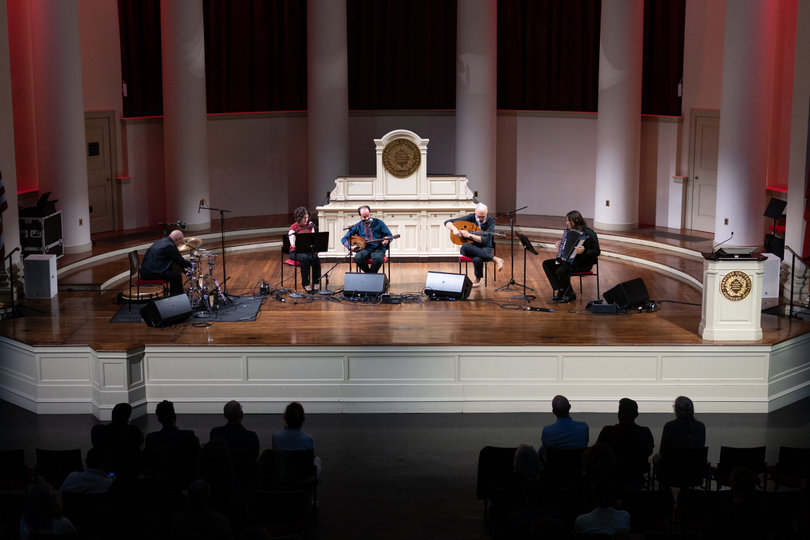
The Sounds of Palestine featured a performance by the Dal’Ouna Ensemble, a Franco-Arab ensemble specializing in classical and folkloric Arab and Palestinian music.
For Ramzi Aburedwan, a Palestinian musician, composer and conductor, performing the songs provides an opportunity to preserve a “threatened” culture.
When Aburedwan was a student at the National Regional Conservatory of Angers in France, he began studying Western classical music. His studies made him nostalgic about traditional Palestinian music, and when his peers asked him to perform, an idea formed.
Aburedwan founded the Dal’Ouna Ensemble with a group of fellow students in 2000, and over 20 years later, he says the ensemble shares the stories and experiences of Palestinians living under occupation.
“Music is very important for preserving culture and humanity,” Aburedwan said. “(The music) will give them this protection, and this possibility to free themselves from inside.”
Aburedwan explained the stories of some of the songs he performed, including the first song titled “Mahinour” or “A Full Moon,” which he said is about a Palestinian shepherd woman tending to her flock in the beautiful mountains of Palestine.
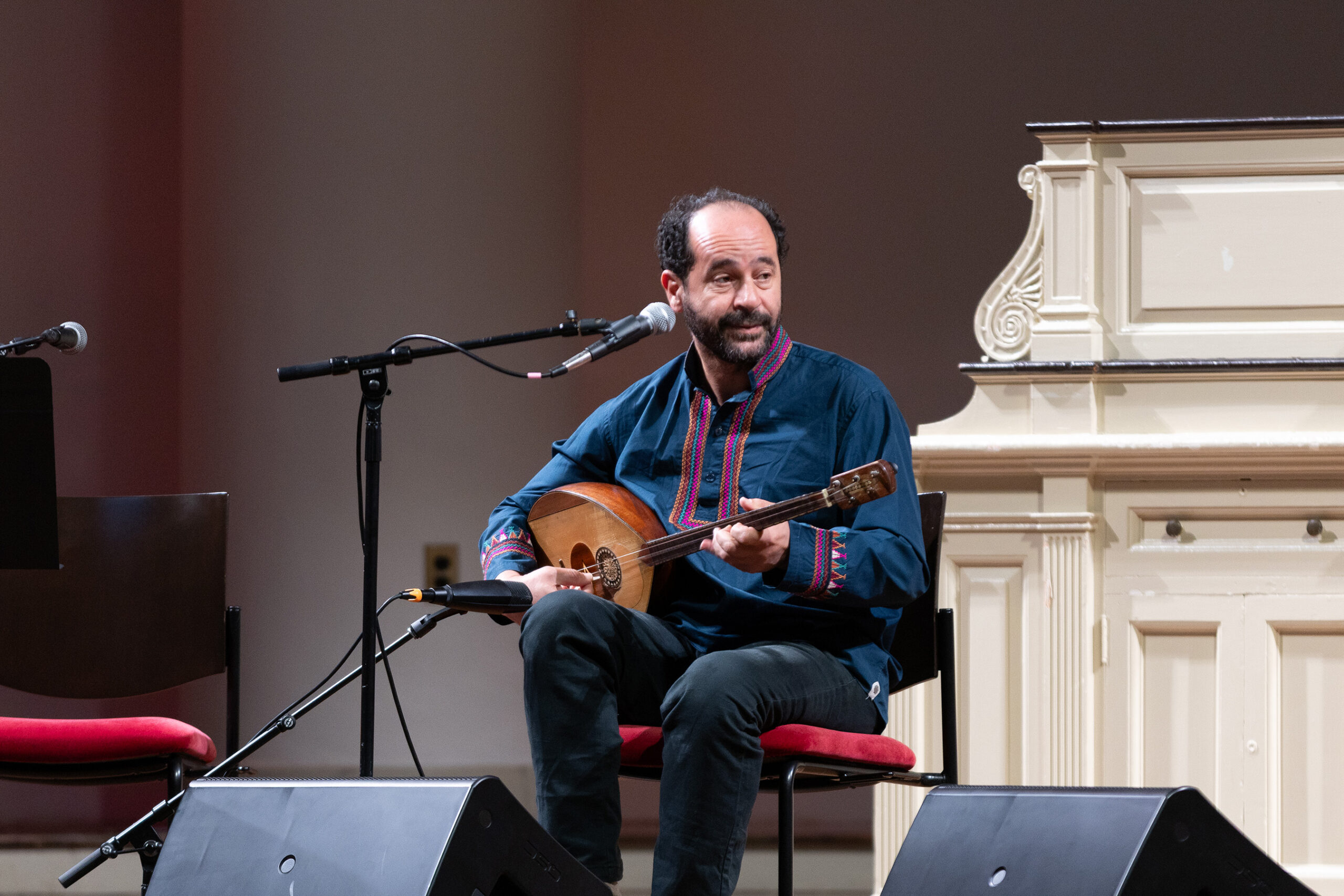
A Wednesday performance by the Dal’Ouna Ensemble titled “Sounds of Palestine” at SU’s Hendricks Chapel provided artists an opportunity to preserve Palestinian culture through music and display aspects apart from the ongoing conflict. Zabdyl Koffa | Staff Photographer
Yael Zeira, director of SU’s Middle Eastern Studies Program, said she wanted the ensemble’s event to show people more about Palestine than the news often shows.
“I wanted people to see the beauty of Palestinian culture, not just to hear all the news headlines and hear all the time about violence,” Zeira said.
Aburedwan said what Dal’Ouna performs is Palestinian at its core, but it’s not quite the same as traditional Palestinian music.
“I’m not completely representing purely Palestinian music because I had my education in France, and I had the chance to learn the different styles of music of the world,” Aburedwan said. “But the main sound, it’s sound from Palestine because these songs are inspired from their daily life.”
Another song performed, called “Youma Mouil El Hawa,” or “Mother, Love is Calling,” tells the story of the displacement and separation of Palestinian families. The song centers around a Palestinian girl’s longing for freedom and desire to die rather than live under oppression, Aburedwan said.
Because a scheduled guest singer wasn’t able to make the performance, Zeira was asked to recite poems alongside the ensemble during two songs.
Though she hadn’t expected to be part of the performance, when she took the stage, Aburedwan joked that Zeira had practiced the poem for months.
“It was one of the most beautiful and memorable experiences of my life. The instruments sound different when you’re up there, and you can really see the conversation that’s taking place,” Zeira said. “I was honored to be up there.”
Different artists have performed with the ensemble since its founding. While a majority of the artists who have performed for Dal’Ouna are Palestinian, Aburedwan said people outside of the culture have contributed as well.
French musician Michael Geyre has played accordion with the Dal’Ouna ensemble for the last two years. For him, performing with the Dal’Ouna ensemble is about the music itself rather than politics.
“You don’t have to share your opinion with people, it’s up to you to have an opinion. You can share your experience,” Geyre said. “To me, music and politics should never be related.”
On the other hand, Aburedwan sees displaying Palestinian culture around the world as an opportunity to incite action. He hopes attendees walked away from Wednesday’s event with one important takeaway: something can always be done.
“The most important element is to be aware and then everyone can do something, even if it’s small,” Aburedwan said. “Changing the world is not gonna happen by one person. It’s gonna happen when everybody participates.”
Greater awareness makes it more difficult to hide the truth, Aburedwan said. He believes people are less likely to accept what he described as “the lies” when they have a better understanding of the conflict.
Syracuse local Tamice Gates said she attended the event for an opportunity to experience a different side of Palestinian culture beyond what’s typically portrayed in the news.
“The war and the genocide that’s happening kind of dominates the headlines, and some of the cultural parts of the world is lost,” Gates said. “This is a sort of a way to separate yourself from the headlines and experience the beauty of this country.”
Gates said the experience of hearing the music live was a “wonderful” moment for her.
“I don’t know that I’ve ever experienced anything like it, and I hope we continue to have these moments facilitated for us,” Gates said.
She described the stories the ensemble performed as “moving” and said it helped deepen her understanding of Palestinian culture.
Going forward, Aburedwan is especially interested in connecting with younger audiences, like the attendees at Wednesday’s performance, because they’re more open-minded, he said.
“So many people have been formed to think one way and then to not go outside the box,” Aburedwan said. “Because young people are much more flexible, once they understand they have no other choice than advocating for justice.”