Buster Honeywood’s arduous road to Division I landed him at Syracuse
Get the latest Syracuse news delivered right to your inbox. Subscribe to our sports newsletter here.
It’s January in Syracuse, and snow blankets the ground. Buster Honeywood is two months removed from his fifth season at Bellevue University, a National Association of Intercollegiate Athletics program in Nebraska. It’s finally time to fulfill a dream he’s chased since learning soccer on England’s east coast at age 5. So as he tours SU’s athletic facilities, a little snow won’t dampen his mood.
“I had a great time,” Honeywood says, recalling his first visit to Syracuse. “We were supposed to be here for two days, and we were stuck for four. We got snowed in. But they made a great impression.”
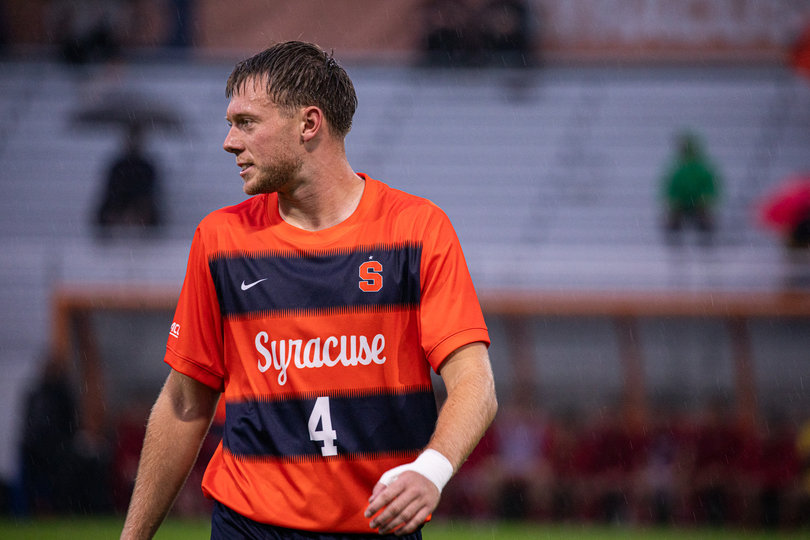
Back then, Honeywood was nearing his first Division I season. Eight months later, the 6-foot-3 center back is one of three SU players to start all 10 games, anchoring a defense that’s allowed seven goals, the second fewest in the Atlantic Coast Conference.
Honeywood’s former Bellevue teammates always knew he’d reach D-I. His best friend Anthony Cox said they’d talked about it since meeting in nursery at 4 years old.
Cox credits himself with introducing Honeywood to the sport, and they played together in the United States 15 years later. Now with Syracuse, Honeywood’s taken another step forward.
“The goal was to always go D-I, to play professional and make it to the top,” Cox said. “He’s still on that journey. I truly believe he’s on course to get there.”
• • •
Kessingland, England, is a village fit for a fisherman. Nestled on the coast, the seven-square-kilometer town is shaped by the North Sea. Honeywood lived there until leaving for Bellevue at 18. He used to fish with his father, Andy Honeywood. Then he discovered soccer.
“That was life,” Honeywood said. “As soon as school finished, we’d play until it got dark or until we got told to come home.”
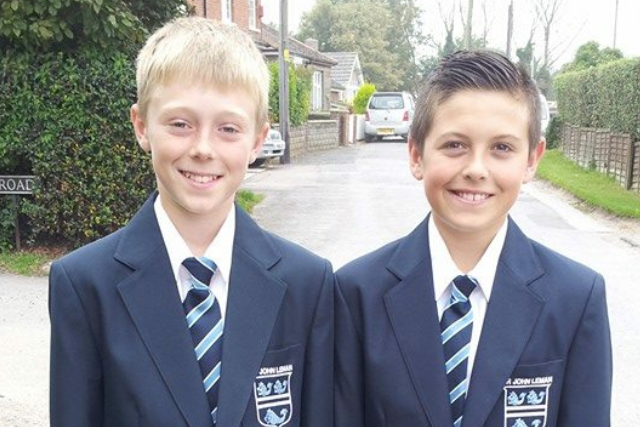
Buster Honeywood and Anthony Cox smile in their Sir John Leman High School uniforms. The two grew up in Kessingland, England, where they became best friends and starred at soccer. Courtesy of Anthony Cox
Honeywood’s home was a two-minute walk from the beach and a 30-second walk from Cox’s. It had a spacious backyard, where Honeywood and Cox regularly played from 9 a.m. onward.
Inspired by F2 Freestylers, a British football duo with almost 14 million YouTube subscribers, the two started a channel: AB Freestylers. A for Anthony. B for Buster.
“We did get quite a few thousand views on it, but we took it down,” Cox laughed. “We didn’t wanna get embarrassed.”
Between the sand, Honeywood’s yard and the Kessingland Community Center, Honeywood and Cox dialed in. Cox said it was “ridiculous” how many balls landed in the neighbor’s garden. It was that or the back of the “classic English cages” they practiced on at their favorite spots around town.
“We would kick a ball every day, work on our technique, pretend we were scoring screamers,” Cox said. “That’s just how it went for us.”
In England, the best players hail from London and Manchester, Cox said. Few settle on the coast. Honeywood and Cox were outliers. When they stood out among their classmates, they played with kids a few years older. But they weren’t intimidated.
Honeywood, soft-spoken like his mother Emma Honeywood, was “not afraid of anything” on the pitch. Andy would tell him, “When you go into a tackle, make sure you smash him.”
Cox didn’t need to be told twice, either. The two dominated, so much that they were often split up on the play yard. But on the same side in meaningful games, their chemistry was unmatched.
Cox paced the left flank. Honeywood set up deep. He’d give a look, and Cox knew to go. It took them from numerous youth clubs to Sir John Leman High School to Lowestoft Town FC, a nearby semi-professional club. Eventually, it took them to Bellevue, too.
From ages 11-16, the two took daily 20-minute bus rides to John Leman. From 16-18, they appeared for Lowestoft’s first team. No matter where they were, conversations were the same.
“It was talking about our future and playing pro. That was the biggest thing,” Cox said. “Just two small boys from a small town. It made everything so special.”
• • •
Honeywood had been to the U.S. once for a wedding, and his uncle lives in Seattle. But Nebraska isn’t Seattle. In fact, Nebraska isn’t like anything Honeywood had ever experienced. When Honeywood first landed, he was greeted by cornfields. Only cornfields.
“We were like, ‘What have we done here?’” Honeywood said. “It’s a bit bare.”
Bellevue head coach Mark Heath-Preston picked up Honeywood and Cox from the airport. They’d been stuck in Dallas for two days, and their apartment wasn’t ready for move-in. Morale was low.
The pair lived in Heath-Preston’s basement for the next two weeks. Like the rest of the state, the space was mostly empty. A couch. A bed. A table.
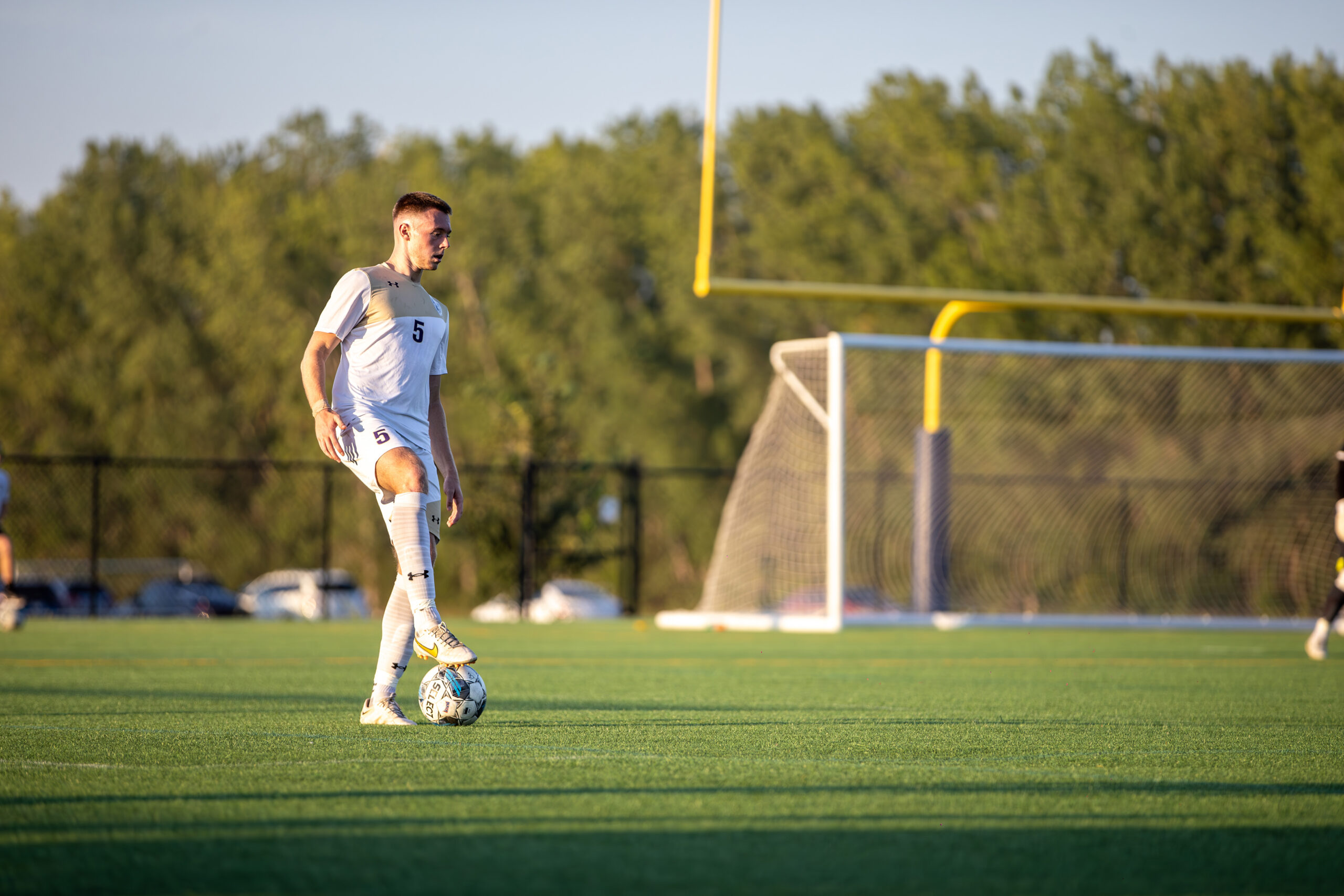
Buster Honeywood traps the ball while playing for Bellevue University. Honeywood spent five seasons with the Bruins but was only healthy for three. Courtesy of Bellevue Athletics
Upon landing in Nebraska, Honeywood felt his knee was “loose.” Not in the flexible way, but rather flimsy. On the second day of Bellevue’s training, he participated in a drill that required him to backpedal, turn and sprint. He fell to the ground. Cox, a few steps ahead, turned to crack a joke.
“Bro, it’s dry out here. How are you slipping?”
“Nah, it’s my knee. I can’t get up. I can’t move.”
Honeywood later underwent an MRI. Doctors told him he tore his meniscus, patellar tendon and ACL. He said he wanted to go home, but the 18-year-old persisted.
After surgery, he earned full custody of the bed, while Cox moved to the couch. They got “so good” at table tennis after playing nonstop for two weeks. The next few months were a mental battle as Honeywood watched Cox live their dream.
His teammates tried to take his mind off soccer by attending Nebraska football and Creighton basketball games and exploring ice cream shops in Omaha, a 20-minute drive from campus.
They took Honeywood to American staples Chipotle, Five Guys and Chick-fil-A. When Honeywood wanted a taste of home, former Bellevue defender Kyi Nicholson said he walked 20 minutes to Panera.
“It’s like getting tea and coffee in the morning,” Nicholson joked.
Honeywood got injured in August. By early April, he was cleared to return.
In Bellevue’s first spring scrimmage, Honeywood played 60 minutes off the bench. He was convinced he was back. Then, two minutes into the Bruins’ second scrimmage, Honeywood went down again.
“I knew it straight away,” Honeywood said. “I was in denial.”
He tore his left ACL for the second time. He said it was the worst thing that could’ve happened. Coaches and doctors doubted him. He began doubting himself, too.
“It was Groundhog Day every single day,” Heath-Preston said. “I wasn’t sure if he’d make it.”
But Honeywood did.
“You gotta trust your heart and go with it,” Cox said. “As soon as you say the words, ‘Give up,’ that dream is gone.”
• • •
Honeywood refused to say those words, despite how incongruous he felt. His second rehab was similar to the first. Lots of walking, eating and thinking. At that point in Honeywood’s career, there was no turning back.
It was Groundhog Day every single day, I wasn’t sure if he’d make it.Mark Heath-Preston, Bellevue University head coach
Cox transferred to USC Upstate, a D-I program in South Carolina, leaving Honeywood with few distractions. Emma questioned what her son was doing without Cox and no soccer to play. Classes ran from 9 a.m. to lunchtime before training and lifting. For months, Honeywood could only spectate.
“I had very low expectations,” he said. “I’d been mentally prepared that if it doesn’t happen, it doesn’t happen.
“You’re sat there getting left behind.”
Heath-Preston offered to pay Honeywood’s tuition if he couldn’t return to the pitch, but Honeywood was determined.
“It doesn’t matter if he’s getting paid $10 a year or $2 million a year. He will play soccer no matter what,” Cox said.
As one of Bellevue’s older players, Honeywood assumed a “prominent” role, Bellevue goalie Jaxson Staples said. Honeywood suffered an ankle injury before the 2024 season but learned to push through it. When teammates got hurt, they sought his advice.
Heath-Preston said Honeywood didn’t kick a ball for nearly three years. But when he returned, he “had more of a hunger to help what was already a really good side.”
In his first two healthy seasons, Honeywood earned Honorable Mention All-Continental Athletic Conference honors. He started 39 matches and tallied five goals and two assists. The Bruins reached back-to-back NAIA Quarterfinals.
Honeywood considered leaving for D-I then. He spoke to several programs but said most forced him to change majors, setting him back on his degree. Still, he set his sights on the next level, so Honeywood played like he was already there.
Staples said Honeywood’s skills made him realize “there’s levels to this.” Nicholson said he prioritized his health more. Honeywood even began training with the United Soccer League’s Union Omaha.
“There was a big step up, and he really showed that he wanted it,” Staples said. “Everyone knew he was striving for big things.”
The Bruins finished 10-8-2 in 2025, reaching the CAC Championship before falling to Georgia Gwinnett. It wasn’t how Honeywood envisioned his NAIA career ending, but he immediately looked ahead.
“It’s obviously not nice to lose Buster, but what he did in giving his time to our program, you have no problem with that,” Heath-Preston said.
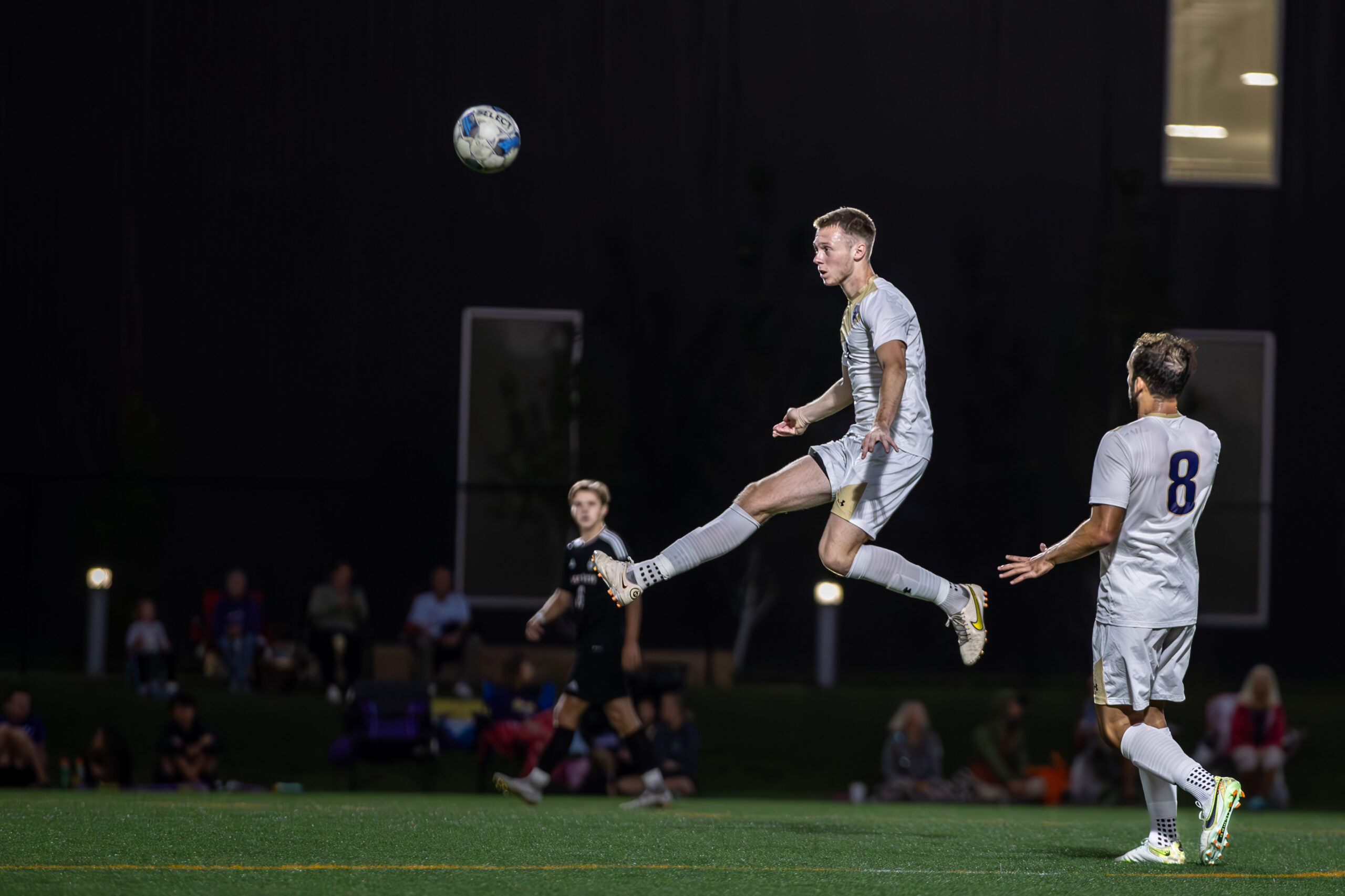
Buster Honeywood rises to clear the ball at Bellevue University. Honeywood used a strong three seasons with the Bruins to propel him to Division I Syracuse. Courtesy of Bellevue Athletics
• • •
Honeywood emailed the top-40 D-I schools in the Rating Percentage Index with career highlights. When he received few replies, he hesitated to send a second batch. Then, a message from SU assistant Matty Evans appeared in his inbox.
The two hopped on a few phone calls. Eventually, they moved to Zoom calls with Ian McIntyre and Jukka Masalin.
“We’re not just looking for the best profile,” McIntyre said. “We’re looking for the best profile that fits who we are.”
McIntyre had coached NAIA players before. Nathan Opoku — who McIntyre said is SU’s best player in recent memory — and Michael Acquah both played at Lindsey Wilson College. Tim Noeding starred at Bethel University. McIntyre pitched Honeywood to be next.
“As soon as I spoke to those guys, they became my top option,” Honeywood said. “I liked what they said about the program and ambition for the team this year. I was pretty much sold there.”
Eight months after those calls, Honeywood sits a few hundred feet from SU Soccer Stadium, reminiscing. The large scar on his leg comes into question. It’s a reminder of his past. Of everything it took to get here.
Cox said he’s stoic, but Honeywood’s clearly emotional here. In three days, he’ll face then-No. 10 Notre Dame, the most formidable opponent on Syracuse’s schedule — and in Honeywood’s D-I career — thus far.
But before that, Honeywood is given a final chance to reflect on his journey. Was it worth it? To some, it seems like things didn’t go to plan.
But to Honeywood, maybe they did.
“There are gonna be bumps in the road,” he said. “But good things come to those who wait.”