How to keep yourself, your car safe while driving this winter
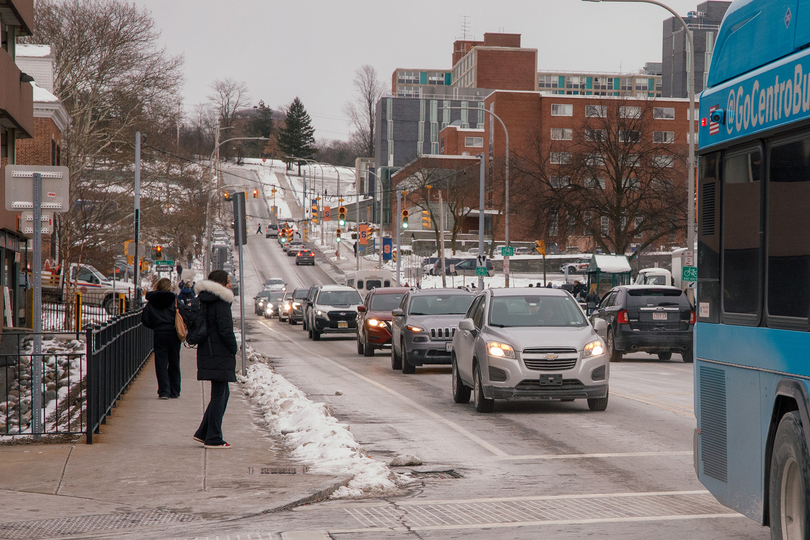
Staying safe on the roads during icy winter weather conditions starts long before you get in the car. The Daily Orange compiled a guide with safety tips, including installing snow tires and getting your car inspected. Avery Magee | Asst. Photo Editor
Support The Daily Orange this holiday season! The money raised between now and the end of the year will go directly toward aiding our students. Donate today.
As Syracuse University students prepare to travel home for winter break, the city is expected to see several snow showers. This makes it important for drivers to be especially careful on the roads and take extra precautions to keep their vehicles safe, according to car safety experts.
Even in regions that are accustomed to cold weather, inclement weather can lead to a spike in car accidents. In 2017, a pre-winter storm caused 40 accidents in one day in Syracuse alone.
SU snow crews work around the clock to ensure campus roads and sidewalks are cleared before morning commutes begin, a spokesperson for the SU Department of Public Safety said in a Tuesday statement to the D.O.
While inclement weather may make it difficult to find parking around the university, DPS urges drivers to remember that parking regulations do not change due to inclement weather, including the city’s odd and even parking rule. Drivers should move their vehicles accordingly so city plows can clear the roads, the spokesperson said.
To stay informed during the winter, DPS suggests university drivers download the Orange Safe app to receive push notifications about emergencies, as well as important safety information, DPS said.
For emergency notifications, students and faculty should register for Orange Alert through MySlice. Drivers can also follow @SyracuseDPS on Instagram and X for real-time updates.
The D.O. has compiled a guide to handling car safety this winter season.
What to do before you get in the car
Staying safe starts with preparing your vehicle for winter, PJ Schmid, owner of Rudy Schmid Inc., Total Car Care, said. Schmid recommends investing in snow tires, which have more built-in traction, especially for those driving through the city’s icy hills.
Before winter hits, Schmid recommends drivers send their cars to a reputable auto shop for a thorough inspection. These check-ups ensure the car’s steering, suspension, brakes and antifreeze are in proper shape to tackle the cold weather.
Testing your car’s battery is crucial, he added, as they tend to lose voltage in lower temperatures.
Winter weather can inadvertently damage vehicles, making it important to keep up with preventative maintenance to avoid costly repairs.
“What you think is a small repair ends up costing a lot because of all the safety systems that are on vehicles now,” Schmid said. “What looks like $1,000 or $1,500 repair ends up being a $5,500 repair.”
How to stay safe while driving
The American Automobile Association urges drivers to reduce their speed during winter months in its winter tips guide. In hazardous winter conditions, it can take longer for cars to start and break because of the lower traction, according to the guide, making it important to slow down on icy roads.
AAA recommends keeping a five-to-six-second gap between cars in snowy conditions. This additional time gives drivers the extra distance they need in case of an unexpected stop. Drivers should also avoid using cruise control in icy conditions, the winter tips guide states.
Schmid echoed this sentiment, suggesting that all travelers add an extra 15 minutes to their trip when facing harsh conditions.
According to AAA, it’s also important to accelerate and brake slowly to avoid skidding on the road. If the car does begin to skid, drivers should take their foot off the gas and shift to neutral, according to the Missouri Department of Transportation. Then, they should steer in the direction the rear of the vehicle is moving until they regain control.
Drivers should also inform others of their estimated time of arrival and share their location throughout the drive, AAA recommends. It’s also recommended that drivers try to keep their car’s tank at least half full at all times to prevent gas lines from freezing.
What to do if you get into trouble
In the case that drivers get stranded in the snow, AAA recommends they remain in their cars to preserve their vehicle’s energy until help arrives. They warn passengers to avoid walking through snow or ice to avoid any accidents.
Drivers should clear their exhaust pipes of any snow, ice or mud. Blocked exhaust pipes can lead to deadly carbon monoxide gas leaks in the car when the engine is running, according to AAA.
DPS recommends drivers always keep an emergency kit in their car, especially during the winter. To pack a well-stocked kit, drivers should include an ice scraper, snow shovel, extra warm layers, non-perishable snacks and water.