Opinion: Literary crisis rhetoric ignores reader surge, online book culture
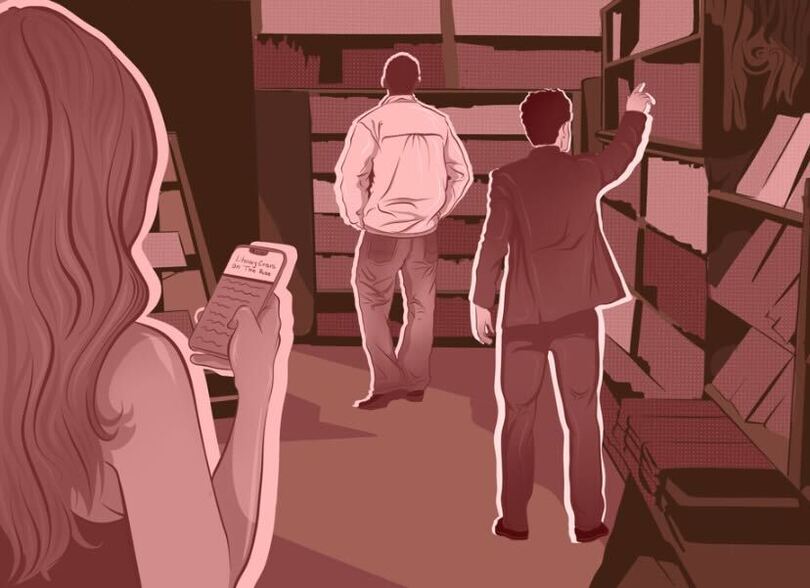
Our columnist asserts online reading communities like BookTok are revitalizing literacy and fueling a bookstore revival. Traditionalist pushback misses the broader resistance readers are establishing nationwide, she writes. Emma Soto | Contributing Illustrator
Get the latest Syracuse news delivered right to your inbox.
Subscribe to our newsletter here.
In early 2026, Barnes & Noble announced a sizable expansion, with 60 stores scheduled to open nationwide. While this may seem natural given the store’s recent popularity by word of mouth, the corporation has, in truth, been suffering a major decline since the 2010s. With a literary crisis declared throughout the United States, this upcoming development may just be the catalyst we need to instill hope in the nihilistic reading world.
The rise of online book retailers has been nothing short of catastrophic for bookstores, and with Amazon taking up nearly 50% of the book market, Barnes & Noble rapidly lost its footing. In fact, in the past decade, the chain has been forced to close at least 100 stores. To make matters worse, Kindle’s popularity only served to add more pressure on Barnes & Noble, dragging readers away from analog books and toward the digital world of e-reading.
With so much competition and little fight to give, no one would’ve predicted the corporation’s phoenix-like rebirth in the 2020s.
Oddly enough, much of this revival is owed to the internet itself.
Trends are circular, and books seem to be no exception. In recent years, subgenres have been created on platforms like Instagram and TikTok, like “bookstagram” and BookTok. Primarily young girls share, discuss and read novels in these forums. These communities have generated an outpouring of book conversation that proves reading has been revitalized, with the #BookTok already gathering 370 billion views. Substack has taken off as well, celebrating 5 million paid subscriptions.
While traditionalists push back against this modern literature wave, it’s important to adapt to it. Rather than responding to BookTok and internet literature methods with criticism, we need to embrace them. People are adapting and finding their own ways to connect with books.
In recent years, the rhetoric surrounding the literary crisis has taken over the U.S., with claims that most high schoolers hardly manage to finish even a single novel. This increased disinterest in reading has left teachers and the government alike worried and overwhelmed, unsure how to go about curbing this crisis. However, alarmists have only exasperated the narrative, drawing nearly no attention to the resistance people are putting up.
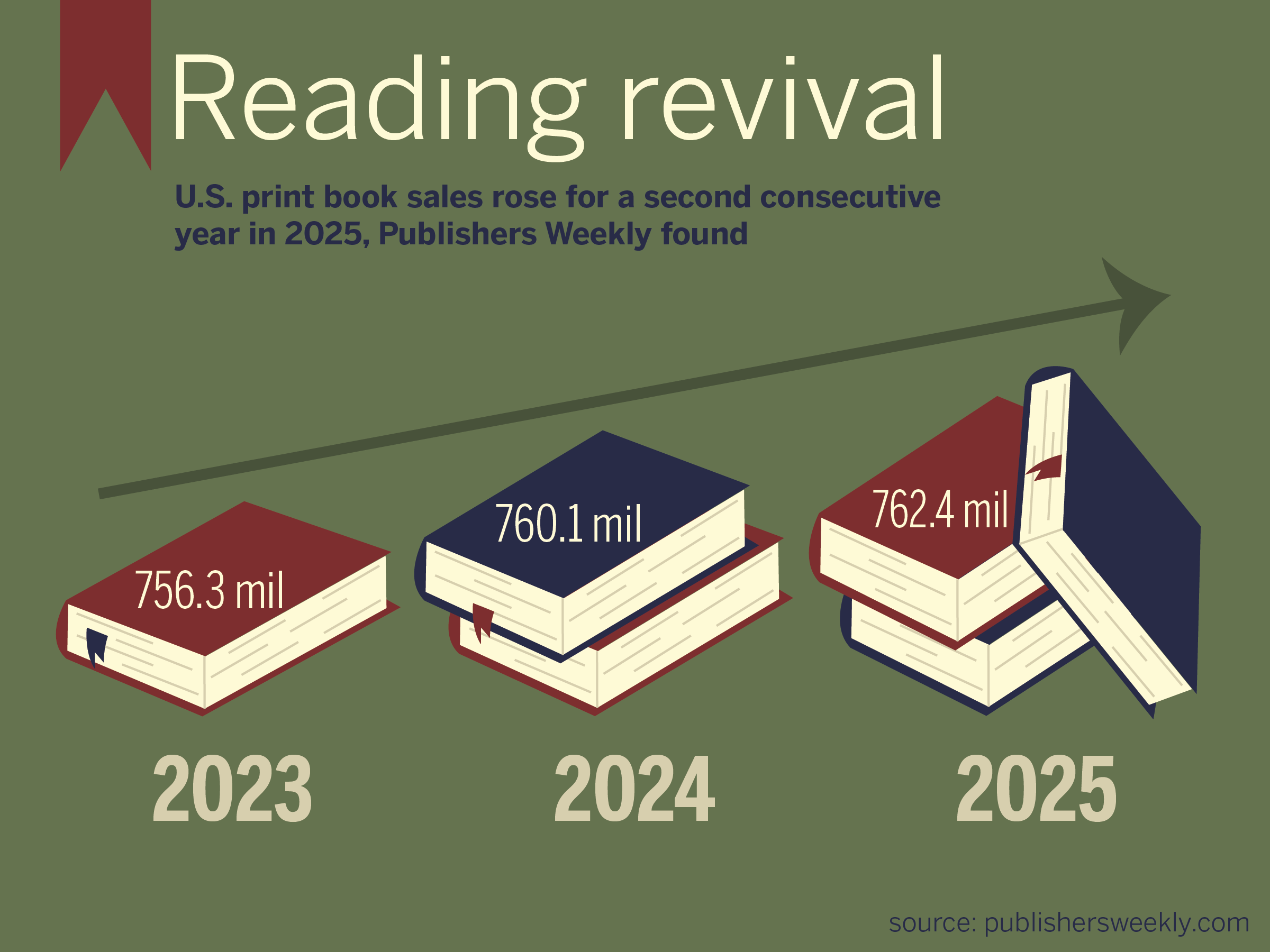
Zoey Grimes | Design Editor
These online book forums like BookTok are doing just what we want: encouraging younger generations to read and pushing back against the literacy crisis. People are consistently showing up to their Barnes & Noble to resist closures. Readers are not going down without a fight.
It seems we are heading toward a future of young book lovers, despite the fear these past few years have instilled in us. These promising online movements seem to be single-handedly guiding us back towards literacy, yet are belittled or not talked about at all.
The popularity of this online book club, though, is not just about reading – it’s about community. In an increasingly digitized world, people are still finding ways to create their own pockets of community on the vast internet. Friendships are formed, events are planned, and people are realizing screens can’t feed the soul forever.
This fostering of community and popularization of escapism in books has drawn people to Barnes & Noble, and it’s not only books they seek. While customers often leave with a new read in hand, the store has also become a third space.
When you walk into your local Barnes & Noble now, it’s common to see groups of teenage girls sitting in the cafe with stacks of books and melting iced coffees in hand. Down the aisles, you’ll even spot a “BookTok recommendations” table or shelf, extending the online conversation in the real world.
By transferring this internet craze to their stores, Barnes & Noble has not only revitalized its charm and gained enough attention and profit to expand, but also has created a space for local residents to spend time with their community. In an era of declining literacy, a decrease in human connection, as well as fascist book restrictions, this is an encouraging development. Younger generations are showing up in their own ways, and even if they needed a push from social media to do so, it’s still a promising sign for the future of reading and connection.
While many critique the internet’s choice of books and even its supposed “glamorization” of reading, the optimist in us says at least people are reading. There is no time for pretension in a literary crisis, but there is room for encouragement. We may not all agree on what to read or who the best author is, but if we can still stop at a bookstore on the way home and notice more than one car in the parking lot, I think we can call this a win.
The news is constantly working on drawing us toward the negative: asserting the literary crisis as fatal, but what they mistakenly ignore is the resistance being put up by readers everywhere.
Being a bibliophile is back in 2026.
Dayna Roberts is a junior majoring in creative writing. She can be reached at dbrobert@syr.edu.