SU, Southside Connections partner to form Salt. storytelling program
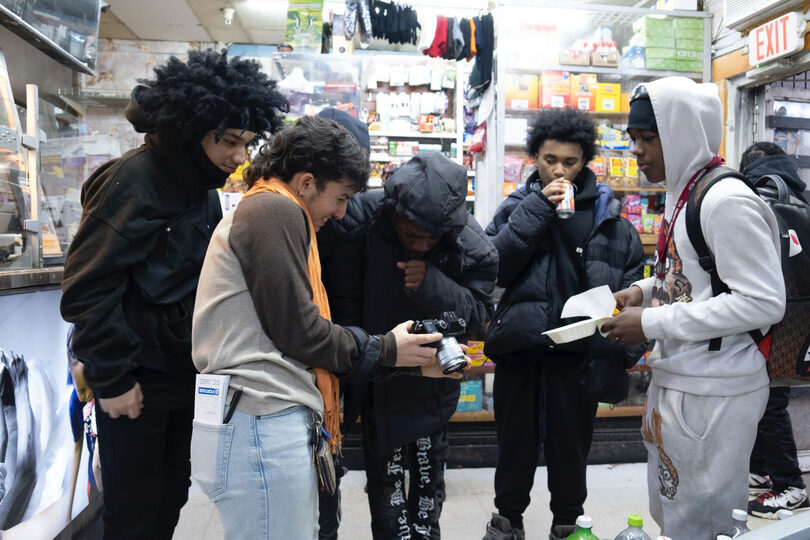
A Salt. photographer shows photos to customers at South Salina Street's Ze Mart. This is part of a larger initiative between Southside Connections and SU. Courtesy of Matt Moyer
Get the latest Syracuse news delivered right to your inbox.
Subscribe to our newsletter here.
Regular customers walking into Ze Mart on South Salina Street are immediately greeted with faces pictured along the walls and ceiling, displayed similarly to a grandmother’s refrigerator. These details showed Destinyi Fernandez, a junior at Syracuse University, how Syracuse residents feel welcomed in their community.
“They feel seen and (represented), just because the South Side is a place where not a lot of people are represented,” Fernandez said.
Fernandez took photos at the convenience mart through the Engaged Humanities Network’s Salt. program. Salt. is a partnership with Southside Connections and SU, is a visual storytelling program that couples community members with SU’s resources and industry professionals.
In the program, Syracuse community members of all ages receive “top-class” training with professional photographers and filmmakers, to create products like photo essays, short films and data visualizations, Brice Nordquist, EHN’s director, said.
Participants engage in hands-on photoshoot sessions, review and post-production with two photographers: Amy Toensing, a former Newhouse School of Public Communications instructor, and Syracuse alum Matt Moyer. The two worked for National Geographic’s Photo Camp for over 20 years.
Toensing said her goal with the program is to create a system of mutually beneficial relationships alongside Southside Connections that will lead the program into becoming self-sufficient, community-led and self-driven.
“We hope that people, the folks that we’re training right now become the trainers,” Toensing. “And that mentorship, that tiered mentorship, starts to build on itself as we make our way through.”
Through this incipient period, trainees are shown techniques and are given instruction, then brought to sites to create and hone their skills.
“(Salt.) is really giving community members the tools, training, kind of setting to explore the power of visual storytelling and then… applying it to their own community,” Toensing said.
Through this process, Toensing explained those in the program will use their new multimedia skills to teach future participants.
Nordquist echoed this and said he hopes to expand the program in the near future, specifically to Syracuse’s Northside.
“We want to move Salt. from neighborhood to neighborhood,” Nordquist said. “South Side now, the North Side next through existing relationships.”
Courtesy of Matt Moyer
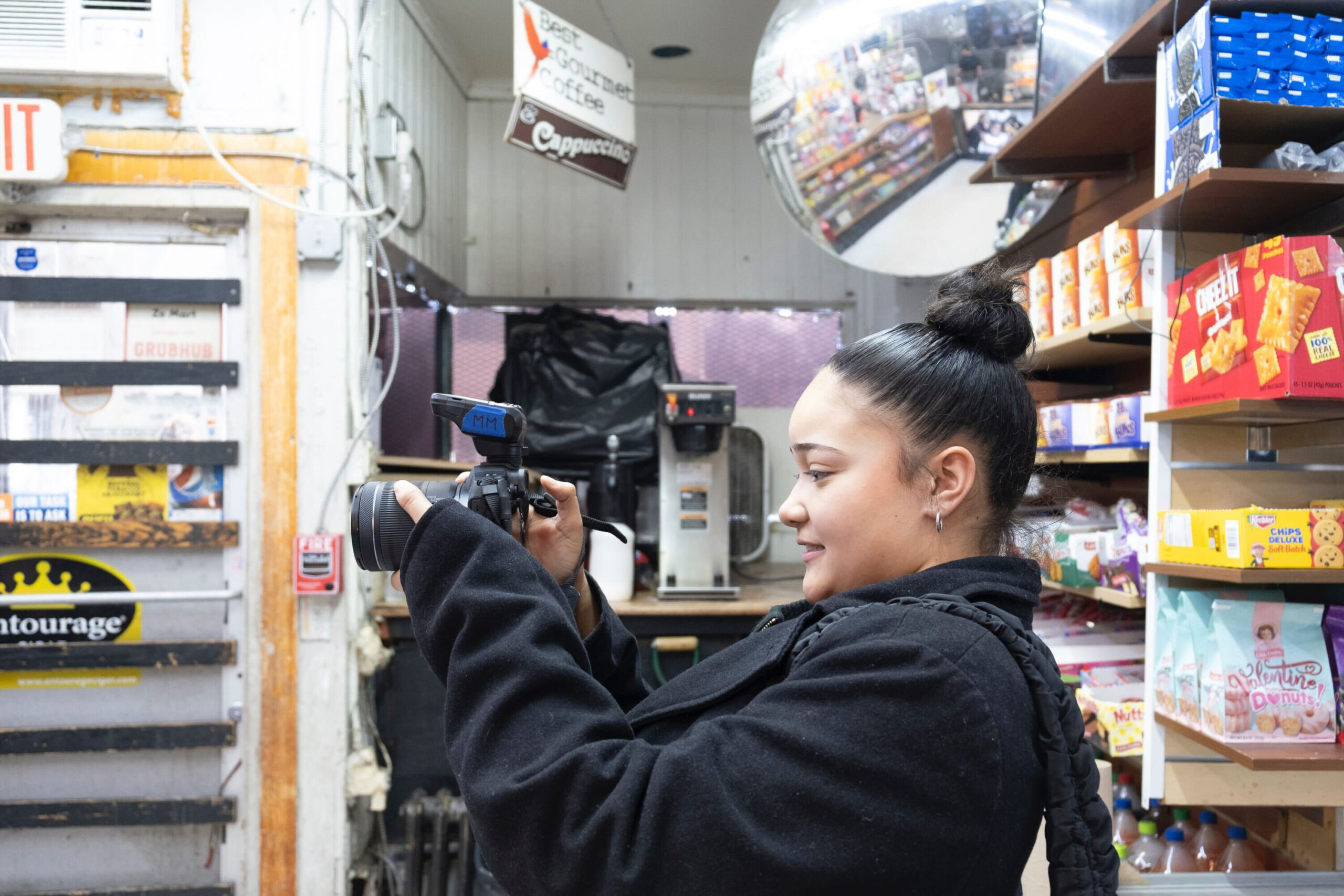
Destinyi Fernandez, a photographer for Salt. takes photos for Ze Mart. Fernandez said adding in personal elements, like photos, help residents feel welcomed in their community.
For Syracuse’s Southside neighborhood, visibility has long been a challenge. Salt.’s mission is for its members to be seen, so the program has taken notes from the community.
Southside Connections, a network of over 30 community organizations in the Southside neighborhood, has been essential in making Salt. a reality, Nordquist said. The program aims to build a “stronger, more connected community,” according to the CNY Community Foundation website.
Sandra Oduro, a doctoral student at SU who works with Southside Connections, said it’s important to have a network devoted to the community.
“No one is an island. No human being can live on their own… if you are able to see that there is this organization that I can fall on or I can lean on,’ it makes your work so much easier,” Oduro said.
For Salt., the scene for a story can be anywhere — a South Side boxing gym, a Ze Mart or Brady Farm’s produce at the Valley Farm Market, Nordquist said. Yet, Toensing said the stories are far from random, adding the project is very important work for “maintaining democracy in Syracuse and beyond.”
Nordquist believes the program is a key to rewriting stereotypical narratives of the neighborhood.
“If the story is ‘don’t go to the South Side, it’s dangerous,’ behavior follows that story,” Nordquist said. “If the story is ‘the South Side is rich in culture and community,’ behavior shifts, inside and outside the neighborhood.”
The program is gaining a foothold in the Southside community with trainees across all ages, backgrounds and stories, Toensing said. Working alongside individuals from high school to community elders, Toensing said she aims to depict a “beautiful diversity” within Syracuse, giving the program the potential to have lasting effects on the community.
Salt. has plans to promote visibility and allow more individuals the opportunity to be seen.
“Visibility is very important, if we are able to increase this awareness, sensitize them through social media, it goes a long way to help the South Side community,” Oduro said.