How to stay safe, protect your living space during Syracuse’s snowstorm
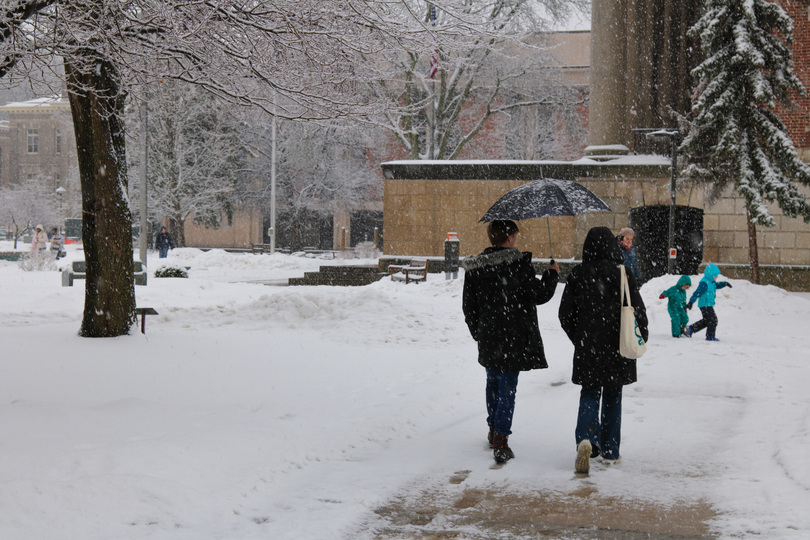
The temperature in Syracuse is below freezing, with 12-18 inches of snow expected. The D.O. compiled a guide with tips about staying safe. Avery Magee | Photo Editor
Get the latest Syracuse news delivered right to your inbox.
Subscribe to our newsletter here.
As a nationwide snow storm hits central New York this week, it’s important to stay safe in and outside of your home by taking proper precautions and following weather alerts.
The winter storm, which as of Sunday evening has accumulated to around eight inches in Syracuse, is expected to continue for most of the weekend. A majority of central New York is projected to see 12-18 total inches of snow, according to the National Weather Service. Wind chills will reach minus 10 degrees, and the temperature will remain consistently below freezing, according to NWS.
On Sunday, Onondaga County issued a travel advisory for “significant snow.” The advisory does not restrict travel, but warns residents of hazardous driving conditions. The advisory comes after New York Gov. Kathy Hochul declared a state of emergency Friday in response to a then-predicted massive snowstorm hitting Syracuse Sunday.
Hochul warned citizens to prepare for the effects of colder weather and dangerous conditions in her Friday state of emergency.
Syracuse Mayor Sharon Owens also issued a snow safety alert Friday.
The Daily Orange has compiled safety tips to protect yourself and your home during the storm.
Staying warm
Syracuse University Student Government Association President German Nolivos urged students to wear multiple layers, waterproof shoes and warm face coverings in a Saturday campus-wide email.
Nolivos also told students to limit time outdoors and be aware of signs of frostbite or hypothermia.
The risk of developing frostbite increases with prolonged exposure to temperatures below freezing and windy weather, according to the Cleveland Clinic. Hypothermia occurs when internal body temperature drops below 95 degrees and is caused by exposure to cold temperatures.
Both medical emergencies may include symptoms like numbness, confusion, intense shivering or extreme fatigue, Nolivos wrote in the email.
To protect oneself against frostbite and hypothermia, the Centers for Disease Control and Prevention suggests following the “Avoid, Spot, Treat” method: avoiding weather by staying indoors whenever possible, spotting the symptoms and treating the condition by seeking medical attention.
“Your health and safety are our top priority,” Nolivos wrote. “Please plan ahead, stay warm, and take care of each other this weekend.”
Outdoor Safety
For those who cannot avoid working outdoors, Hochul’s office released a list of “best practices.” The list includes frequent breaks in warm places, ensuring access to clean drinking water and wearing proper protective equipment.
The New York Department of Environmental Conservation advises rescheduling any nonessential outdoor activities during the extreme cold.
“It only takes 10 minutes for frostbite to set in and rescues can put hikers and first responders at risk,” Hochul’s statement read.
Severe weather can also lead to an increase in car accidents. In December, The D.O. compiled a guide to navigating car safety in harsh winter weather.
Winter home maintenance
While staying warm, students living off campus should take steps to protect their homes from winter weather damages. The New York State Department of Health advises people to keep their indoor temperature between 64 and 75 degrees.
To prevent pipes from freezing, residents should allow faucets to drip when indoor temperatures are low, according to the DOH.
Residents should also open cabinet doors to allow more heat to reach pipes hidden behind appliances or near outer walls. In the event that a pipe does burst, it is important to stay away from the water to avoid electric shock, NWS’ website states.
The National Weather Service provides a list of essential supplies to have in-house during a winter storm, including flashlights, heating fuel and first aid materials. It also suggests reviewing generator safety and to avoid using space heaters in enclosed spaces.
In her Friday statement, Hochul said local social services are legally required to ensure that people experiencing homelessness have access to shelters and that they extend their hours.
University Resources
SU canceled in-person Monday classes. Syracuse’s Department of Public Safety suggests staying informed of any additional updates by monitoring alerts through social media and campus emails or texts.
To report areas that need snow cleaning, call 315-443-4984 and to contact DPS call 315-443-2224.
To reach the SU Ambulance call 315-443-4299 and for life threatening emergencies call 911.