Jury selection for accused Pan Am 103 bomb builder delayed to August
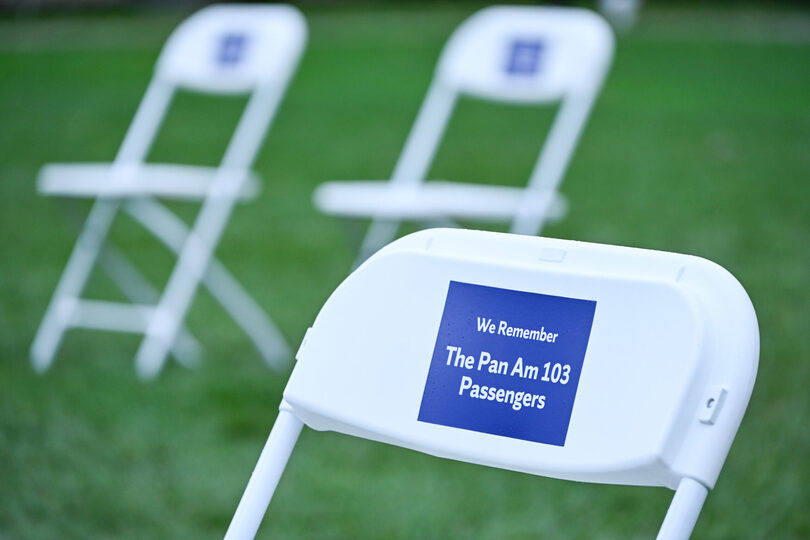
The trial for the accused builder of the bomb used in the Pan Am Flight 103 terrorist attack was delayed due to "unforeseen circumstances.” The jury selection process for the trial will now begin Aug. 24. Lola Jeanne Carpio | Contributing Photographer
Get the latest Syracuse news delivered right to your inbox.
Subscribe to our newsletter here.
The trial for the man accused of crafting the bomb used in the Pan Am Flight 103 terrorist attack has been delayed by four months from its original April 20 court date, according to several case files released by the United States Department of Justice in December.
Due to “unforeseen circumstances” by both legal parties, the jury selection process for the trial of Abu Agila Mohammed Mas’ud Kheir Al-Marimi, accused of building the bomb, will now begin Aug. 24, pending court approval, according to a Dec. 2 status update. The update did not specify what the “unforeseen circumstances” are.
The delayed deadline comes with a June and July timeline for the defense and prosecution to resolve and settle the case’s several pre-trial briefings.
The 1988 attack over Lockerbie, Scotland, killed 270 people, including 35 Syracuse University students and 11 residents on the ground in Lockerbie. The attack targeted the flight on its way to New York City from London with a bomb planted in a suitcase within the plane’s cargo hold. The bombing killed all 259 people on board, including the SU students and two from SUNY Oswego.
Al-Marimi, a Libyan national known as Mas’ud, has been in U.S. custody since December 2022. He pleaded not guilty in 2023 to three federal charges, including two counts of destruction of an aircraft resulting in death and one count of destruction of a vehicle used in foreign commerce by means of an explosive, resulting in death.
The case’s evidentiary and testimonial complications occurred over 37 years after the attack. Mas’ud is now 74 years old. Both parties have continuously argued over the validity of the prosecution’s Rule 15 depositions, which are video-recorded witness testimonies taken before a trial.
The defense argued Mas’ud’s alleged 2012 confession to Libyan police was coerced and based on hearsay, according to a pre-trial document filed in December. They’ve also challenged that U.S. courts lack jurisdiction to continue pursuing the case because the event happened in Scotland and involved a Libyan national, according to a document filed Jan. 8.
The U.S. government, the prosecution, has also objected to one of the defense’s expert testimonies, Rebecca Murray, who the defense describes as an expert on Libyan prison conditions.
Mas’ud’s defense has also motioned to dismiss the trial, claiming he was put in U.S. custody without due process, which has also delayed the case as the U.S. government moved to extend the deadline to respond to the motion to Jan. 30.
All parties must finalize their briefings by March 19.