Examine ‘after effect’ of 13th Amendment in SU Art Museum’s new exhibit
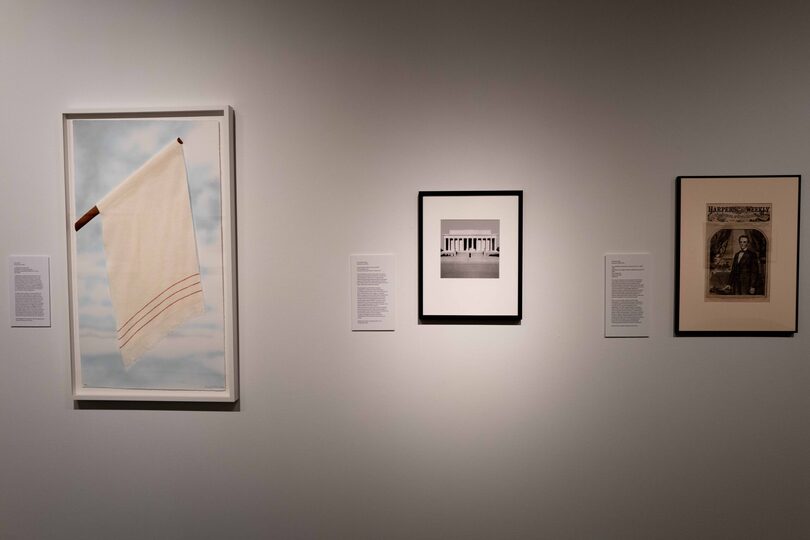
Syracuse University’s Art Museum’s current exhibit, “Afterimages: The Legacies of the Thirteenth Amendment”, explores artist reactions to the amendment. The exhibit includes paintings, photographs and even police records. Tara Deluca | Asst. Photo Editor
Get the latest Syracuse news delivered right to your inbox.
Subscribe to our newsletter here.
Paintings of historical scenes, portraits of notable figures and photographs of police records hang from the walls of Syracuse University’s Art Museum, showcasing the lasting legacy of the 13th Amendment. The bright colors, bold lettering and different art styles of each work contribute to the atmosphere of the exhibit.
“This exhibition is a dedication to the resilience of a group of people, but it’s also looking at an aspect of history that’s been overlooked,” said Regan Hyde, a student curator and first-year graduate student in art history and museum studies.
The exhibition, “Afterimages: Legacies of the Thirteenth Amendment,” which was curated as an SU graduate class project, features more than 10 artworks. Each piece highlights how artists grappled with the 13th Amendment and adversity during this time. Some pieces are from the historical period when the amendment was created, while others are more modern. Launched Jan. 20, the exhibit is on display until March 8.
By placing historical pieces alongside modern works, the exhibition aims to highlight how slavery policies, established more than a century ago, continue to shape lived experiences today, Hyde said.
While the 13th Amendment formally ended slavery, it also included the exclusionary clause, which kept slavery legal as a punishment for a crime. Hyde said she wanted the pieces to investigate how different artists through the years have reacted to these slavery laws.
They wanted to show ongoing histories, Sascha Scott, an associate professor of art history and the exhibition’s faculty lead, said. In her class, Scott’s students selected works that reflect moments of progress and celebration alongside their aftermath.
Together, the works explore themes of resilience, visibility and systemic injustice through scenes of togetherness, portraits of important figures and documents from the 19th century, Scott said.
“They’re not from the past, but they really impact the present,” Scott said.
Those who visited the exhibit, like SU sophomore Anaya Henry, noticed the connection between historic policies and present-day realities.
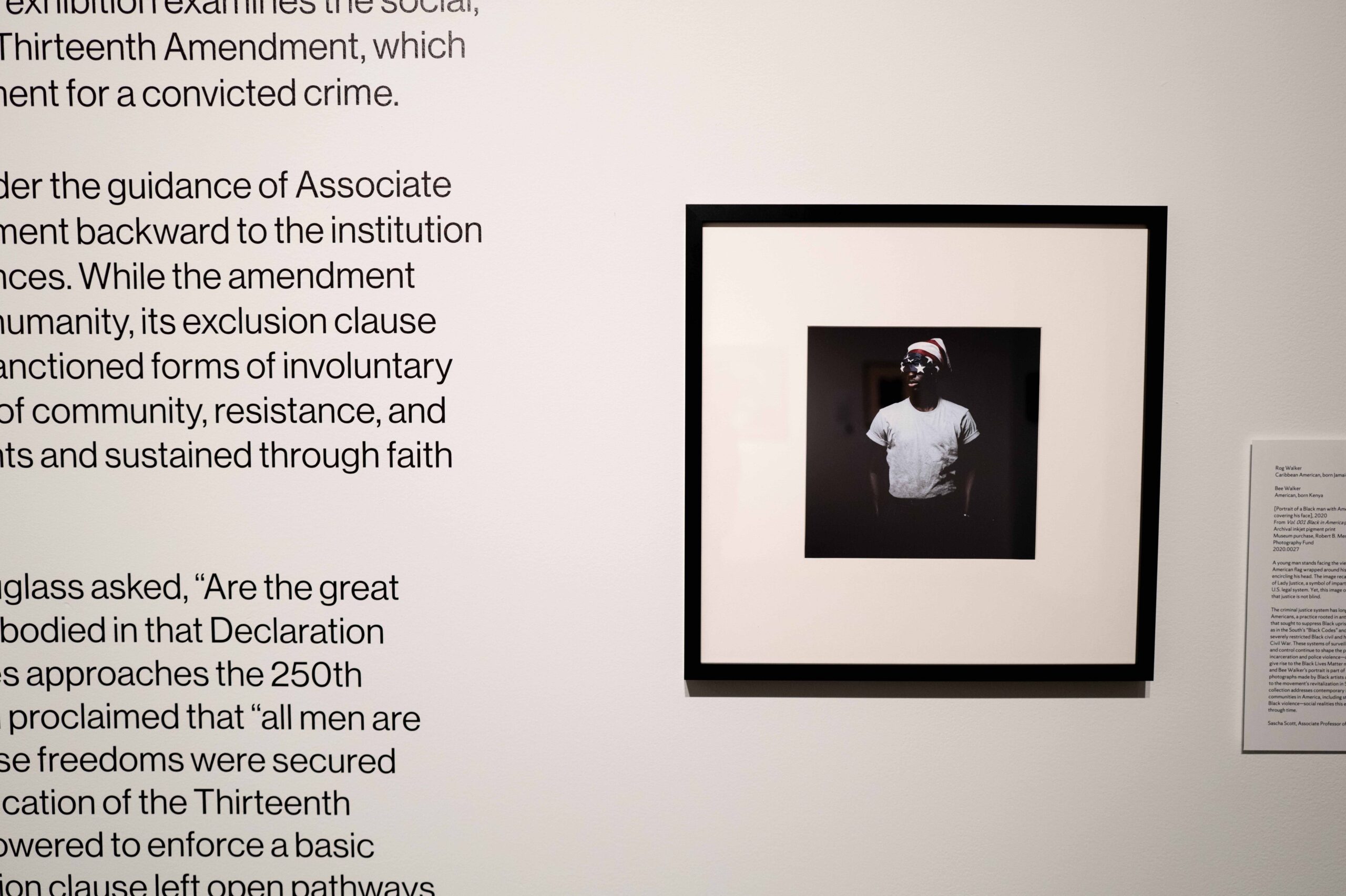
When choosing an image to represent in “Afterimages: The Legacy of the Thirteenth Amendment,” Sascha Scott went with a photograph by Rog and Bee Walker. The close-up shot features a Black man whose eyes are covered by an American flag. Tara Deluca | Asst. Photo Editor
“As a student, you learn about the 13th Amendment in a textbook, but seeing the art makes it feel real,” Henry said. “It made me think about how laws from the past still affect people’s lives today.”
When choosing the image to represent the exhibition, Scott was drawn to a 2020 photograph by Rog and Bee Walker. The close-up shot features a Black man with his eyes covered by an American flag.
“It was just such a powerful articulation of the possibility of what the United States and its constitution has to offer and also its blind spots and who those blind spots impact,” Scott said.
The exhibition’s title of “Afterimages” — chosen by Scott’s students — was inspired by a poem they read in class that Scott said reflects on both “trauma and Black resilience.”
The student curators played a central role in shaping that narrative, conducting research and writing exhibition labels that center artists’ perspectives, Scott said. While producing the museum labels, Scott’s students researched the history behind the pieces and the artists’ backgrounds.
Hyde said the curation process emphasized the importance of listening to artists, rather than interpreting their work through a purely academic lens like she’s used to.
“We want to put their voices first, because it’s not about what I think. My classmates and I are just doing the research and pushing their voices forward,” Hyde said.
She centered her research around Jacob Lawrence’s 1989 work titled “And God Said, Let the Earth Bring Forth the Grass, Trees, Fruit, and Herbs.” The print uses bold color and stylized forms to explore spirituality and community within Black life.
“The exhibition is both about the 13th Amendment, but really about artistic responses to the before, during and after of the 13th Amendment,” Scott said. “So the many legacies of that. We get to do it visually through these really powerful artists, like Lawrence.”
Hyde said she hopes visitors leave the exhibition feeling both informed and inspired.
“Maybe they didn’t know the full 13th Amendment, and they didn’t know what the clause was and the ramifications of that,” Hyde said. “I hope they feel enlightened.”