Opinion: LinkedIn is social currency. It’s time to use it effectively.
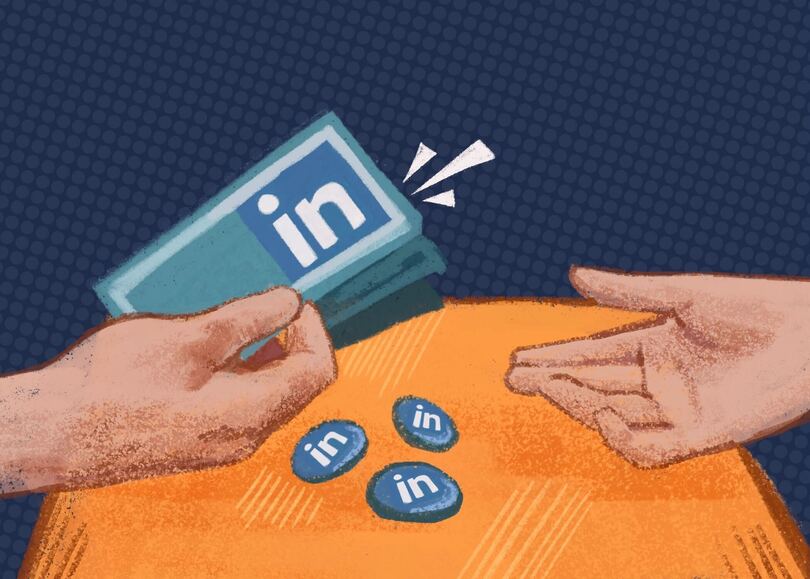
With U.S. job growth slowing, our columnist writes LinkedIn is now essential social currency for college students. He argues building connections and sharing goal-driven posts jumpstart careers in a competitive market. Hannah Mesa | Illustration Editor
Get the latest Syracuse news delivered right to your inbox.
Subscribe to our newsletter here.
The Wall Street Journal reported on Feb. 11 that United States’ job growth estimates for 2024 and 2025 have fallen dramatically. The Labor Department’s Bureau of Labor Statistics noted a total of 1.5 million jobs created in 2024, well below the 2 million estimate. In 2025, the labor market added just 181,000 jobs, far short of the projected 584,000.
These numbers are alarming for students, especially at Syracuse University, where such high tuition emphasizes the necessity to enter the workforce immediately after graduation. The best way to do this is through networking, as 54% of U.S. workers have been hired due to personal connections.
LinkedIn is no longer optional for college students — it’s become a form of social currency. The platform blends social media and professional networking, allowing users to interact with peers through posts while discovering job opportunities.
Initially, LinkedIn was just a job search engine where users would find openings that fit their experience. Now, the app has developed a stronger social component. Professionals can share their experiences and highlight lessons they learned over their respective careers.
LinkedIn delivers more value as more effort is put in, which is why it functions as such a valuable social currency. The more consistently a user posts, the more credibility they build in their field. These benefits compound over time.
One connection can lead to five then 10 more, introducing users to professionals they wouldn’t have met otherwise. This expands professional outreach, where executives at businesses nationwide can identify users as potential candidates for hire.
Making a connection, though, is more than just pressing the “connect” button — it’s finding genuine interest in someone’s life, whether that be professional or personal, and remaining in touch. Building social currency can skyrocket professional careers. Establishing rapport, trust and a positive relationship with others will make finding jobs much easier in the future.
LinkedIn is one of the best places to start.
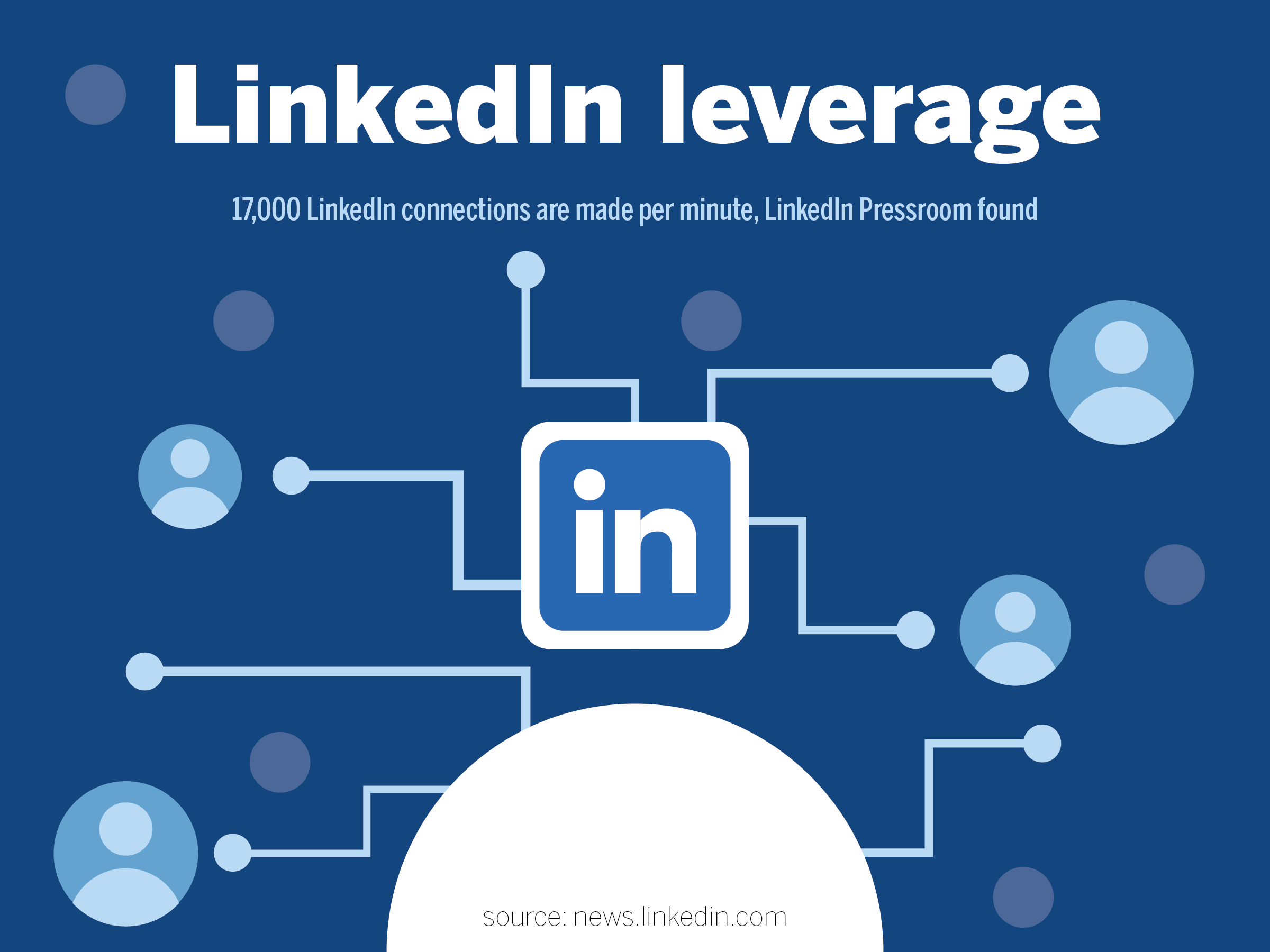
The recent LinkedIn growth is vast, with the platform now having over 1 billion users. More than 50% of adults who have a bachelor’s or advanced degree in the U.S. are LinkedIn users and 95% of job recruiters use LinkedIn. This reflects the harsh reality of the job market, which is more competitive than ever, thanks to hiring cutbacks and record-low confidence levels.
But, people often perceive the social components of LinkedIn as performative. LinkedIn maxxing, posting three to four times daily and frequently messaging potential connections, can make sharing ideas feel fake or cringe.
 Zoey Grimes| Design Editor
While this argument may be valid to an extent, it’s equally important to note that those posting frequently care just as deeply about finding connections, and they have found success in their method. It’s beneficial to power through the uncomfortable “performative” feeling, as this will lead to networking traction. Many are starting to provide their own insights about this very topic.
I had the chance to interview Daniel Greenberg, one of the first people I followed on LinkedIn, who is on a mission to create a $10 million podcast. The Louisville, Kentucky native and co-host Matt Huang created “Connection Accepted,” networking with successful LinkedIn users who have large followings and thriving businesses, aiming to help listeners grow their own presence on the platform.
Greenberg has amassed over 13,000 followers by embracing the cringe that many users feel when posting on LinkedIn. After our conversation, one overarching idea stood out: post.
Greenberg has a target audience of anyone seeking to grow their network on LinkedIn, typically business founders, operators and students. But, his audience is based on the content that he has chosen to create.
Anyone can go on LinkedIn and create their own personalized platform. The only thing stopping them is posting itself. In his view, users shouldn’t be mocked for putting themselves out there, even with the familiar “I’m pleased to announce” post.
“Everyone starts at zero. The starting cringe you feel is the eventual cost of virality,” Greenberg said.
SU offers several resources for students interested in LinkedIn, making now the ideal time to get started. Tools like LinkedIn Learning are free for students and can help them learn skills necessary for future careers. Additionally, there are LinkedIn groups for each individual home college. Regardless of a student’s home college, there is a LinkedIn group for them.
Thinking about building a network in college can be daunting. As a sophomore who is in a brand new major, trying to find connections and common ground with people felt pretty overwhelming at first. But, as I continue to learn more about networking, I am extremely grateful that I started now.
This network that I am building will last with me after college. Knowing that I built my network with people that I am learning with and mentors I am learning from has created a base that I can come back to with my progression. This social currency that I have built is so easy for everyone to do as well — all it takes is to reach out.
LinkedIn has taken over my day to day and I don’t think that I’m upset about it.
William Dumond is a sophomore studying political science and policy studies. He can be reached at whdumond@syr.edu