Opinion: ‘Girl dinner,’ ‘boy kibble’ trends romanticize food restriction
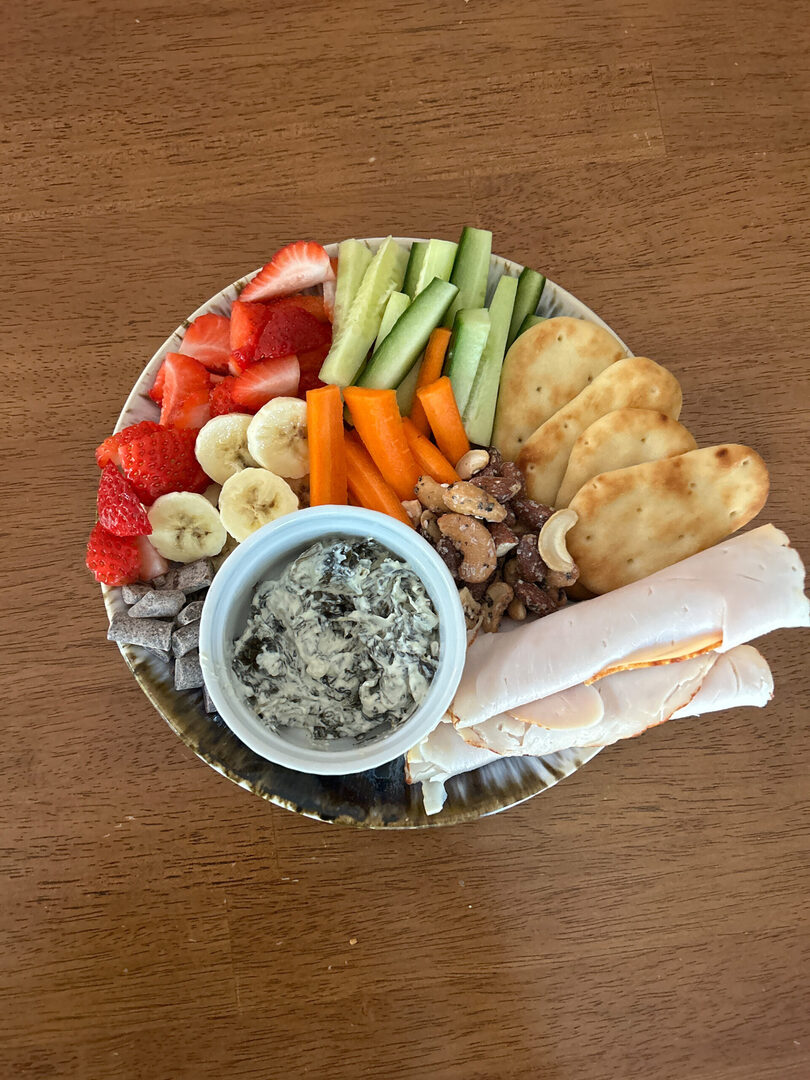
From “girl dinner” to “boy kibble,” viral food trends perpetuate sexist stereotypes. When meals become performative, they reinforce harmful beauty standards and impact how young audiences see their bodies, our columnist asserts. Courtesy of Eliana Rosen
Get the latest Syracuse news delivered right to your inbox.
Subscribe to our newsletter here.
I’m addicted to watching baking and cooking videos on social media, so much so that I’ve seen countless food trends come and go. One week it’s oxtail, the next Japanese cheesecake. I’ve come to notice that most of these trends last about as long as our attention spans, but one has proven to be the exception: “girl dinner.”
The trend, which first took off in 2023, featured young women assembling low-maintenance meals they prepared for themselves with whatever they had on hand.
I, for one, loved this trend. As a high school senior balancing school, sports, clubs, work, internships and other responsibilities, “girl dinner” served as a reminder that the main point of a meal was simply to satiate you. Not every meal needed to be perfect or aesthetic, but rather, realistic and satisfying.
Recently, I noticed that the trend I had known and loved reemerged, this time with a new spin. “Girl dinner” has become a restrictive nightmare that seems to encourage young women to eat snacks in place of full meals. When done correctly, “girl dinner” can range from a generous assortment of snack foods to one simple dish eaten in a large enough portion to actually be filling.
The trend has turned into a competition of creators showing off just how little they can eat in one sitting.
Eating such small amounts of food and labeling it “girl dinner” perpetuates the stereotype that people assigned female at birth don’t need, or shouldn’t eat, as much food as those assigned male at birth. This isn’t the case.
The Food and Drug Administration recommends eating roughly 2,000 calories a day for all genders, though this varies depending on weight and activity level. The idea that feminine-presenting people should eat less promotes sexist stereotypes, including the expectation that women should be small, dainty and weak. It also assumes they should prepare large, elaborate meals for the men in their lives, who supposedly need more food.
The latest installment of the “girl dinner” saga has emerged as “boy kibble.” Trust me, it’s as unappetizing as it sounds. “Boy kibble” is the male fitness influencer’s take on “girl dinner,” and it’s chock-full of protein and little else.
“Boy kibble” refers to a bland slop that usually consists of rice, vegetables, ground meat and very little flavor, according to the New York Times. These meals are carefully portioned to help masculine-presenting people stick to strict meal plans aimed at weight loss and gaining muscle. It’s a stark contrast to the original “girl dinner,” which emphasized efficiency and honesty, while pushing back against diet culture.
A carefully framed plate of food doesn’t reveal a person’s diet, or show their health and habits offline.Hannah Hewitson, Columnist
Although “boy kibble” doesn’t necessarily promote undereating in the same way the newest wave of “girl dinner” trend seems to, both trends put unrealistic expectations on eating that reinforce gendered beauty standards and turn eating into performance.
“Boy kibble” suggests that healthy, masculine-presenting people should be large and muscular. The revamped “girl dinner” implies that healthy, feminine-presenting people should be petite and thin.
These ideas are not only inaccurate, but they can also be dangerous. When eating becomes a tool for achieving a narrowly defined body type, it increases the risk of disordered eating habits, especially among younger and more vulnerable audiences.
Considering that 51% of TikTok users are under the age of 24, these videos can significantly impact the relationship that young people have with food. A 2023 study found that up to 22% of children and adolescents struggle with disordered eating. By early adulthood, between 5.5% and 17.9% of young women and 0.6% to 2.4% of young men will have been diagnosed with a clinically significant eating disorder.
When content creators jump on trends like “girl dinner” and “boy kibble,” they must be cognizant of their audience. Social media rarely tells the full story. A carefully framed plate of food doesn’t reveal a person’s diet or show their health and habits offline.
Ultimately, “boy kibble” and “girl dinner” are just trends and will soon be replaced by the next viral health craze social media tries to shove down our throats. What doesn’t go away is our hunger cues; we know our bodies and how to fuel them better than anyone else. As loud as all the health influencers and food trend noise may be, it’s important to tune them out and listen to our bodies instead.
Hannah Hewitson is a freshman majoring in journalism. She can be reached at hrhewits@syr.edu.