Syracuse’s student DJs experiment at campus parties, bar dance floors
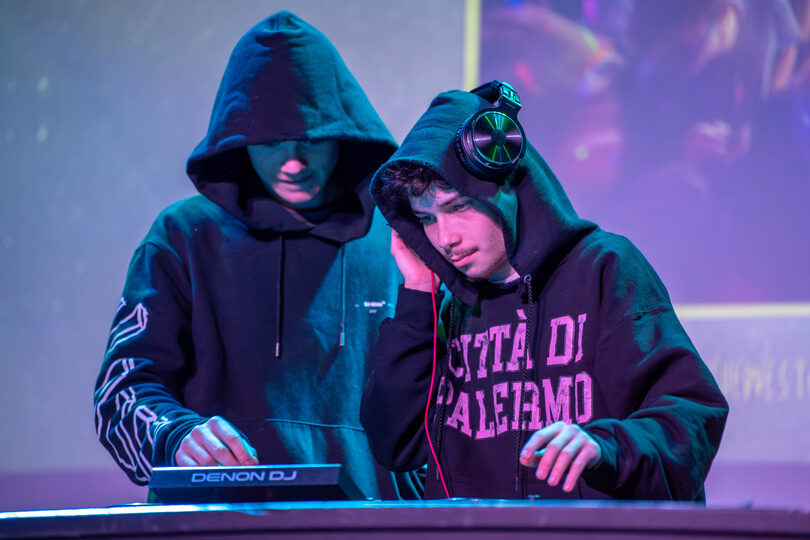
To be a good DJ, Troy Conner says it’s all about knowing what the audience wants. A DJ may play the same 50 tracks, but if the crowd enjoys the setlist, it marks a successful DJ. Zoe Xixis | Asst. Photo Editor
Student Press Freedom Day is a reminder of the vital role student journalists play in holding institutions accountable. The money raised between now and March 6 will go directly toward supporting our independent newsroom. Donate today.
Recognizing when the crowd likes what you’re doing is easy for DJ Maria Profili. If they like it, they stay.
“It’s the best feeling ever, getting to control the event and the music in it,” she said. “And I’ve been to so many places where the DJ has just been awful, and I guess that’s taught me how to be better.”
The Syracuse University junior competed against six DJs and took home the trophy at the Westcott Theater’s Greek Life DJ Competition on Feb. 26. (Profili represented Alpha Xi Delta.)
The competition participants are just a sample of the amateur DJ scene that saturates SU’s Greek houses, bars and house parties.
Senior Troy Conner DJs mostly at house parties, like those at the Cage. He’s even taken his sets to New York City, opening for The Dare last November in New York City. He knows the show is going well when it doesn’t feel like a show at all — it should feel more like hanging out with friends in his bedroom than performing for hundreds of people, he said.
“The shows that I feel like have been the best are when I can look at the crowd and they’re all doing their own thing, in the moment, they’re all dancing with friends by themselves,” he said. “They’re not thinking about me.”
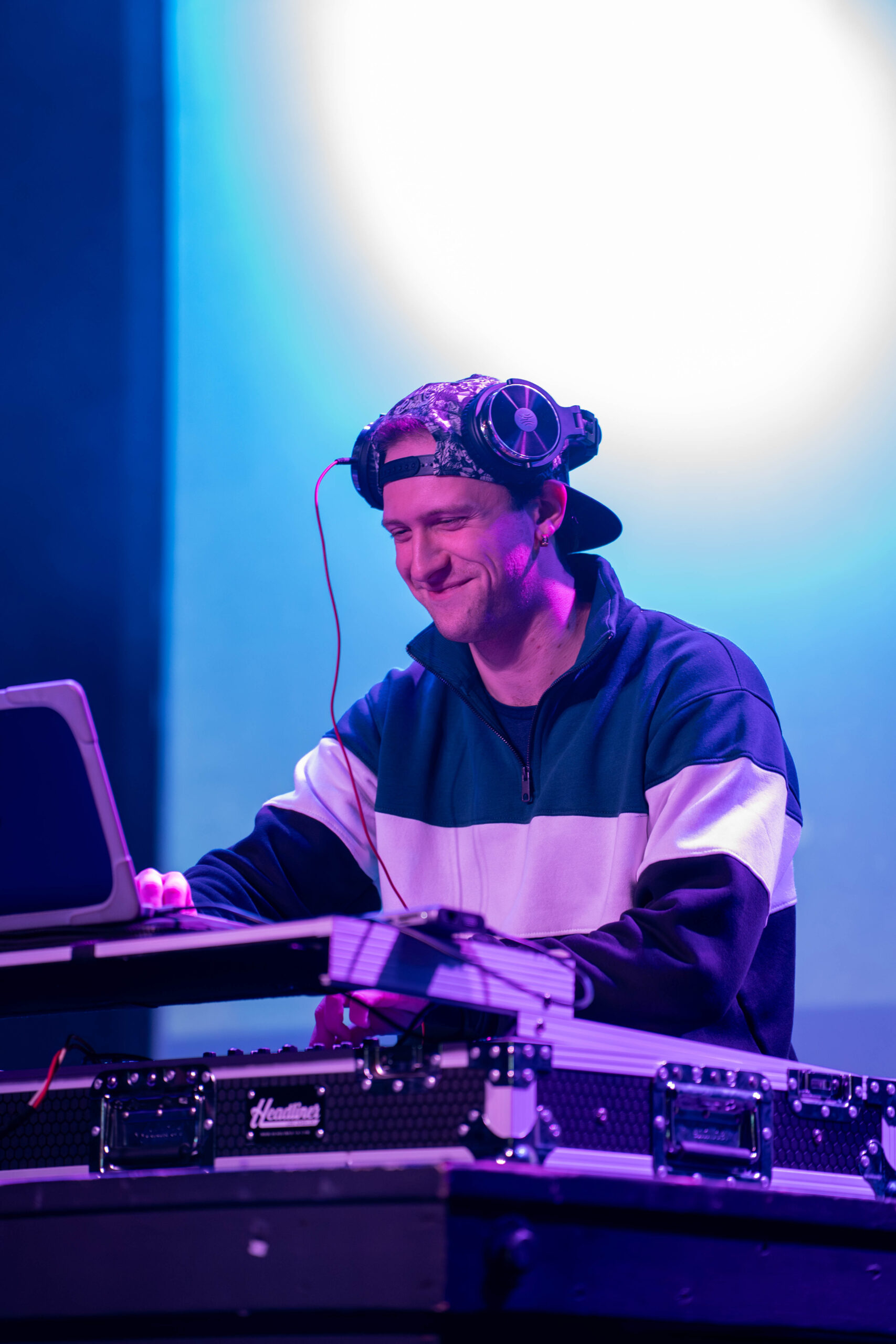
At Westcott Theater’s Greek Life DJ Competition, six student DJs competed against each other for the competition’s coveted trophy. Junior Maria Profili, who was representing Alpha Xi Delta, took home the win. Zoe Xixis | Asst. Photo Editor
Profili has an easy avenue to knowing what the audience wants: She’s a woman, so she knows what female-dominated nightlife crowds want to hear. Profili was the only woman who competed at Thursday’s showdown. People, especially fellow women, have the most fun when they can sing along, she said.
Usually, Profili starts the night off with remixes. By the end, she plays more popular music — the stuff audiences “actually like,” she said. Mixes of “Finesse” by Bruno Mars and “Mo Bamba” by Sheck Wes are two reliable hits in Profili’s repertoire.
The best DJs aren’t doing it for their own enjoyment but for the audience, Conner said. Whether it’s music they’ve never heard or the same 50 hits over and over again, what the audience wants is most important, he said.
“There’s a reason the guy who DJs at (Orange Crate Brewing Co.) plays the same songs every time,” Conner said. “It’s because he knows those are the songs people like and those are the songs you want to hear. So you can say what you want about his originality, but he’s being a good DJ.”
Sophomore Roey Leshem is one of the DJs that frequents the decks at Orange Crate and Lucy Blu Island Bar and Club. He said for bars, he cohesively switches from rap to pop based on what the crowd responds to — what he calls an “open format” style.
Like Profili, freshman Gavin Rifkin said he finds the most success in catering to a female audience. He competed at Westcott Theater, representing Alpha Epsilon Pi.
To Rifkin, that means playing “white girl music.” The genre encompasses mostly 2010s pop hits that get the whole crowd singing along — think “Party in the USA” by Miley Cyrus, “Starships” by Nicki Minaj and “I love it” by Icona Pop and Charli xcx.
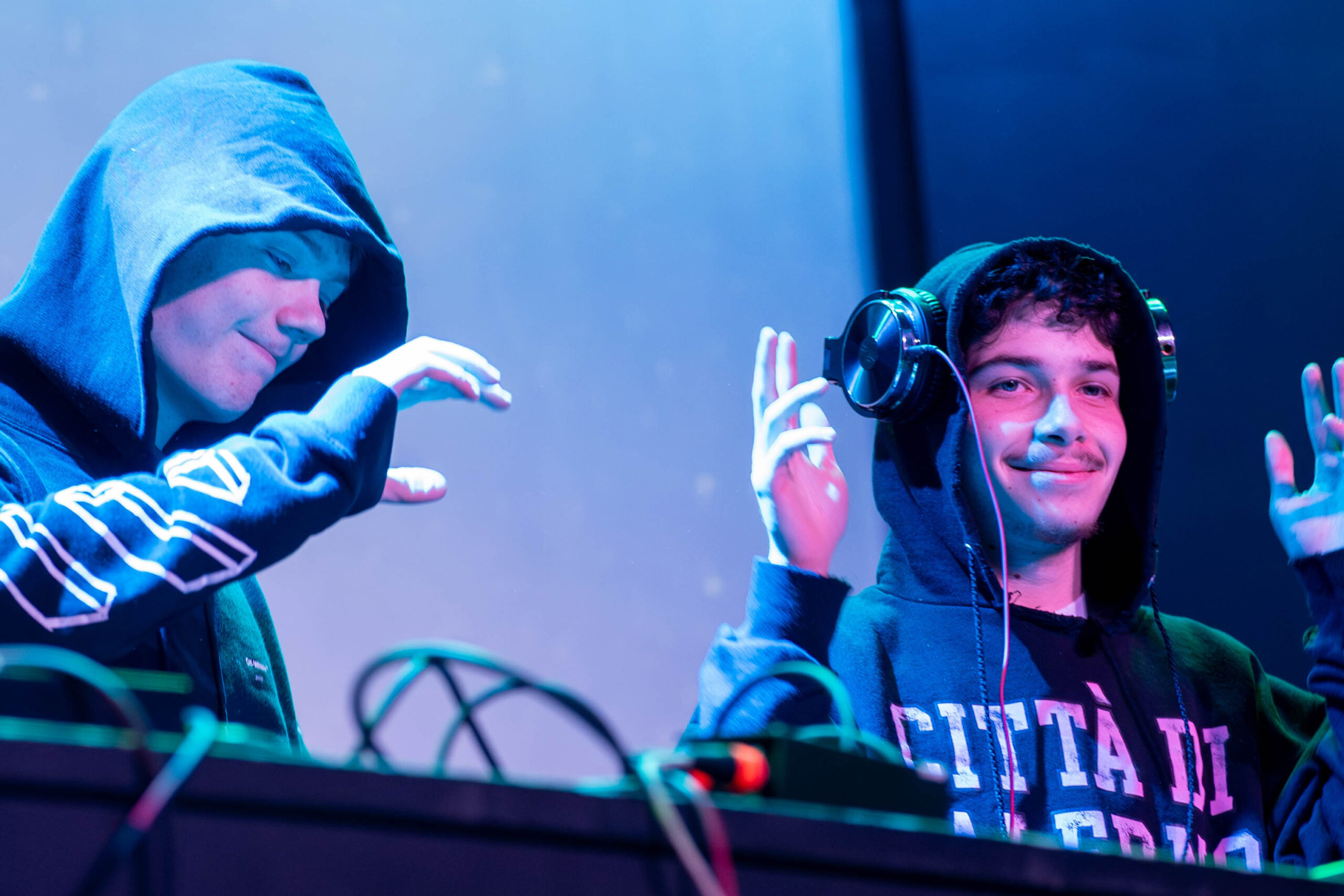
Syracuse University’s known party scene makes it accessible for aspiring DJs to perform. With many amateur DJs on campus, it makes it easier for students who want to break into the DJ scene. Zoe Xixis | Asst. Photo Editor
Rifkin purchased his first DJ deck the summer going into his sophomore year of high school, inspired by watching one of GRAMMY-winning DJ Fred again..’s sets on YouTube.
It wasn’t an impulse buy — he had to do a lot of babysitting to afford the $300 purchase, he said. The investment took a little while to pay off.
“My parents would go in the other room every time I was going, because it sounded that bad,” Rifkin said. “But then, you just practice. And then one day you wake up and you’re like, ‘Okay, I can do this.’”
Leshem made that same $300 investment during a gap year before starting at SU and said he still uses the same equipment today. DJing provided Leshem a way to express his lifelong love for music, taking inspiration from artists like Martin Garrix and Avicii. He started learning through YouTube tutorials, and he made a lot of “really bad” mixes at first, he said.
“There’s a lot of unsaid things that aren’t in tutorials, that you kind of just have to figure out yourself,” Leshem said. “And then even after all your practice when you finally show up to events, things are different and so much learning you just have to do on the fly.”
An already-established DJ friend showed Leshem the ropes of performing at big venues, setting him up to play a sold-out welcome week event as his first on-campus gig.
Conner started DJing while recovering from a downhill mountain biking injury that sidelined him for a few weeks. Conner had all the time in the world and one arm in a sling. When a friend offered to loan him a DJ board, he thought if he was ever going to learn, it should be now.
Learning to DJ is just a matter of understanding a few simple concepts, Conner said. In his opinion, being a DJ requires “little musical skill,” especially compared to producing music. It comes down to understanding beats per minute and musical keys, he said.
Conner picked up 75% of his current DJ skills within the first few weeks of starting, he said. Conner has now started producing his own music and said he’s had to learn a lot more than just BPM. Though he’s been producing for a year and a half, he said he still feels like he knows nothing.
Maybe it’s the fairly low level of musical knowledge required to start that creates such a collection of DJs at SU. But it might just be the campus environment itself, Conner said.
“If you want to get into DJ performing, there’s no better place to do it than the college campus,” Conner said. “You’re surrounded by thousands of people who are looking for places to go out, not spend a lot of money, and want to go to these DIY events.”
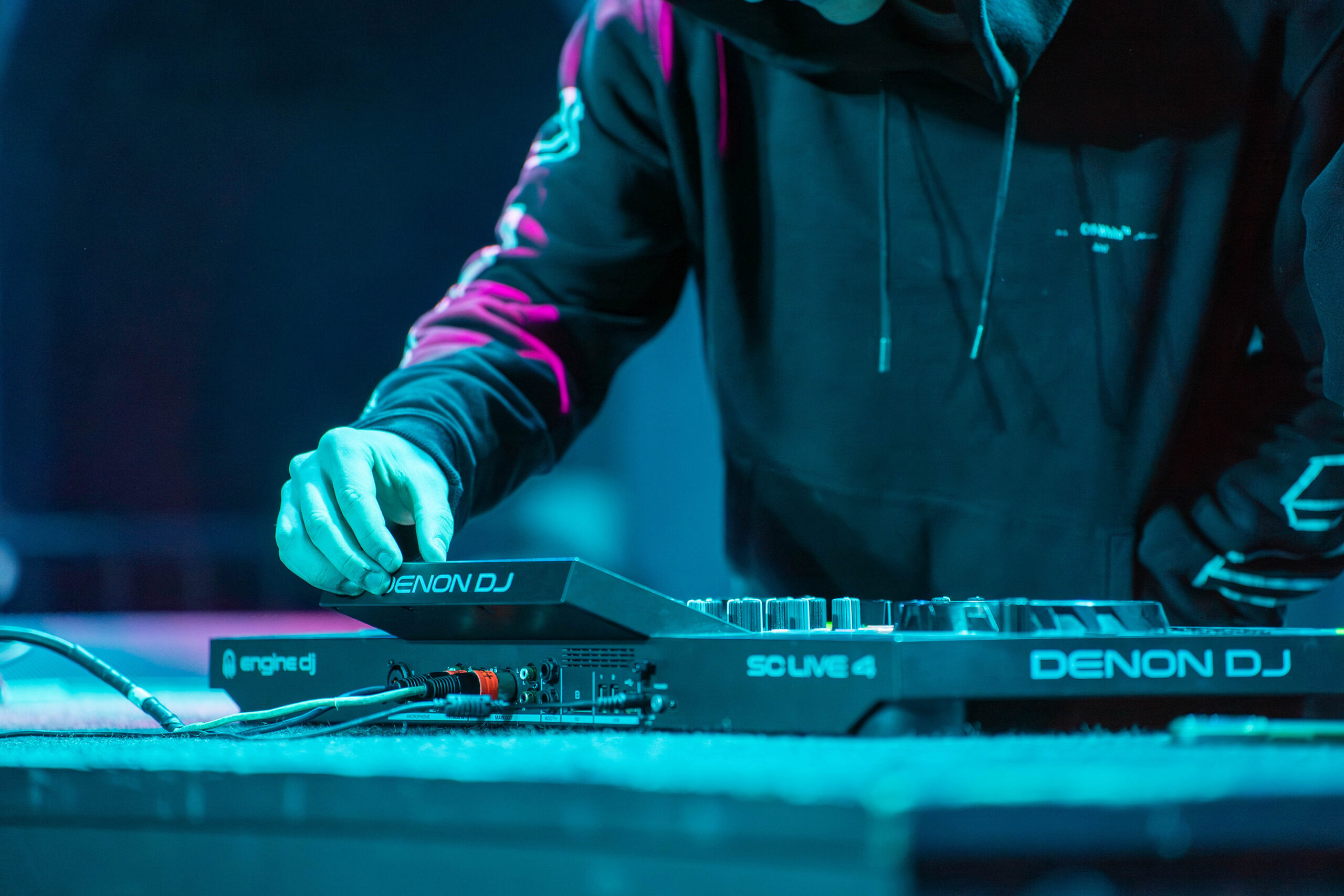
While recovering from a mountain biking accident, senior Troy Conner picked up DJing to kill time. While Conner learned a lot in his early phases, he still has much to learn. Zoe Xixis | Asst. Photo Editor
The fact that DJs are so visible on campus contributes to the beginner scene too, Rifkin said.
“Because we go to Syracuse and it’s a party school, it’s fun being up there,” Rifkin said. “You see a DJ and they’re having fun. You want to be up there too. So it gets people to want to learn a little bit.”
Though opportunities for house shows have dwindled after the closure of venues like Dazed, Conner said he still thinks becoming a DJ has never been more accessible.
Greek life is part of that equation too, giving DJs like Profili and Rifkin their platform. Though Greek life creates platforms for DJs, it’s also exclusive by nature. Profili said if you don’t know anyone in Greek life, it can be hard to break into the scene.
Profili was initially drawn to learning how to DJ because of her music-related major. She asked for a DJ board for Christmas during her freshman year. Then, she got her start on the stage at the end of her sophomore year after she “begged” her friends at Delta Upsilon to give her a try DJing for a party. They thought she was “awesome,” and so did partiers who posted about her on Yik Yak, she said.
Rifkin said when he started DJing in high school, he had the idea in the back of his head that he might be able to DJ at his future fraternity.
In terms of the tech required to start, becoming a DJ is “infinitely accessible,” Leshem said. Recent updates to music streaming services have made it easier than ever for an artist to connect their music library to their DJ deck, opening up more musical possibilities.
The presence of amateur DJs is so large at SU that Leshem said he’s considered starting a club where performers could share technical know-how. Even without a club, Leshem said the community between DJs is strong.
“I’ve made so many friends with, ‘Oh, here’s a tip,’ and then they give me a tip, and then all of a sudden we’re friends and playing events together,” Leshem said.
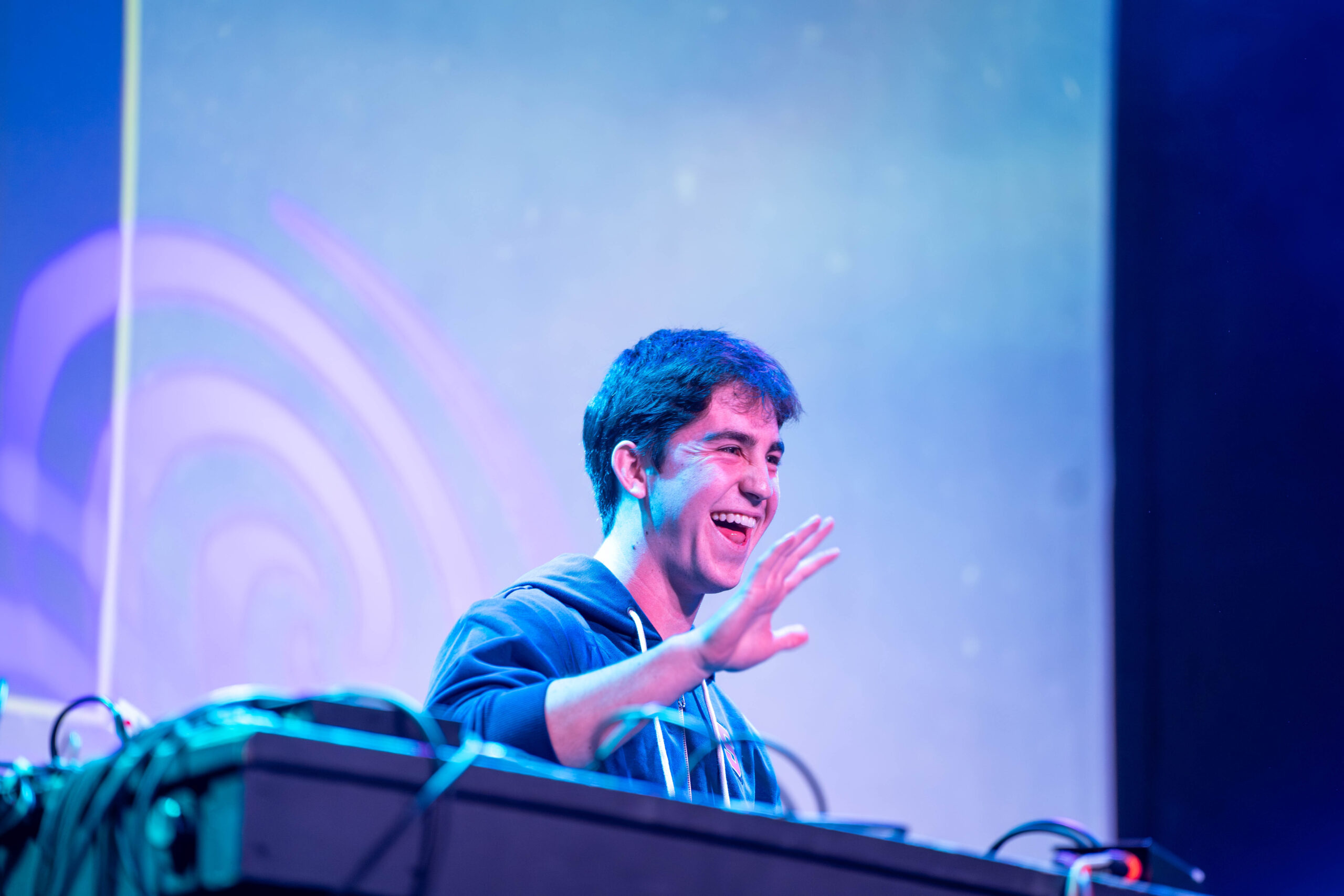
Freshman Gavin Rifkin was representing Alpha Epsilon Pi at Westcott Theater’s Greek Life DJ Competition. At female-centered crowds, Rifkin typically plays “white girl music,” which encompasses 2010s pop hits. Zoe Xixis | Asst. Photo Editor
Though Conner has found success outside the SU party scene, he doesn’t want to take DJing past a hobby. He plans to pursue a career in photojournalism. Besides, he attributes his success to the fact that he doesn’t take it too seriously — if he did, he said his passion and opportunities would fade quickly.
Leshem and Profili, though, said DJing might fit in alongside their future careers. DJing would make a good side gig to accompany Profili’s career in the music business. Leshem already picks up gigs for Red Bull brand activations, so continuing to DJ while he pursues experiential marketing makes sense.
At the end of the day, the point of a DJ playing music at a party is to allow everyone to enjoy the same thing all together, Conner said.
A good DJ takes songs people already know and puts a new spin on them, Leshem said. The crowd reengages with the music in a way they might not have known they could, he said.
“I love being able to just dance with people,” Leshem said. “Sometimes you’re a DJ and sometimes you’re just some guy behind a deck dancing to the song in the background, and those are the best moments of it, when it’s your favorite song playing and everyone’s dancing.”