Personal Essay: As a woman in STEM, I’m learning to combat imposter syndrome
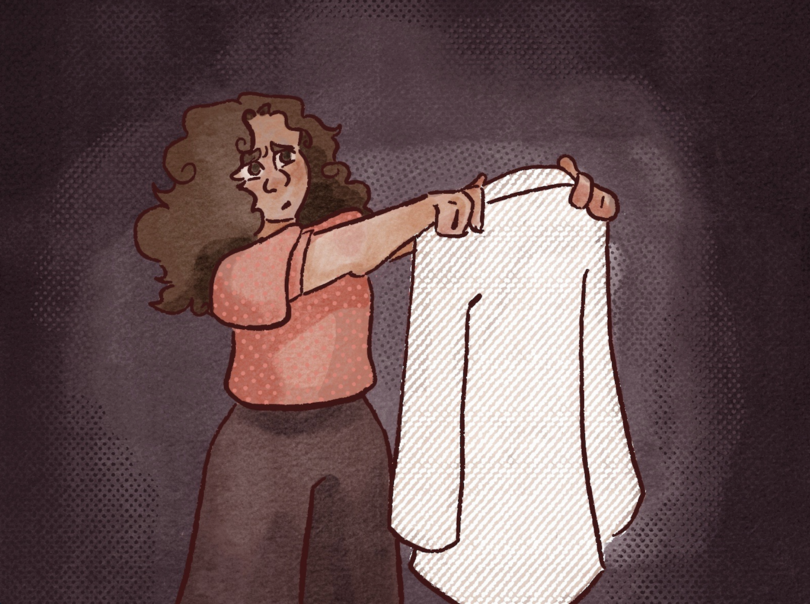
Our essayist argues women in STEM often face imposter syndrome and feel an unjustified lack of qualification. She claims this is result of an academic culture that only celebrates major accomplishments and prestige. Kendall Thompson | Contributing Illustrator
Get the latest Syracuse news delivered right to your inbox.
Subscribe to our newsletter here.
At an academic conference in September, I gave my first oral presentation on my rural stroke research. At first, all I could think about was why I’d been selected and why anyone would listen to me. I had yet to receive my MD, and the project was my own idea, selected solely on merit.
During this conference, and at each stage of my medical training and education, I’ve felt this distrust in myself. I’ve been waiting for the other shoe to drop, for someone to realize I’m not actually good enough to be where I am.
I realized this feeling of doubt is called imposter syndrome. It’s estimated that about 70% of the population has experienced imposter syndrome at some point, with women more likely to experience this phenomenon. One study found that 97.5% of women in STEM experience imposter syndrome.
The environments we work and study in often play a factor in this. Systemic biases themselves often make people feel like they don’t belong. Racial, xenophobic and socioeconomic biases induce imposter syndrome.
The culture of academia itself can also contribute to imposter syndrome. In a culture that places so much emphasis on elite achievements and prestige, smaller, yet equally important successes often go uncelebrated.
As a woman in STEM, there have been many times I’ve been the only woman in a room and felt like I didn’t belong there. I’ve heard countless comments implying women don’t belong in STEM and that they aren’t as intelligent or hardworking as their male counterparts.
Even though more women than men are entering the medical field now, I’ve still heard older attending physicians disparage young women for taking maternity leave or for taking up space in a room they thought was theirs.
When that voice tells you that you don’t belong or you aren’t good enough, take a step back, remember how far you have come and let it fuel how far you will go.Samantha Ballas, Personal Essayist
I’m now less than two months away from graduating medical school, and I still worry that I’m not good enough or that I’ll fall short. While it’s important to stay humble during medical training (after all, lives are on the line), it’s important to remember that you belong and you’ve earned your place.
Success doesn’t happen by accident. Getting high scores on entrance exams, receiving glowing letters of recommendations and acing interviews all require you to have skill, knowledge and ability.
While it’s easier said than done, I’ve found ways to push back against imposter syndrome.
One approach that helped me throughout residency interview season was taking a step back to remember that I’m qualified. Although the interviewees had amazing credentials, strong board scores and interesting research, that doesn’t take away from everything I’ve done. It’s not an accident that I belong in the same spaces as these brilliant people. My accomplishments are just that — mine. Comparing your work to others’ only holds you back. Celebrate those around you, but don’t compare.
Another way is to take time to celebrate yourself. People who struggle with imposter feelings tend to brush off successes. When you’re used to performing at a high level, success can feel more like a box that was supposed to be checked rather than something that you’ve earned. Celebrate all the wins, big and small, and then reflect on them to help with future endeavors.
Sharing your successes and doubts with trusted people can be helpful as well. While this can promote competition, it can also help to connect with others and provide a better, more truthful picture of your accomplishments. This goes hand in hand with celebrating your work.
Throw yourself a party for your Duolingo streak, get a cake for taking a big exam, have a nice dinner at the end of a tough class or when your paper gets accepted. Share the success, make it real and keep working toward the next step.
Most of all, give yourself grace. You will fail. You won’t be perfect. The important thing is to come back from your failures with a desire to improve. When that voice tells you that you don’t belong or you aren’t good enough, take a step back, remember how far you have come and let it fuel how far you will go.
Samantha Ballas is a medical student. She can be reached at ballass@upstate.edu.