Opinion: DEI crackdown discourages underrepresented film narratives
Get the latest Syracuse news delivered right to your inbox.
Subscribe to our newsletter here.
Earlier this month, a Disney Pixar employee came forward about the company’s cancellation of “BeFri,” a film that’d been in the works for three years before getting scrapped due to its female friendship-centered themes, employees allege.
It’s natural for a major studio to produce films that appeal to a large demographic, but it’s hard to ignore the fact that Disney Pixar has produced plenty of “girl power movies” such as “Mulan” in 1998, “Brave” in 2012, “Frozen” in 2013, “Moana” in 2016 and more recently, “Turning Red” in 2022. This move away from films with feminist themes seems to be a recent phenomenon.
“Disney just didn’t feel like little boys could see themselves in the film enough,” an anonymous employee told The Hollywood Reporter. “Basically, Disney reps were like, ‘We can’t have a girl power movie.’”
My childhood was built on Disney and Pixar movies. It seemed like each film from “Cars” to “Up” told an unforgettable story that felt more like a glimpse into another world than an animation on screen. I never thought a day would come when these studios would lose their magic, but it may be rapidly approaching.
In recent years, Disney Pixar has aligned its work with more conservative values. Disney Pixar employees were told to avoid LGBTQ+ themes while developing “Elio” and “Inside Out 2,” with entire scenes cut from “Elio” to make his character more masculine. The movie was released a few months after President Donald Trump took office.
The company also scaled back diversity, equity, inclusion and accessibility initiatives in wake of Trump’s public criticism of DEI programs.
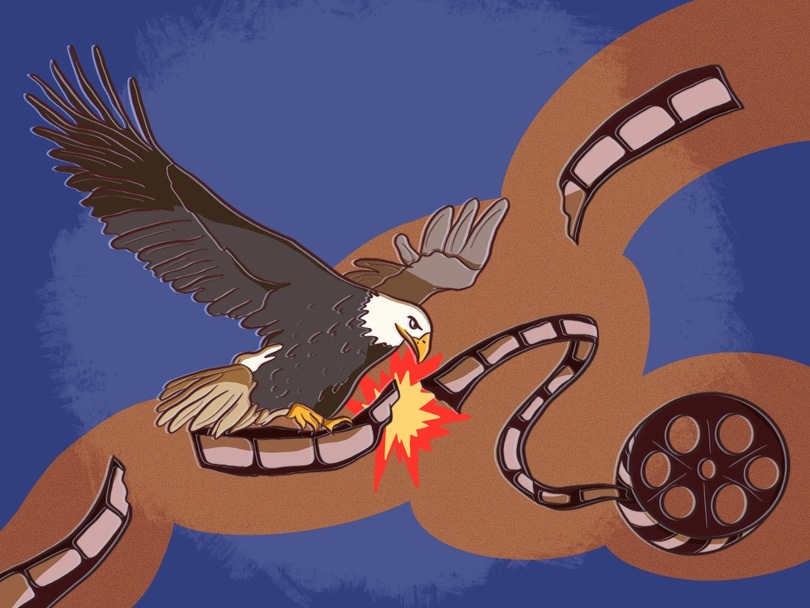
Disney Pixar isn’t alone. Amid Trump’s DEI crackdown, the broader film industry is starting to lack representation. Instead of prioritizing diversity, movie studios are conforming to the modern political landscape.
Zoey Grimes | Design Editor
After Warner Bros. and Discovery merged in 2022, $2 billion worth of content was cancelled, the majority of which told the stories of women and people of color. Paramount and Amazon Studios each cancelled their respective DEI initiatives, with Amazon scrapping its policy to cast at least one Black, Latino, Indigenous, Middle Eastern or Asian character with a speaking role per show.
This lack of diversity within narratives is reflected in both cast and crew. Only a quarter of films in 2024 were led by women or people of color. Across major motion pictures made in 2024, just 27% of producers, 21.7% of directors, 12.9% of screenwriters and 8.4% of composers were women, and only 23.2% of directors were people of color.
If studios are concerned about alienating certain viewers, they should try to diversify narratives and staff rather than cutting storylines or entire films that speak to underrepresented groups.
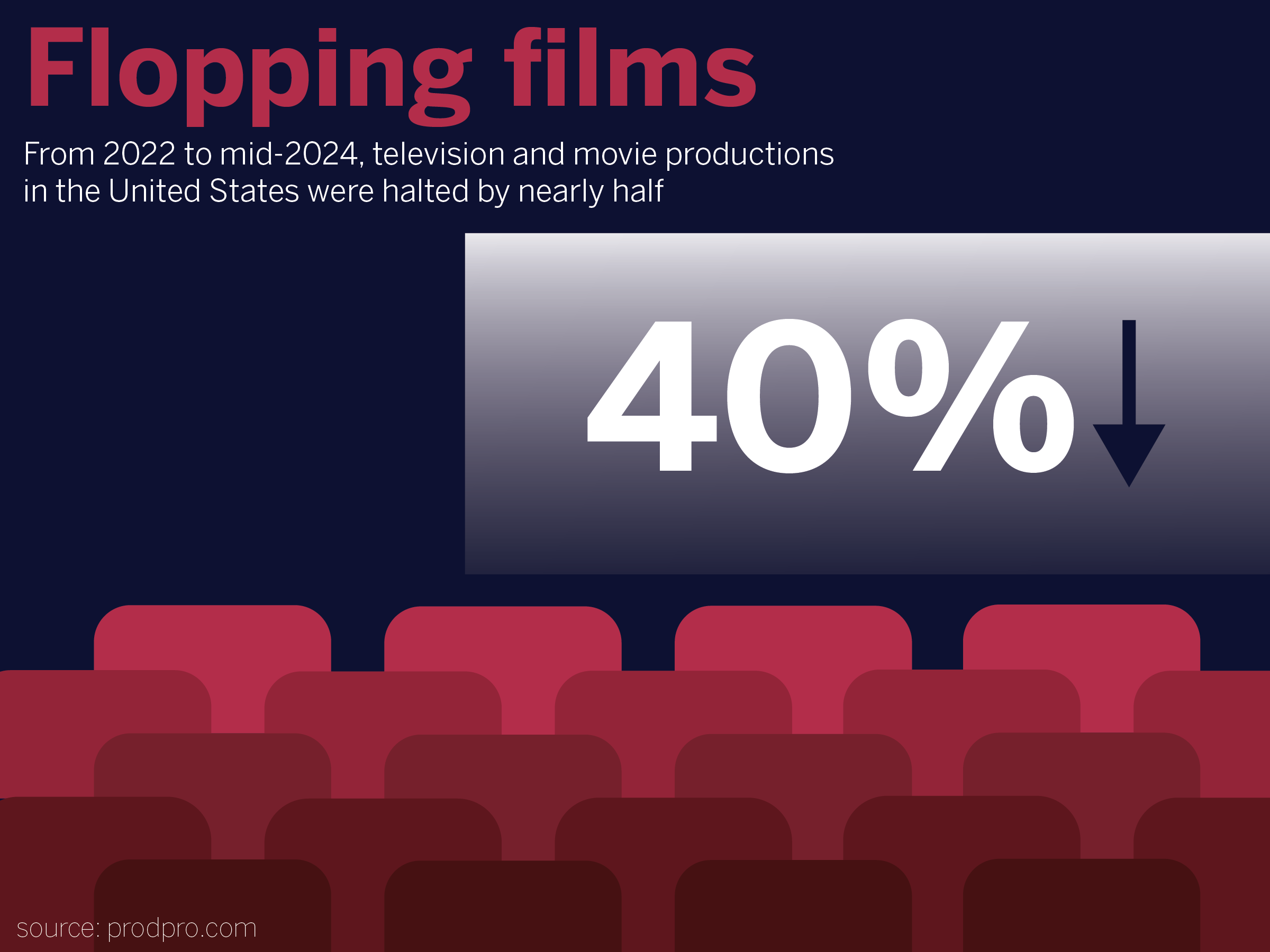
The immediate future of Hollywood is bleak. In an effort to avoid box office failure, major studios seem to be putting original pieces on pause, focusing on remakes and sequels instead. Out of the 17 upcoming Disney Pixar films with set release dates, only two movies, “Gatto” and “Hexed,” are completely original ideas.
Despite this, fans still seem to prefer original movies that value diversity. Sony’s “Spider-Verse” series, known for its diversity, has grossed a combined $500 million domestically. “K-Pop Demon Hunters,” which shares similar themes of female friendship with “BeFri,” is the most-watched Netflix Original ever.
By trying to play it safe, film studios aren’t telling stories that speak to larger audiences — they’re telling stories that are doomed to fail.
Hannah Hewitson is a freshman majoring in journalism. She can be reached at hrhewits@syr.edu.